

Close Menu
AI News TodayAI News Today

    Subscribe to Updates

    Get the latest creative news from FooBar about art, design and business.

    What's Hot

    Amazon is already offering new OpenAI products on AWS

    Flesh-eating bacteria devour man’s arm and leg in just three days

    Now YouTube TV lets you multiview any channel you want

    Facebook X (Twitter) Instagram
    • About Us
    • Contact Us
    Facebook X (Twitter) Instagram Pinterest Vimeo
    AI News TodayAI News Today
    • Home
    • Shop
    • AI News
    • AI Reviews
    • AI Tools
    • AI Tutorials
    • Chatbots
    • Free AI Tools
    AI News TodayAI News Today
    Home»AI News»Electrical current might be the key to a better cup of coffee
    AI News

    Electrical current might be the key to a better cup of coffee

    By No Comments3 Mins Read
    Share Facebook Twitter Pinterest LinkedIn Tumblr Reddit Telegram Email
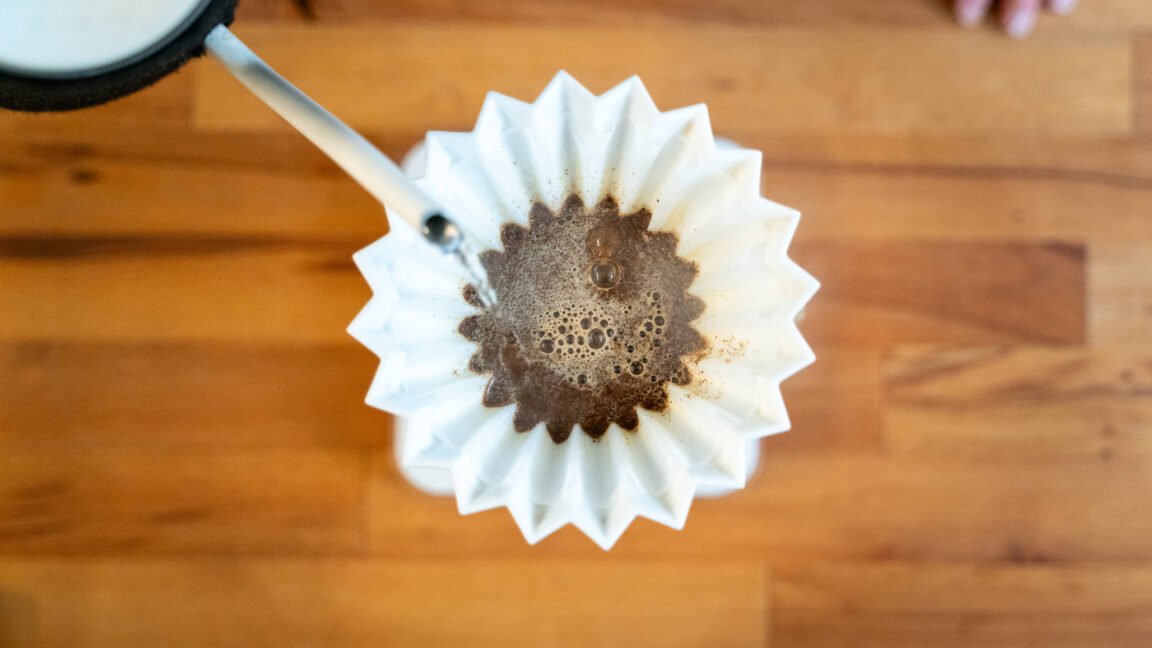
    Hot water being poured into a pour-over container, seen from above, as the coffee grounds are blooming.
    Share
    Facebook Twitter LinkedIn Pinterest Email

    University of Oregon chemist Christopher Hendon loves his coffee—so much so that studying all the factors that go into creating the perfect cuppa constitutes a significant area of research for him. His latest project: discovering a novel means of measuring the flavor profile of coffee simply by sending an electrical current through a sample beverage. The results appear in a new paper published in the journal Nature Communications.

    We’ve been following Hendon’s work for several years now. For instance, in 2020, Hendon’s lab helped devise a mathematical model for brewing the perfect cup of espresso, over and over, while minimizing waste. The flavors in espresso derive from roughly 2,000 different compounds that are extracted from the coffee grounds during brewing. So it can be challenging for baristas to reproduce the same perfect cup over and over again.

    That’s why Hendon and his colleagues built their model for a more easily measurable property known as the extraction yield (EY): the fraction of coffee that dissolves into the final beverage. That, in turn, depends on controlling water flow and pressure as the liquid percolates through the coffee grounds. The model is based on how lithium ions propagate through a battery’s electrodes, similar to how caffeine molecules dissolve from coffee grounds.

    Three years later, Hendon’s team turned their attention to studying why the microscopic clumps form in the first place, particularly at very fine grind levels. The culprit is static electricity arising from the fracturing and friction between the beans during grinding. Hendon thought reducing that static would be a good way to eliminate those clumps. The technical term is triboelectricity, which arises from the accumulation of opposite electric charges on the surfaces of two different materials due to contact with each other.

    A similar charge build-up also occurs during volcanic eruptions. So Hendon collaborated with volcanologists Josef Dufek and Joshua Méndez Harper, who were regulars at the same local coffee house and had noted striking similarities between the science of coffee and plumes of volcanic ash, magma, and water.

    Their experiments confirmed that adding a single squirt of water to coffee beans before grinding can significantly reduce the static electric charge on the resulting grounds. This, in turn, reduces clumping during brewing, yielding less waste and the strong, consistent flow needed to produce a tasty cup of espresso. Good baristas already employ the water trick; it’s known as the Ross droplet technique. But this was the first time scientists had rigorously tested that well-known hack and measured the actual charge on different types of coffee.

    Coffee Cup current Electrical Key
    Share. Facebook Twitter Pinterest LinkedIn Tumblr Email
    Previous ArticleChampions League Soccer: Stream PSG vs. Bayern Munich Live
    Next Article US Supreme Court appears split over controversial use of ‘geofence’ search warrants
    • Website

    Related Posts

    AI News

    Flesh-eating bacteria devour man’s arm and leg in just three days

    AI News

    ‘It’s Undignified’: Hundreds of Workers Training Meta’s AI Could Be Laid Off

    AI News

    Match Group invests $100 million in Sniffies, a cruising app for gay men

    Add A Comment
    Leave A Reply Cancel Reply

    Top Posts

    Amazon is already offering new OpenAI products on AWS

    0 Views

    Flesh-eating bacteria devour man’s arm and leg in just three days

    0 Views

    Now YouTube TV lets you multiview any channel you want

    0 Views
    Stay In Touch
    • Facebook
    • YouTube
    • TikTok
    • WhatsApp
    • Twitter
    • Instagram
    Latest Reviews
    AI Tutorials

    Quantization from the ground up

    AI Tools

    David Sacks is done as AI czar — here’s what he’s doing instead

    AI Reviews

    Judge sides with Anthropic to temporarily block the Pentagon’s ban

    Subscribe to Updates

    Get the latest tech news from FooBar about tech, design and biz.

    Most Popular

    Amazon is already offering new OpenAI products on AWS

    0 Views

    Flesh-eating bacteria devour man’s arm and leg in just three days

    0 Views

    Now YouTube TV lets you multiview any channel you want

    0 Views
    Our Picks

    Quantization from the ground up

    David Sacks is done as AI czar — here’s what he’s doing instead

    Judge sides with Anthropic to temporarily block the Pentagon’s ban

    Subscribe to Updates

    Get the latest creative news from FooBar about art, design and business.

    Facebook X (Twitter) Instagram Pinterest
    • About Us
    • Contact Us
    • Terms & Conditions
    • Privacy Policy
    • Disclaimer

    © 2026 ainewstoday.co. All rights reserved. Designed by DD.

    Type above and press Enter to search. Press Esc to cancel.