

Close Menu
AI News TodayAI News Today

    Subscribe to Updates

    Get the latest creative news from FooBar about art, design and business.

    What's Hot

    Genesis GV90 SUV Debuts With Coach Doors, 310-Mile Range

    TerraPower’s nuclear reactor has a secret weapon for powering AI data centers

    OpenAI hit the brakes. Now what?

    Facebook X (Twitter) Instagram
    • About Us
    • Contact Us
    Facebook X (Twitter) Instagram Pinterest Vimeo
    AI News TodayAI News Today
    • Home
    • AI News
    • AI Reviews
    • AI Tools
    • AI Tutorials
    • Chatbots
    • Free AI Tools
    • Artificial Intelligence
    AI News TodayAI News Today
    Home»Chatbots»NASA calls off mission to rescue Swift gamma-ray observatory
    Chatbots

    NASA calls off mission to rescue Swift gamma-ray observatory

    By No Comments3 Mins Read
    Share Facebook Twitter Pinterest LinkedIn Tumblr Reddit Telegram Email
    NASA calls off mission to rescue Swift gamma-ray observatory
    Share
    Facebook Twitter LinkedIn Pinterest Email

    NASA and Katalyst Space Technologies announced Wednesday they are giving up on a robotic mission to rescue the Swift gamma-ray telescope before it falls out of orbit.

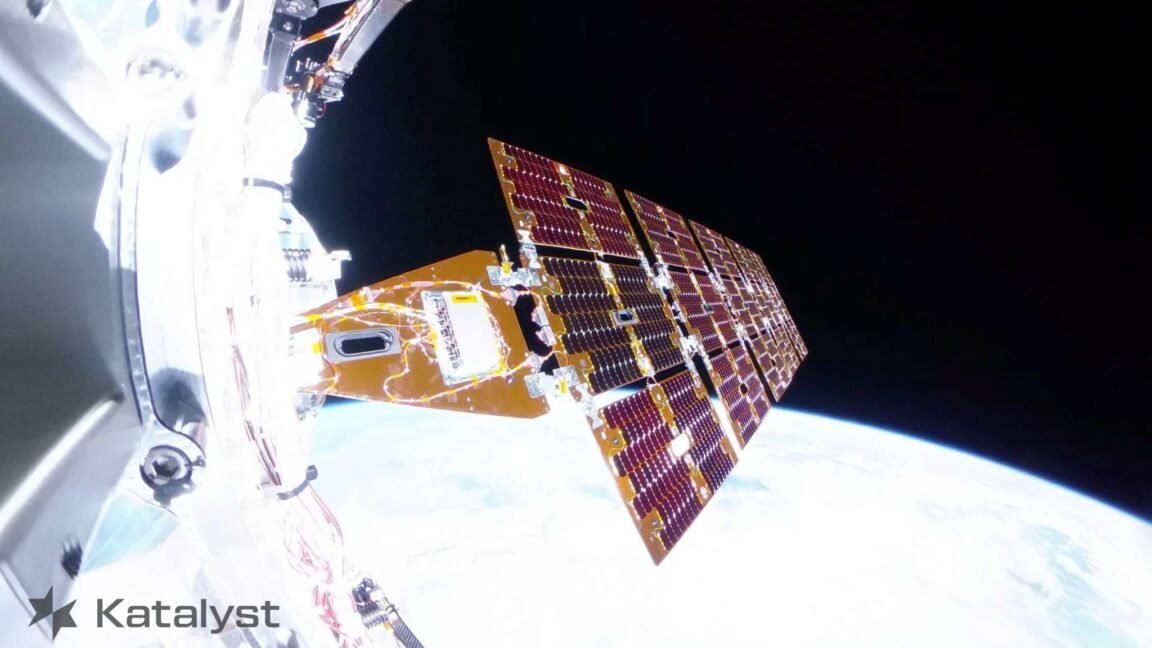
    The rescue satellite, named Link, launched July 3 on a journey to fly up to NASA’s Neil Gehrels Swift Observatory, capture it with three robotic arms, and boost its orbit high enough to escape a looming reentry. Link is about the size of a refrigerator, with two power-generating solar arrays and three xenon-fueled electric thrusters to send Swift into a safer, higher orbit.

    Katalyst, the startup leading the Swift rescue effort, said Wednesday that “ongoing attitude control issues” will prevent the Link satellite from completing its rescue mission. The spacecraft is still alive, and Katalyst said it will make the most of Link’s remaining capacity, which may still allow it to get near enough to Swift for a demonstration of the satellite’s close-in navigation system.

    “While the mission will not have the ending we originally intended, NASA and Katalyst are assessing what milestones remain ahead,” Katalyst said in a statement. “We will continue working to extract technical and operational value from the spacecraft.”

    It was a lot to ask

    The Swift rescue mission was always risky. NASA awarded Katalyst a $30 million contract less than a year ago to build and launch the Link satellite. NASA said Katalyst had to launch the rescue mission by this summer in order to reach Swift before it falls back into Earth’s atmosphere and burns up.

    “NASA should be willing to move quickly and take smart risks when the potential return is worth it, and that is exactly what we did with this mission,” said NASA Administrator Jared Isaacman. “This is not the outcome we were working toward, but it does not change why this mission was worth attempting.”

    NASA gave Katalyst a remarkably tight schedule. It usually takes several years to ready a first-of-its-kind satellite for launch. Katalyst did it in nine months. The timeline forced hard trade-offs, with the schedule driving engineers to tolerate technical risks they might not otherwise accept. Everything seemed to go well during the satellite’s first few weeks in orbit.

    That changed in late July when the Link spacecraft suddenly spun out of control. Katalyst hasn’t said what caused the problem, but two of the satellite’s three reaction wheels, used for attitude control, stopped working. There were also issues with cold gas thrusters used for finer pointing control. That left the satellite’s three low-impulse plasma thrusters as the only means of regaining control of Link’s orientation as it zipped around the Earth at nearly 5 miles per second.

    calls gammaray mission NASA observatory rescue Swift
    Share. Facebook Twitter Pinterest LinkedIn Tumblr Email
    Previous ArticleComcast Xfinity Wants to Use Your Wi-Fi as a Motion Sensor in Your Home
    Next Article Travis Kalanick kicks off another round of VC bashing: ‘1% are helpful’
    • Website

    Related Posts

    Chatbots

    OpenAI hit the brakes. Now what?

    Chatbots

    Researchers say OpenAI revoked their access to limited cyber program

    Chatbots

    The wearable future is stuck in weird, experimental, existential limbo

    Add A Comment
    Leave A Reply Cancel Reply

    Top Posts

    Genesis GV90 SUV Debuts With Coach Doors, 310-Mile Range

    0 Views

    TerraPower’s nuclear reactor has a secret weapon for powering AI data centers

    0 Views

    OpenAI hit the brakes. Now what?

    0 Views
    Stay In Touch
    • Facebook
    • YouTube
    • TikTok
    • WhatsApp
    • Twitter
    • Instagram
    Latest Reviews
    AI Tutorials

    Quantization from the ground up

    AI Tools

    David Sacks is done as AI czar — here’s what he’s doing instead

    AI Reviews

    Judge sides with Anthropic to temporarily block the Pentagon’s ban

    Subscribe to Updates

    Get the latest tech news from FooBar about tech, design and biz.

    Most Popular

    Genesis GV90 SUV Debuts With Coach Doors, 310-Mile Range

    0 Views

    TerraPower’s nuclear reactor has a secret weapon for powering AI data centers

    0 Views

    OpenAI hit the brakes. Now what?

    0 Views
    Our Picks

    Quantization from the ground up

    David Sacks is done as AI czar — here’s what he’s doing instead

    Judge sides with Anthropic to temporarily block the Pentagon’s ban

    Subscribe to Updates

    Get the latest creative news from FooBar about art, design and business.

    Facebook X (Twitter) Instagram Pinterest
    • About Us
    • Contact Us
    • Terms & Conditions
    • Privacy Policy
    • Disclaimer

    © 2026 ainewstoday.co. All rights reserved. Designed by DD.

    Type above and press Enter to search. Press Esc to cancel.