

Close Menu
AI News TodayAI News Today

    Subscribe to Updates

    Get the latest creative news from FooBar about art, design and business.

    What's Hot

    Belkin’s kid-friendly wireless headphones are 25 percent off

    Facilitating AI integration with simplicity at scale

    Norway considers ban on camera-enabled wearable ‘pervert glasses’

    Facebook X (Twitter) Instagram
    • About Us
    • Contact Us
    Facebook X (Twitter) Instagram Pinterest Vimeo
    AI News TodayAI News Today
    • Home
    • AI News
    • AI Reviews
    • AI Tools
    • AI Tutorials
    • Chatbots
    • Free AI Tools
    • Artificial Intelligence
    AI News TodayAI News Today
    Home»AI News»Is Russia’s rival to Starlink failing? Here’s what we know.
    AI News

    Is Russia’s rival to Starlink failing? Here’s what we know.

    By No Comments3 Mins Read
    Share Facebook Twitter Pinterest LinkedIn Tumblr Reddit Telegram Email
    Is Russia's rival to Starlink failing? Here's what we know.
    Share
    Facebook Twitter LinkedIn Pinterest Email

    Some technical anomalies were expected. About 5 percent of SpaceX’s first batch of Starlinks failed almost immediately after launch. Over time, this group of 60 Starlink prototypes suffered a failure rate of about 13 percent, according to McDowell. With more experience, SpaceX’s next 420 Starlink satellites had a failure rate of about 3 percent. SpaceX’s current generation of Starlink Version 2 satellites has a failure rate of about 0.01 percent, according to McDowell’s tabulations.

    The US military’s Space Development Agency is fielding its own constellation of data relay satellites for applications in missile targeting and command and control. Some of the agency’s first 42 operational satellites encountered thermal and propulsion problems after launching last year, and they have taken longer than anticipated to raise their orbits.

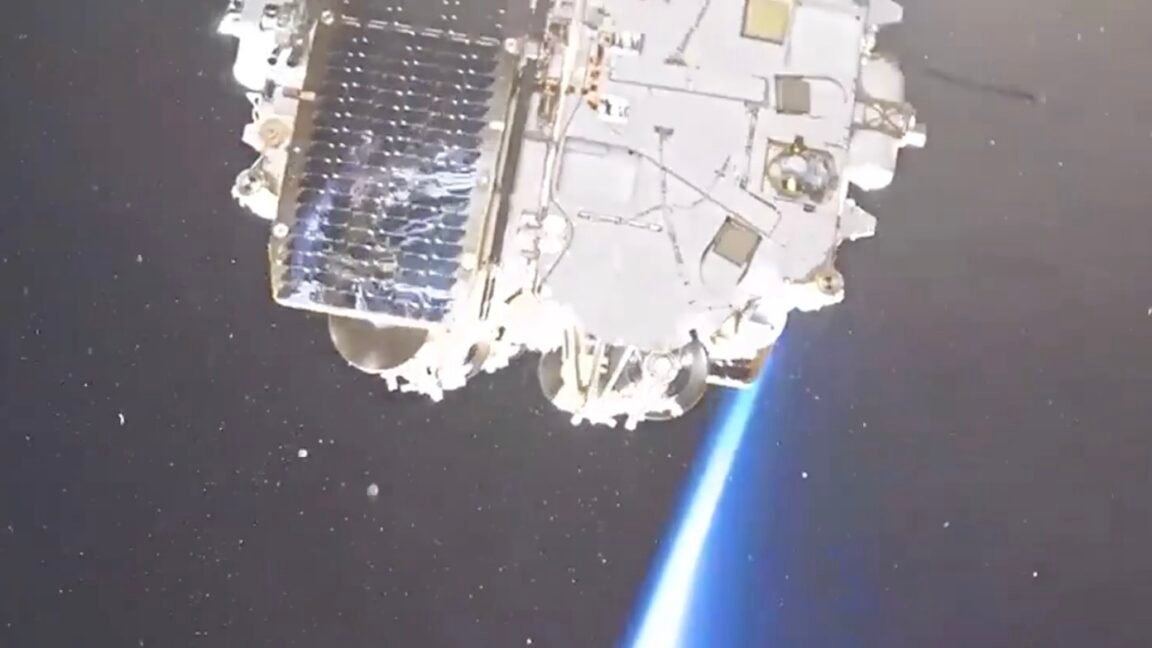
    In its assessment on Monday, the Institute for the Study of War wrote that the second batch of Rassvet satellites “appears to have failed to reach intended operational altitudes.” Zero Rassvets have reached 500 miles, and none of the second group have climbed above 300 miles, whereas much of the first cluster seems to have settled into stable orbits.

    However, there’s a lot we don’t know. Perhaps, for untold reasons, Russian officials decided to abandon plans to orbit the Rassvet satellites at 500 miles. Starlink satellites, after all, fly closer to 300 miles. This would put the Rassvet satellites closer to users on the ground, which comes with performance benefits. But there’s a trade-off in that lower-altitude constellations require more satellites for seamless global coverage.

    Also, networks like Starlink, Rassvet, and China’s Guowang and Qianfan fly their satellites in numerous orbital planes, or pathways. Russian ground teams may be intentionally keeping some of the Rassvet satellites at lower altitudes to allow their orbital planes to drift over a period of many months before eventually lining up with final pathways.

    What we do know is that putting a megaconstellation into orbit is hard to do. At best, Russia’s entire satellite manufacturing sector has produced just a few dozen spacecraft per year since the fall of the Soviet Union. “It turned out we weren’t ready for this,” Yuri Borisov, the former head of Russia’s space agency Roscosmos, said in an interview in 2023.

    Russian forces are clamoring for Rassvet after SpaceX cut off access in February to the Starlink network by unregistered user terminals in Ukraine, circumventing Russia’s illicit usage of satellite communications for military operations. Rassvet had been in the works for years, but the timing of the first Rassvet launch the following month offered Russian military commanders hope of soon regaining access to ubiquitous satellite broadband through a domestic network.

    failing heres rival Russias Starlink
    Share. Facebook Twitter Pinterest LinkedIn Tumblr Email
    Previous ArticleA Practical Introduction to PySpark Window Functions
    Next Article AI Generated Content: How to Read It, Spot It, and Use It Without Being Fooled
    • Website

    Related Posts

    AI News

    Norway considers ban on camera-enabled wearable ‘pervert glasses’

    AI News

    The Army just used a 20-kilowatt laser to take out three drones

    AI News

    Uber is laying off 10% of staff, or 3,300 people

    Add A Comment
    Leave A Reply Cancel Reply

    Top Posts

    Belkin’s kid-friendly wireless headphones are 25 percent off

    0 Views

    Facilitating AI integration with simplicity at scale

    0 Views

    Norway considers ban on camera-enabled wearable ‘pervert glasses’

    0 Views
    Stay In Touch
    • Facebook
    • YouTube
    • TikTok
    • WhatsApp
    • Twitter
    • Instagram
    Latest Reviews
    AI Tutorials

    Quantization from the ground up

    AI Tools

    David Sacks is done as AI czar — here’s what he’s doing instead

    AI Reviews

    Judge sides with Anthropic to temporarily block the Pentagon’s ban

    Subscribe to Updates

    Get the latest tech news from FooBar about tech, design and biz.

    Most Popular

    Belkin’s kid-friendly wireless headphones are 25 percent off

    0 Views

    Facilitating AI integration with simplicity at scale

    0 Views

    Norway considers ban on camera-enabled wearable ‘pervert glasses’

    0 Views
    Our Picks

    Quantization from the ground up

    David Sacks is done as AI czar — here’s what he’s doing instead

    Judge sides with Anthropic to temporarily block the Pentagon’s ban

    Subscribe to Updates

    Get the latest creative news from FooBar about art, design and business.

    Facebook X (Twitter) Instagram Pinterest
    • About Us
    • Contact Us
    • Terms & Conditions
    • Privacy Policy
    • Disclaimer

    © 2026 ainewstoday.co. All rights reserved. Designed by DD.

    Type above and press Enter to search. Press Esc to cancel.