

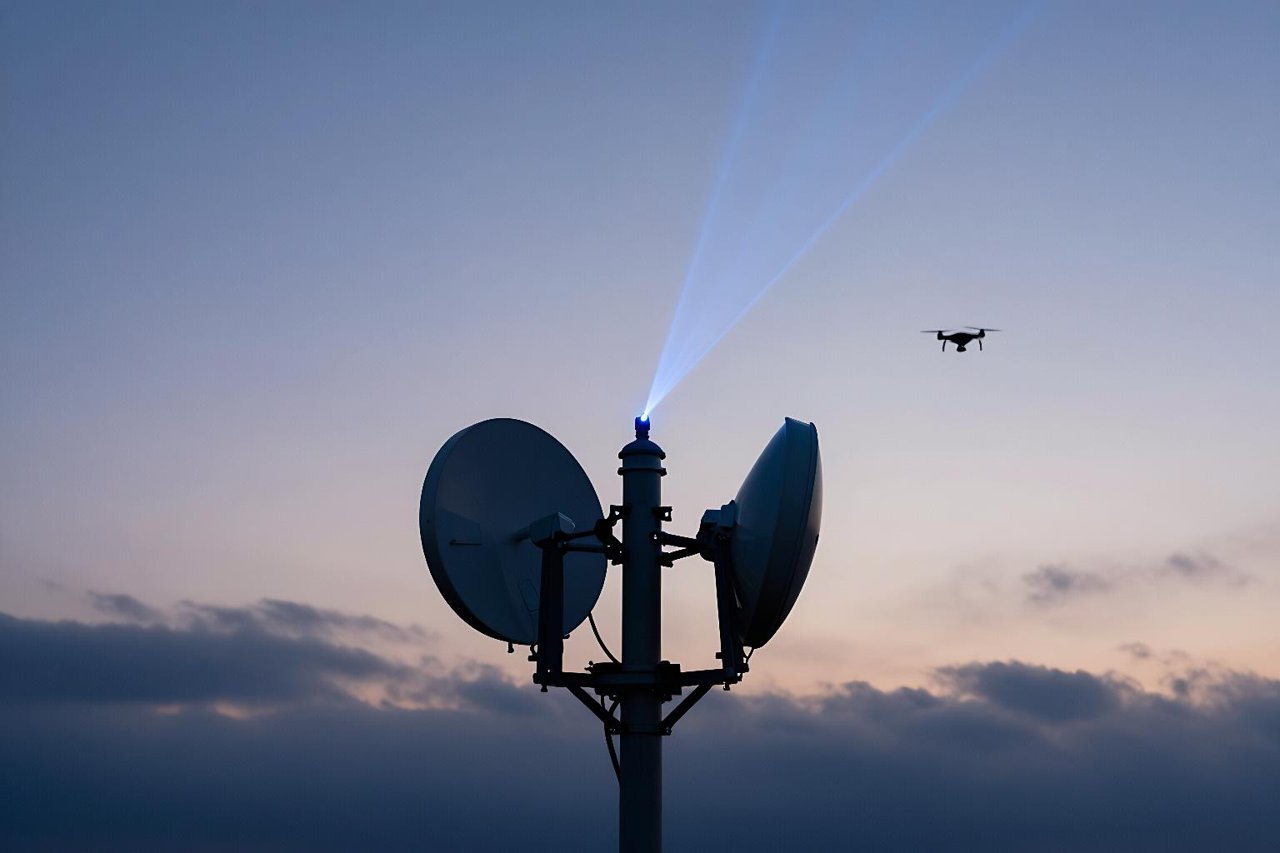
Ask a dozen engineers to define Beam AI and you will get a dozen different answers. The term has become a shorthand for a movement: artificial intelligence that steers, reads, and anticipates focused energy. It applies to laser links, radar beams, high-resolution displays, and even the faint chemical trails that fruit flies use to find dinner.
Biological systems solved beam tracking millions of years ago. Only recently have machines started to catch up. Neural networks can map atmospheric turbulence, measure a moving target’s velocity, and predict where a signal will arrive fractions of a second later. These capabilities turn passive sensors into active tools.
What makes Beam AI different from ordinary machine learning?
Traditional machine learning processes databases and spreadsheets. It predicts customer churn or classifies emails. Beam AI works on the physical world. It operates on things like angular velocity, diffraction limit, and phase noise. The underlying math is different. A system has to learn a continuous control problem rather than solve a classification task. That is why so many robotics teams rely on reinforcement learning to align optical components.
Laser up-link: how NASA tests Beam AI in space
Some of the hardest tests happen off-planet. When NASA’s Artemis II mission sends people back toward the Moon, mission control plans to prove that laser communications can carry enormous amounts of data across interplanetary distance. The craft beams high-resolution video through space, but arrival at an optical ground station depends on precise pointing.
In early tests, the approach worked at ever larger data rates. The engineers demonstrated that space-to-Earth laser comms can scale, and machine learning was central to maintaining the optical lock during cloud cover.
Directed energy and the AI fire-control problem
A 20-kilowatt laser used to sound like a laboratory curiosity. Today it is a counter-drone system. The U.S. Army recently used a 20-kilowatt laser to take out three drones, and the impressive part was not the power; it was the software. The system uses cameras and radar to feed a neural network that decides exactly where to send the beam. The laser then burns through the target at the speed of light. Without AI, this would be nearly impossible because the atmosphere scatters and refracts the beam randomly.
Watch the coverage of that exercise and you will see why the Army just used a 20-kilowatt laser to take out three drones without losing track. It is a clean example of AI closing the loop between detection and emission.
Consumer devices with built-in beam scanning
We do not usually think about consumer electronics as beam-steering systems, but they are. Movie screens use ever-smaller pixel gaps, and augmented reality sunglasses scan light directly into your eye. For years, these devices had a fatal flaw: the miniature projector jittered enough to make text unreadable. AI changed that. Predictive models use data from the glasses’ accelerometer and gyroscope to stabilise the image in real time. The result is a crisp image, even while you walk.
That is why people are starting to ask whether the best way to watch a movie on a pair of sunglasses is a serious proposition. It might be.
What fruit flies teach us about tracking a chemical plume
You can think of an odor plume as a series of fragmented beams. When a fruit fly chases a vial of vinegar, it follows a zigzag path that feels too fast for pure instinct. Researchers have modelled this behavior with a compact neural network that mirrors how the fly compares scent concentration across its two antennae. Engineers are now applying that exact algorithm to ground robots that track gas leaks after industrial accidents. The results look remarkably like the way fruit flies chase invisible ribbons of smell to get to their source.
The brittle computing layer underneath Beam AI
All of this depends on cloud infrastructure. AI models are trained in data centers and often run inference remotely. If the remote service experiences an outage, the beam controller loses its brain. That is a real operational problem. A recent DDoS wave knocked out several Ubuntu services. Developers running mission-critical nodes had to scramble. The incident served as a reminder that software stack reliability is just as important as optics. No photonics package can protect you if Ubuntu services are hit by outages after DDoS attack during a time-critical procedure. Designers therefore build local fallback modes into beam-control systems.
Where Beam AI appears next
The pattern is spreading beyond defence and space. Beam AI is already starting to show up in:
- Autonomous vehicles, where LIDAR and radar beams must distinguish raindrops from a pedestrian.
- Precision agriculture, where AI-controlled sprayers keep chemical droplets inside a band no wider than the crop row.
- Medical robotics, where image-analysis models target ultrasound and laser beams at tissue that would otherwise be risky to reach.
- Satellite constellations, where optical inter-satellite links hand data across the sky without touching a ground station.
The pattern is simple. As photonics hardware gets cheaper, AI becomes the part of the stack that separates meaningful signal from noise. Whether it is an AR lens or a lunar laser terminal, the core challenge is the same: know exactly where the target is, compute the path, and pulse the beam at the precise moment.