

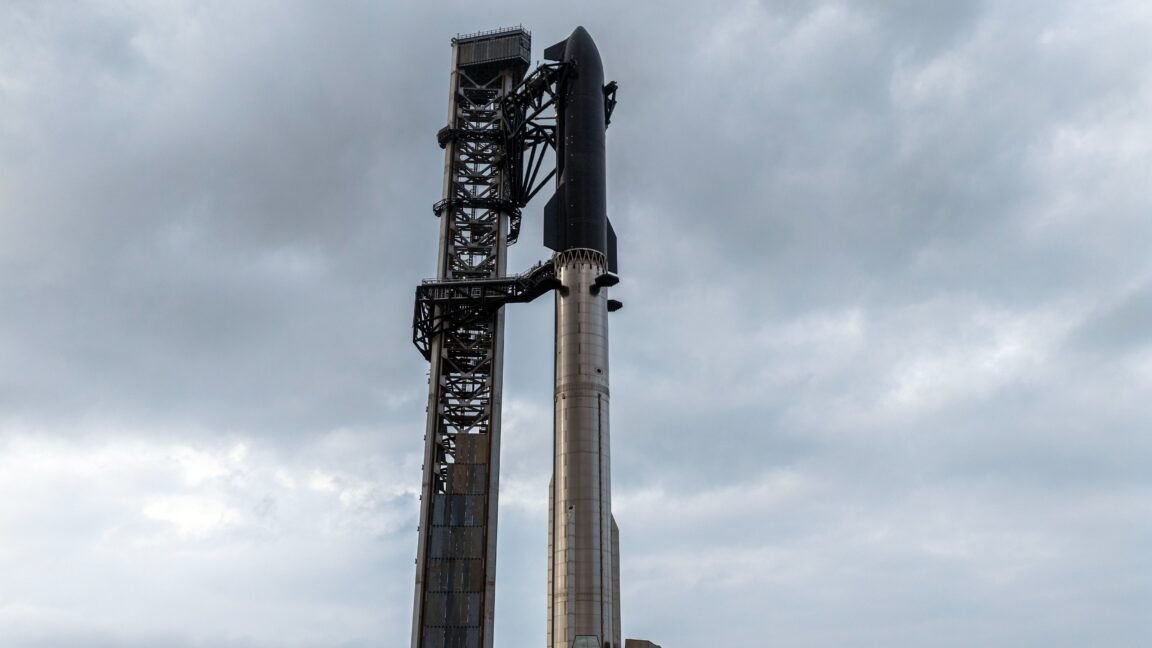
Pending regulatory approval, SpaceX said today it intends to launch its 14th Starship mission as early as September 22. This flight is notable, as it will be the first time that SpaceX attempts to launch the experimental vehicle into orbit.
The company set a target liftoff time of 7:15 am local in Texas (12:15 UTC), with a 75-minute launch window. Sunrise in Brownsville, Texas, is 7:17 am CT, so the launch could make for some striking imagery.
The super heavy lift rocket will be carrying 26 of the larger V3 Starlink satellites into an orbit 275 km above the Earth. In an update on its website, SpaceX said the Starship upper stage will seek to complete six orbits around the Earth before completing its mission after about 10 hours.
Reaching orbit would mark a significant milestone in the company’s Starship development campaign, which conducted its first test flight on April 20, 2023, and has since made progress in fits and starts. With the upcoming mission, SpaceX continues to make modifications to the Starship vehicle as it seeks to improve the third iteration of the Super Heavy booster and Starship upper stage. After recent successes, the company appears to be closer to developing a fully reusable, super heavy lift rocket.
First-stage modifications
During the most recent Starship test flight on July 24, the vehicle’s first stage performed nominally during ascent. However, after a successful boostback burn, the vehicle experienced problems during the return through Earth’s atmosphere.
“In the terminal phase of the burn, the three center engines showed signs of ice clogging, which triggered an early end to the maneuver,” SpaceX said in its update on Tuesday. “The booster went on to attempt a landing burn, with 8 of the 13 planned engines reigniting before the booster made a hard splashdown in the Gulf. The Super Heavy on this upcoming flight has hardware modifications to improve filtering to the engines and software changes to enhance relight reliability.”