

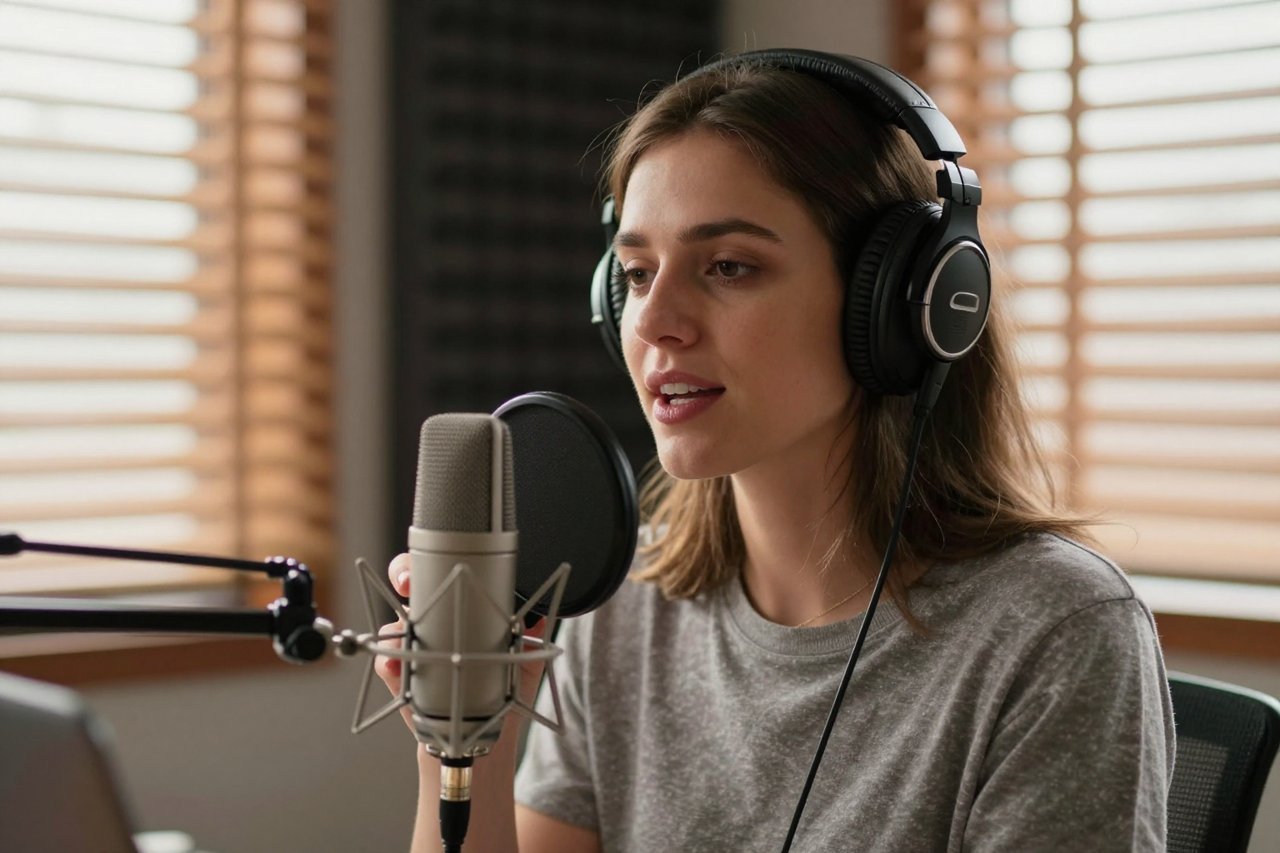
Type a paragraph of script, choose a voice, and you have a finished voiceover before your coffee goes cold. That is the pitch LOVO AI has been selling since 2019, and it explains why the platform keeps turning up in conversations about YouTube automation, e-learning production, and cheap ad voiceovers.
It sits in the same category as ElevenLabs, Murf, and Play.ht, but it has carved out a slightly different niche by bundling video editing into the same subscription. If you have ever priced a professional voice actor for a 1,000-word script, usually somewhere between $200 and $500 before revisions, the appeal is easy to see.
What LOVO AI does in plain terms
Strip away the marketing and LOVO is three products stitched together:
- A text-to-speech engine with a library of roughly 500 voices across more than 100 languages and accents.
- Voice cloning that builds a reusable replica from a short recording.
- Genny, a browser-based video editor that drops generated audio under stock footage, subtitles, and simple animation.
Everything runs in the browser. Nothing to install, no GPU on your end, and very little to configure beyond choosing a plan.
Inside the voice library
Voices that don’t sound like a satnav
Older text-to-speech gave itself away inside a syllable. Flat intonation, odd pauses before commas, a faint metallic edge on every vowel. The current models handle emphasis and pacing well enough that most listeners will not clock the difference on a compressed YouTube track. You can adjust speed, pitch, and volume, and on some voices pick an emotional tone, so the same narrator can carry a product demo and a sombre documentary segment.
Cloning your own voice
Upload a few minutes of clean speech and LOVO builds a model of your voice. Results depend heavily on the source audio. A recording made in a carpeted room with a $90 USB microphone will beat anything captured next to a laptop fan. For creators who want a consistent narrator without booking studio time every week, this feature justifies the subscription on its own.
Dubbing across languages
Drop in a video and LOVO transcribes it, translates the script, and re-voices it, keeping your original voice where the model can manage it. Spanish, Portuguese, Hindi, and Japanese are all supported. It is not flawless. Idioms and jokes often land strangely, so a native speaker should still review anything customer-facing.
Who actually uses it, and for what
Spend time in the user communities and the same jobs come up again and again:
- Faceless YouTube channels publishing several videos a week
- Course creators narrating 40 lessons without hiring 40 times
- Small agencies producing radio-style ads for local clients
- Podcasters adding intros, sponsor reads, or translated episodes
- Developers prototyping phone menu prompts and app notifications
- Authors converting backlist titles into audiobooks
The audiobook case is the most interesting. A 90,000-word novel runs about ten hours of narration, and a human narrator might quote $2,000 to $4,000 plus studio time. Synthetic voices cut that to a monthly fee and an afternoon. Listeners seem more forgiving in non-fiction than in fiction, where performance carries a lot of the emotional weight.
Genny: the video half of the platform
Genny is LOVO’s attempt to own the whole workflow rather than just the audio. You get a timeline editor, templates sized for YouTube, TikTok, and Instagram, a stock media library, auto-generated subtitles, and the ability to drop AI narration straight onto the track.
It will not replace Premiere Pro for anyone doing serious post-production. What it does well is speed. A two-minute explainer that takes an editor an hour in a full editing suite can come together here in fifteen minutes.
How LOVO compares with other AI voice tools
ElevenLabs has the edge on emotional realism, particularly for character work. Murf leans into corporate e-learning, with more emphasis on team features for training content. Play.ht is strong on API access and developer tooling. Descript bundles transcription and editing in a way podcasters tend to love.
LOVO’s differentiator is breadth. One login covers voices, cloning, dubbing, and video, which matters if you would rather not stack four subscriptions. The trade-off is depth: each specialist beats it in its own lane.
It is also worth remembering how quickly this market reshuffles. Compute costs, model releases, and consolidation reshape the field every year, and vendors that look permanent can vanish fast. Monarch Tractor’s collapse and absorption by Caterpillar is a decent reminder of how abrupt that can be. Signing an annual plan with a young AI company is a bet, not just a purchase.
Pricing and where the limits bite
There is a free tier, but treat it as a test drive: limited characters, watermarked exports, and restricted access to premium voices. Paid plans run roughly $29 to $49 a month depending on tier and billing cycle, with annual payment shaving a meaningful chunk off. Enterprise pricing is quoted on request.
The limits that catch people out are character quotas and commercial licensing. Counts burn faster than expected once you factor in revisions, and licence terms differ by tier. Confirming that your plan covers commercial use before you publish client work is worth ten minutes of reading.
The consent question that comes with cloning
Voice cloning deserves more scepticism than it usually gets. Cloning your own voice is straightforward. Cloning someone else’s, even with a nod of permission, sits in a legal grey zone in most countries and is an outright violation in others. LOVO asks for consent confirmation during the process, but a checkbox is not a contract and it is certainly not a release form.
There is a wider pattern in play. AI systems that quietly do things users never agreed to tend to produce exactly this kind of backlash, which is what critics of self-driving programmes keep saying about a stunning lack of transparency in how that data gets handled.
If you publish anything with a synthetic voice, say so. A single line in the description costs nothing and prevents a lot of irritated comments later.
Where synthetic voice is heading next
The next obvious home for generated speech is inside vehicles. Car makers and robotaxi operators are already testing voices that explain what the car is about to do, announcing a reroute or a stop for a pedestrian. As London gets closer to its first robotaxi service, that interface question gets more urgent, because passengers in a car with no driver need reassurance and a calm voice delivers it better than a chime.
Running those models quickly and cheaply is the other half of the problem, which is why hardware matters as much as software. Google’s work on the custom chip driving Waymo’s robotaxi ambitions is a reminder that inference speed shapes what these systems can do in real time. Voice generation is heading the same way: smaller models, running closer to the user, answering in under a second.
Getting the most out of LOVO AI
A few habits separate clean output from obvious AI narration. Write for the ear, not the eye: short clauses, active verbs, no subclauses stacked three deep. Punctuate deliberately, because your commas and full stops are the model’s pacing instructions. Break long scripts into paragraphs and generate them separately, so a bad sentence costs you one regeneration instead of the whole file.
Audition three or four voices on the same paragraph before committing to one. If you clone your own voice, keep the source recordings, because a better model in six months will want the same clean input.
One last step before paying for anything: run your actual script through the free tier. Voice tools are easy to demo and harder to live with, and fifteen minutes with your real content will tell you more than any review, this one included.