

Close Menu
AI News TodayAI News Today

    Subscribe to Updates

    Get the latest creative news from FooBar about art, design and business.

    What's Hot

    Jev vs. LLMs: When AI moves from Generation to Decision-making

    Rocket Report: Era of cheap launch is over? Astra sets early 2027. target for return

    Trump admin using AI to deny medical care for seniors in disastrous experiment

    Facebook X (Twitter) Instagram
    • About Us
    • Contact Us
    Facebook X (Twitter) Instagram Pinterest Vimeo
    AI News TodayAI News Today
    • Home
    • AI News
    • AI Reviews
    • AI Tools
    • AI Tutorials
    • Chatbots
    • Free AI Tools
    • Artificial Intelligence
    AI News TodayAI News Today
    Home»AI News»The Pentagon wants $30 million to build an AI-powered lie detector
    AI News

    The Pentagon wants $30 million to build an AI-powered lie detector

    By No Comments3 Mins Read
    Share Facebook Twitter Pinterest LinkedIn Tumblr Reddit Telegram Email
    The Pentagon wants $30 million to build an AI-powered lie detector
    Share
    Facebook Twitter LinkedIn Pinterest Email

    The move comes at a time of high tension within the Department of Defense. Under Defense Secretary Pete Hegseth, the Pentagon has been increasingly turning to polygraph tests in an attempt to find the sources of alleged leaks to the press. In September, the New York Times reported that around 50 officers on the Joint Staff had been given polygraph tests after news coverage reported on depleted US weapons stockpiles in the war with Iran. 

    Polygraph+ will be run by the Defense Counterintelligence and Security Agency (DCSA), which conducts background checks for the federal government. According to the budget document, which has not yet been approved by Congress, the new technology will be used for vetting prospective employees, and “insider threat detection”. It is not yet clear which specific technologies will be used, and the DCSA did not respond to a request for more information. 

    But other efforts at the Department of Defense offer potential clues. In 2023, the agency’s Defense Innovation Unit (DIU) ran an open submission process to find companies with products that could be used for deception detection.

    It selected two companies to build prototypes: Presage Technologies, which claims to be able to measure heart rate and breathing rate using standard cameras, and Altec Research, a medical sensor company now branching out into non-contact sensing technologies. A screenshot of Altec’s prototype technology released by the DIU shows that it tracks head movement, facial skin temperature, and pore activity. Presage Technologies and Altec Research did not respond to requests for comment. The DIU declined to comment. 

    Altec Research has built a prototype that tracks head movement, facial skin temperature and pore activity. (Altec Research)

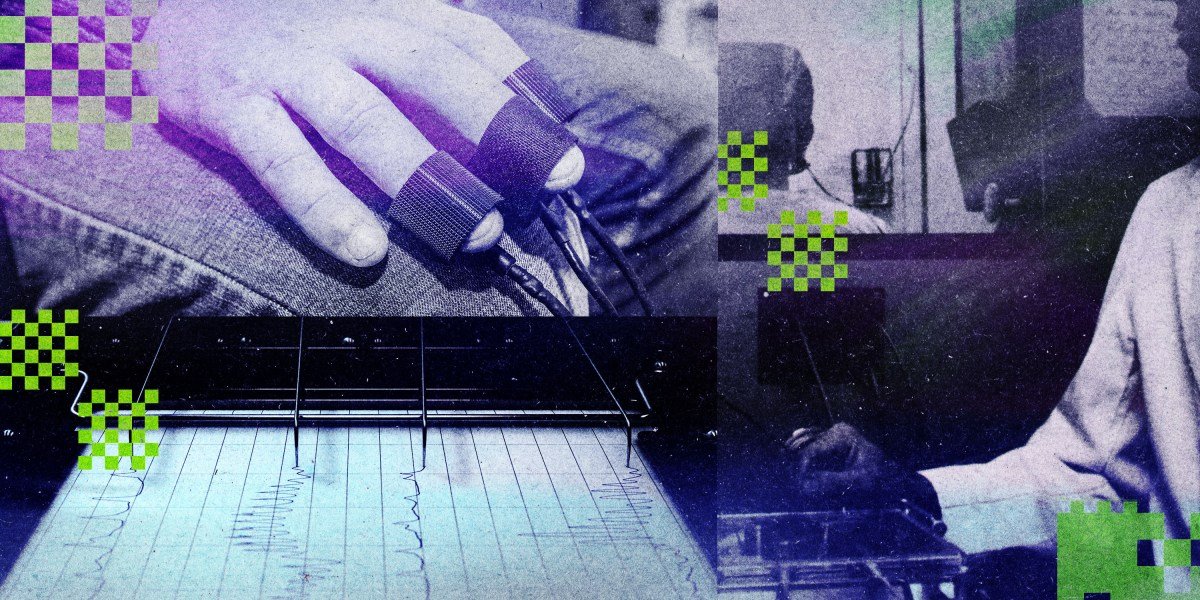
    Current polygraph technology has barely changed since the device was invented in the 1920s. Examiners rely on blood pressure, pulse, breathing, and sweat measurements to determine if someone is lying. They make judgments about the veracity of a respondent’s replies based on differences in their physiological response to baseline questions like, ‘Is the sky blue?’ and target questions like, ‘Have you ever committed a crime?’.

    The federal government conducts tens of thousands of the tests a year while screening employees, but the polygraph has been repeatedly debunked—and its results are rarely admissible in court. In 1983, Congress’s Office of Technology Assessment concluded that there was very limited evidence supporting the polygraph’s use for screening employees, and in 2003, the US National Research Council (NRC) said evidence on its efficacy was “weak at best”. 

    Research suggests humans can spot a lie just over half the time without any technical assistance. The American Polygraph Association claims the polygraph is between 80 and 94% accurate. But the 2003 NRC report pointed out that a screening test with this level of accuracy could still lead to a lot of mistakes. The DoD employs 2.8 million staff—an imperfect system applied at that scale could end up falsely accusing tens of thousands of people.

    There are other issues too. Polygraph interpretations are often subjective: different examiners get wildly different results, and people from minority groups are more likely to be judged as deceptive. What’s more, with training, it’s possible for interviewees to learn a variety of countermeasures that can help beat the test; most commonly, they’llthese usually artificially heighten their body’s physiological response to baseline questions by, for example, stepping on a pin hidden in their shoe. 

    AIpowered build Detector Lie million Pentagon
    Share. Facebook Twitter Pinterest LinkedIn Tumblr Email
    Previous ArticleCal AI’s Zach Yadegari joins the Disrupt 2026 lineup
    Next Article Gemini 3.8 Live with Live Avatar gives Google’s AI a face
    • Website

    Related Posts

    AI News

    Trump admin using AI to deny medical care for seniors in disastrous experiment

    AI News

    2 days left to save up to $200 on a Disrupt 2026 pass

    AI News

    Ando wants to take on Slack with a team messaging app that lets humans and agents work together

    Add A Comment
    Leave A Reply Cancel Reply

    Top Posts

    Jev vs. LLMs: When AI moves from Generation to Decision-making

    0 Views

    Rocket Report: Era of cheap launch is over? Astra sets early 2027. target for return

    0 Views

    Trump admin using AI to deny medical care for seniors in disastrous experiment

    0 Views
    Stay In Touch
    • Facebook
    • YouTube
    • TikTok
    • WhatsApp
    • Twitter
    • Instagram
    Latest Reviews
    AI Tutorials

    Quantization from the ground up

    AI Tools

    David Sacks is done as AI czar — here’s what he’s doing instead

    AI Reviews

    Judge sides with Anthropic to temporarily block the Pentagon’s ban

    Subscribe to Updates

    Get the latest tech news from FooBar about tech, design and biz.

    Most Popular

    Jev vs. LLMs: When AI moves from Generation to Decision-making

    0 Views

    Rocket Report: Era of cheap launch is over? Astra sets early 2027. target for return

    0 Views

    Trump admin using AI to deny medical care for seniors in disastrous experiment

    0 Views
    Our Picks

    Quantization from the ground up

    David Sacks is done as AI czar — here’s what he’s doing instead

    Judge sides with Anthropic to temporarily block the Pentagon’s ban

    Subscribe to Updates

    Get the latest creative news from FooBar about art, design and business.

    Facebook X (Twitter) Instagram Pinterest
    • About Us
    • Contact Us
    • Terms & Conditions
    • Privacy Policy
    • Disclaimer

    © 2026 ainewstoday.co. All rights reserved. Designed by DD.

    Type above and press Enter to search. Press Esc to cancel.