

Close Menu
AI News TodayAI News Today

    Subscribe to Updates

    Get the latest creative news from FooBar about art, design and business.

    What's Hot

    Anthropic’s mid-tier Claude climbs the rankings

    Trump cuts fuel economy standards back to 2014 levels

    AMD will acquire Fei-Fei Li’s World Labs for $8.2 billion

    Facebook X (Twitter) Instagram
    • About Us
    • Contact Us
    Facebook X (Twitter) Instagram Pinterest Vimeo
    AI News TodayAI News Today
    • Home
    • AI News
    • AI Reviews
    • AI Tools
    • AI Tutorials
    • Chatbots
    • Free AI Tools
    • Artificial Intelligence
    AI News TodayAI News Today
    Home»AI News»To keep drug prices high, pharma has been piling up the patents
    AI News

    To keep drug prices high, pharma has been piling up the patents

    By No Comments3 Mins Read
    Share Facebook Twitter Pinterest LinkedIn Tumblr Reddit Telegram Email
    To keep drug prices high, pharma has been piling up the patents
    Share
    Facebook Twitter LinkedIn Pinterest Email

    The cost of healthcare in general is a debilitating, pre-existing condition for Americans. But the high prices of prescription drugs usually stand out as a pain point. While there are many insidious reasons why Americans pay more—often far more—for their medicines than people in peer countries, exploitation of the US patent system is an obvious one.

    A study published Monday in JAMA highlights just how much patent exploitation has grown since 1990. In that time, researchers found that the number of patents on small-molecule drugs has more than tripled, going from an average of 2.1 patents per drug approved in 1990 to 6.9 for those approved in 2019.

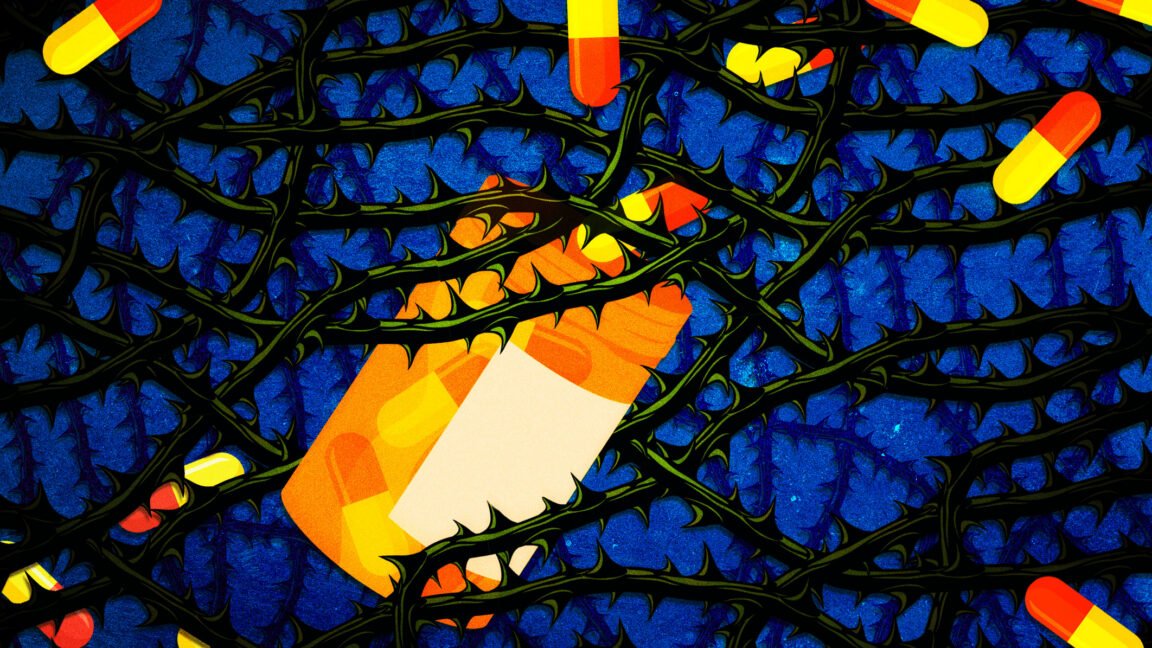
    Most of the growth was in “nonprimary” patents—patents that generally aren’t related to a drug’s active ingredient, but are instead for things like minor tweaks to a drug’s nonactive ingredients, updates to the way the drug is used, or the design of specialty delivery devices, such as auto-injectors. Together, those extra patents on an individual drug can create what’s called a “patent thicket,” which delays the release of affordable generics on the market, keeping drug prices higher for longer without actual clinical advancements.

    The study—led by S. Sean Tu, an expert in drug and patent law at the University of Alabama—found that the increase in patents per drug extended the time in which a drug was patented from an average of two years in 1990 to an average of 6.1 years in 2019.

    “Because patent protection typically determines how long brand-name firms can charge monopoly prices, the rapid growth of nonprimary patents may contribute to limited price competition that benefits patients and the health care system by helping avoid unnecessary spending,” Tu and colleagues write.

    Patent overgrowth

    For the study, Tu and colleagues used publicly available data to look at small-molecule drugs approved by the Food and Drug Administration and the patents filed on those drugs. (Other types of approved drugs, like biologics, are not systematically listed by the FDA in a publicly available database.) The researchers categorized the types of patents associated with each drug and how they affected the term in which the drug remained under patent. The researchers focused on drugs granted FDA approval between 1990 to 2019, giving a five-year follow-up period for patents. Still, this likely underestimates the current sizes of patent thickets, as patent activity is now extending up to nine years after FDA approval, the authors write.

    drug high patents Pharma piling prices
    Share. Facebook Twitter Pinterest LinkedIn Tumblr Email
    Previous ArticleAnthropic’s prospectus details losses, growth, and, yes, a warning that its AI could end humanity
    Next Article AMD will acquire Fei-Fei Li’s World Labs for $8.2 billion
    • Website

    Related Posts

    AI News

    Trump cuts fuel economy standards back to 2014 levels

    AI News

    AMD will acquire Fei-Fei Li’s World Labs for $8.2 billion

    AI News

    Anthropic’s prospectus details losses, growth, and, yes, a warning that its AI could end humanity

    Add A Comment
    Leave A Reply Cancel Reply

    Top Posts

    Anthropic’s mid-tier Claude climbs the rankings

    0 Views

    Trump cuts fuel economy standards back to 2014 levels

    0 Views

    AMD will acquire Fei-Fei Li’s World Labs for $8.2 billion

    0 Views
    Stay In Touch
    • Facebook
    • YouTube
    • TikTok
    • WhatsApp
    • Twitter
    • Instagram
    Latest Reviews
    AI Tutorials

    Quantization from the ground up

    AI Tools

    David Sacks is done as AI czar — here’s what he’s doing instead

    AI Reviews

    Judge sides with Anthropic to temporarily block the Pentagon’s ban

    Subscribe to Updates

    Get the latest tech news from FooBar about tech, design and biz.

    Most Popular

    Anthropic’s mid-tier Claude climbs the rankings

    0 Views

    Trump cuts fuel economy standards back to 2014 levels

    0 Views

    AMD will acquire Fei-Fei Li’s World Labs for $8.2 billion

    0 Views
    Our Picks

    Quantization from the ground up

    David Sacks is done as AI czar — here’s what he’s doing instead

    Judge sides with Anthropic to temporarily block the Pentagon’s ban

    Subscribe to Updates

    Get the latest creative news from FooBar about art, design and business.

    Facebook X (Twitter) Instagram Pinterest
    • About Us
    • Contact Us
    • Terms & Conditions
    • Privacy Policy
    • Disclaimer

    © 2026 ainewstoday.co. All rights reserved. Designed by DD.

    Type above and press Enter to search. Press Esc to cancel.