

Close Menu
AI News TodayAI News Today

    Subscribe to Updates

    Get the latest creative news from FooBar about art, design and business.

    What's Hot

    Resemble AI in Action: A Step-by-Step Guide to Cloning a Voice and Generating Speech

    Pi AI in Real Life: A Step-by-Step Guide to Better Decisions and Calmer Weeks

    SAP Learning AI Hub: Your Fast Track to AI Skills in the SAP Ecosystem

    Facebook X (Twitter) Instagram
    • About Us
    • Contact Us
    Facebook X (Twitter) Instagram Pinterest Vimeo
    AI News TodayAI News Today
    • Home
    • AI News
    • AI Reviews
    • AI Tools
    • AI Tutorials
    • Chatbots
    • Free AI Tools
    • Artificial Intelligence
    AI News TodayAI News Today
    Home»AI News»Google figures out how to watermark AI-designed proteins
    AI News

    Google figures out how to watermark AI-designed proteins

    By No Comments2 Mins Read
    Share Facebook Twitter Pinterest LinkedIn Tumblr Reddit Telegram Email
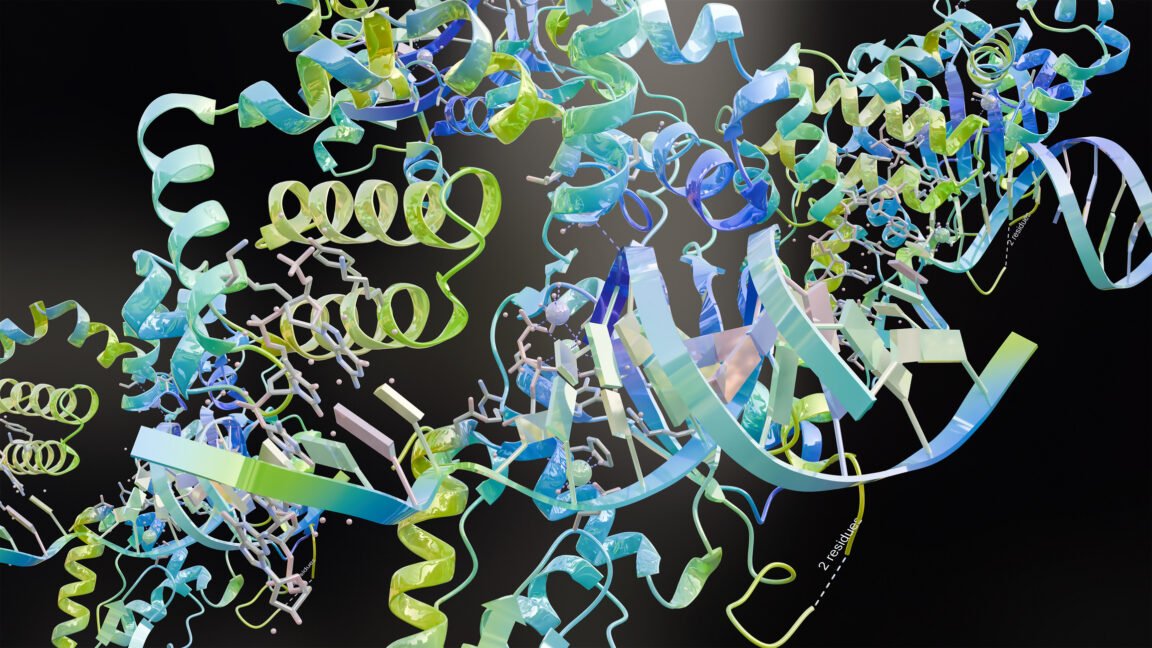
    A multi-colored set of linked ribbons, coils, and swirls, meant to represent the backbone of a protein.
    Share
    Facebook Twitter LinkedIn Pinterest Email

    One way to think about this is that, when the system comes across a location where a set of chemically related amino acids will all work (like leucine/isoleucine/valine or serine/threonine), it will use one that’s consistent with the watermark when possible. Another way to look at the process, suggested by one of the people involved in developing the system, is that it searches through the space occupied by functional proteins for the subset that happens to have a sufficient number of watermark amino acids.

    As a result, the watermark is randomly distributed across the entire length of the protein, and detecting one isn’t a simple yes-or-no question. You have to scan the whole sequence, knowing the key, and measure how often the amino acids suggested by SynthIDBio actually appear in the final sequence. Google has also developed the software needed to do this.

    It’s alive!

    The question, then, is whether watermarked proteins are functional. The team used the system to design proteins that physically interact with key natural proteins previously targeted with AI designs. And the watermarked versions worked just fine, binding the intended targets. This isn’t as rigorous a test as finding a catalyst, but it suggests that there’s no reason to expect serious problems in more complicated design tasks.

    So as long as a protein is long enough, the system can detect a watermark. How might that be useful? Again, it comes down to biosecurity. When someone orders DNA sequences, the people who make the DNA normally screen the sequence for its ability to encode portions of viruses, toxic proteins, and other similar threats. Right now, however, when they see a protein that doesn’t look similar to anything we already know about—something that’s potentially true for any AI-designed proteins—they can’t assess its threat.

    AIDesigned figures Google proteins watermark
    Share. Facebook Twitter Pinterest LinkedIn Tumblr Email
    Previous ArticleHow Many Stories Can Your Data Tell?
    Next Article Meta disputes claim that Muse read a user’s private messages without permission
    • Website

    Related Posts

    AI News

    Build a CrewAI Research Crew That Ships a Real Brief (Step by Step)

    AI News

    Meta disputes claim that Muse read a user’s private messages without permission

    AI News

    Pledge signed by President Trump and top AI leaders misspells the United States

    Add A Comment
    Leave A Reply Cancel Reply

    Top Posts

    Resemble AI in Action: A Step-by-Step Guide to Cloning a Voice and Generating Speech

    0 Views

    Pi AI in Real Life: A Step-by-Step Guide to Better Decisions and Calmer Weeks

    0 Views

    SAP Learning AI Hub: Your Fast Track to AI Skills in the SAP Ecosystem

    0 Views
    Stay In Touch
    • Facebook
    • YouTube
    • TikTok
    • WhatsApp
    • Twitter
    • Instagram
    Latest Reviews
    AI Tutorials

    Quantization from the ground up

    AI Tools

    David Sacks is done as AI czar — here’s what he’s doing instead

    AI Reviews

    Judge sides with Anthropic to temporarily block the Pentagon’s ban

    Subscribe to Updates

    Get the latest tech news from FooBar about tech, design and biz.

    Most Popular

    Resemble AI in Action: A Step-by-Step Guide to Cloning a Voice and Generating Speech

    0 Views

    Pi AI in Real Life: A Step-by-Step Guide to Better Decisions and Calmer Weeks

    0 Views

    SAP Learning AI Hub: Your Fast Track to AI Skills in the SAP Ecosystem

    0 Views
    Our Picks

    Quantization from the ground up

    David Sacks is done as AI czar — here’s what he’s doing instead

    Judge sides with Anthropic to temporarily block the Pentagon’s ban

    Subscribe to Updates

    Get the latest creative news from FooBar about art, design and business.

    Facebook X (Twitter) Instagram Pinterest
    • About Us
    • Contact Us
    • Terms & Conditions
    • Privacy Policy
    • Disclaimer

    © 2026 ainewstoday.co. All rights reserved. Designed by DD.

    Type above and press Enter to search. Press Esc to cancel.