

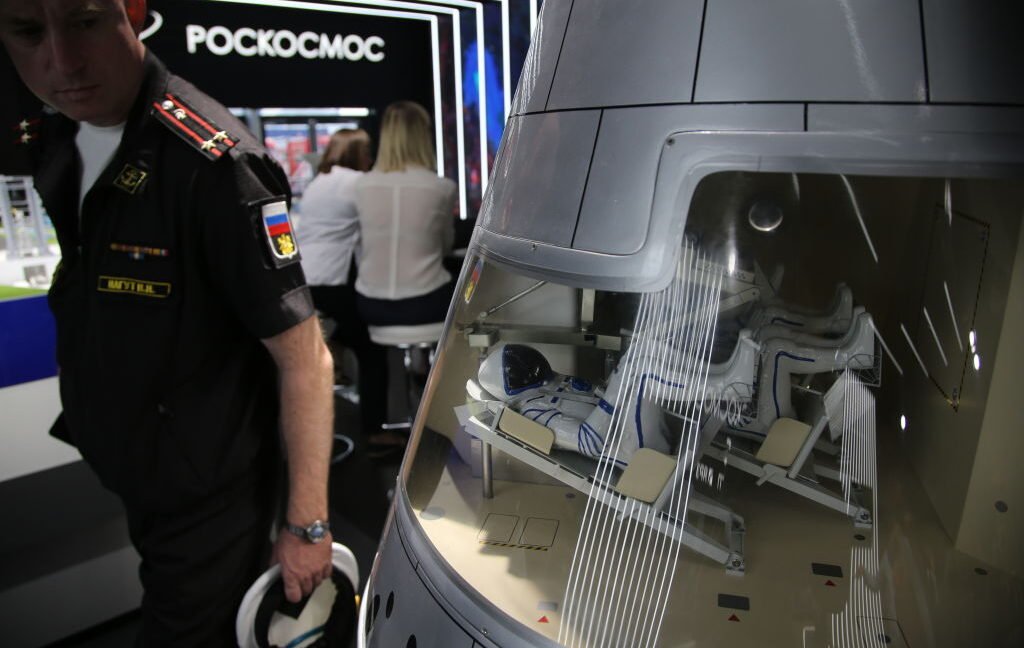
Bakanov, in comments translated for Ars by Rob Mitchell, told the publication that tests of the spacecraft’s parachute system will begin this fall.
“The first step is the launch and testing of a new, promising, reusable manned transport spacecraft,” he said. “And in the fall, there will be a parachute drop and testing in the Far East.”
According to the publication, the spacecraft will also “undergo tests in emergency rescue modes during an emergency at the launch pad” later this year, and in 2027, tests will occur “in the zone of maximum dynamic pressures.”
Aspirational launch dates
It’s not clear from the report whether these tests will involve real flight hardware, boilerplate vehicles, or mockups. However, the reference to the “zone of maximum dynamic pressures” presumably refers to Max-Q and suggests that some kind of launch abort test will occur. This would be a significant step toward a spaceflight.
The article also says Russian space officials are currently holding to a debut crewed launch of the spacecraft in 2028 or 2029, likely on the Angara A5M rocket. This is probably not a date to write down in ink just yet. Four years ago, Russian President Vladimir Putin spoke confidently about the “Eagle” spacecraft and the resumption of Russia’s lunar program.
Clearly, they have not happened.
Whatever it will be called, and whenever it’s completed (if ever), Russia’s next-generation crewed spacecraft is intended to supplant the Soyuz spacecraft for flying cosmonauts into low-Earth orbit and to have the versatility to fly humans to the Moon.