

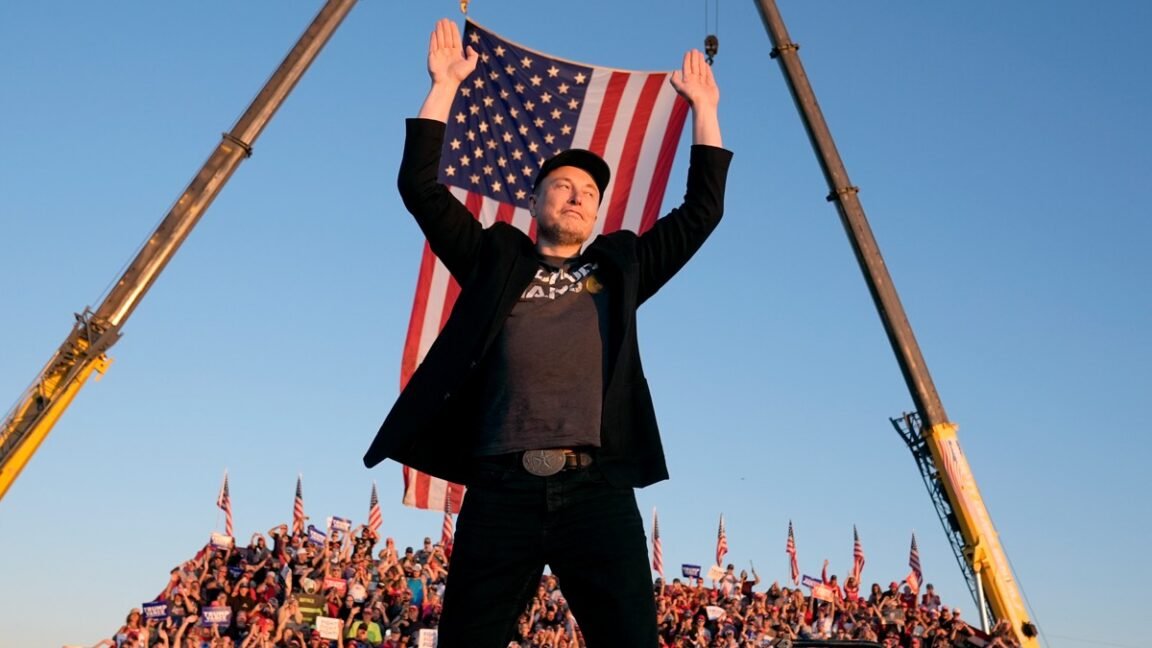
Elon Musk is a very familiar figure to Ars readers, given his massive influence (for better and worse) on the technology sector over the last 20 years. Oscar-winning director Alex Gibney’s latest biographical documentary—simply titled Musk—covers a lot of well-known ground and challenges the carefully crafted public image of Musk as a visionary tech titan.
Gibney’s documentary presents Musk as more of a Gilded Age confidence man, rejiggered for the 21st century: an investor cosplaying as an inventor whose real genius is pumping stocks and dazzling investors and the public alike with visions of a high-tech utopian future. The film is bound to push all the right outrage buttons, whether one is a Musk fan or a detractor—which makes it very much a product of the peculiar social media-driven era in which we live.
Gibney has been making documentaries since the 1980s, covering such varied subjects as Jimi Hendrix, Hunter S. Thompson and gonzo journalism, WikiLeaks, Scientology, Steve Jobs, Elizabeth Holmes (the subject of another forthcoming documentary, You Can See Everything, featuring comedian Nathan Fielder), Boris Becker, The Sopranos creator David Chase, alleged Russian interference in the US 2016 presidential election, the opioid epidemic, and cyclist Lance Armstrong. He snagged his first Oscar nomination for 2005’s Enron: The Smartest Guys in the Room, and won the Oscar for Best Documentary Feature two years later for Taxi to the Dark Side.
Tackling the subject of Elon Musk seems like a natural progression from those earlier works. Gibney has never been one to shy away from controversy, but even before Musk’s release, the film drew the ire of its subject and threats of a defamation lawsuit. There were even (as yet unfounded) rumors that Universal Pictures was getting cold feet about theatrically releasing the film in international markets.
There’s certainly no shortage of material for Gibney to work with and the film covers the most well-known aspects of Musk’s life: Tesla and the fatalities linked to its driver-assistance systems, SpaceX, Starlink, his purchase of Twitter, his shift from warning about the risks of AI to fully embracing it with Grok, his embrace of Trump, the creation of DOGE, his alleged drug use, and his 14 (possibly more) children. Those interviewed include ex-wife Justine Musk, Kara Swisher, Martin Eberhard, Geoffrey Hinton, former MAGA influencer Ashley St. Clair (who bore a child by Musk), Cory Doctorow, Adam Becker, and Sam Harris. David Byrne co-wrote and performed an original song for the soundtrack, “Let Me Sell You a Dream,” incorporating more of Musk’s words.