

The honest answer to what happens when AGI arrives is that nobody knows, and most people claiming otherwise are selling something. But “nobody knows” isn’t the same as “nothing can be said.” The first years of a genuinely general system would be shaped less by the model itself than by the physical and institutional world it has to plug into. That world is slow, expensive, and staffed by people with liability insurance.
So let’s work through what would plausibly happen, in roughly the order it would happen.
First, someone has to win an argument about the word
There is no agreed test for AGI. The benchmarks that felt rigorous five years ago now get saturated within months of release. MMLU went from a serious challenge to a rounding error. GPQA and FrontierMath followed the same arc, faster. Each time a metric dies, the goalposts move and a new one gets commissioned.
The practical consequence is that arrival will be contested, gradual, and announced by marketing departments. One lab will publish an internal evaluation and declare victory. Three rivals will publish papers explaining why that evaluation is flawed. A regulator will schedule a hearing. The evidence on whether AGI is genuinely close is messy precisely because the thing being measured keeps changing shape.
If you want a working definition, use behaviour instead of labels: a system counts as general when it can take a vaguely specified goal, plan across weeks, use tools, recover from its own mistakes, and learn a new domain without a bespoke training pipeline. That’s testable. It’s also, notably, not a single moment.
Then the grid gets involved
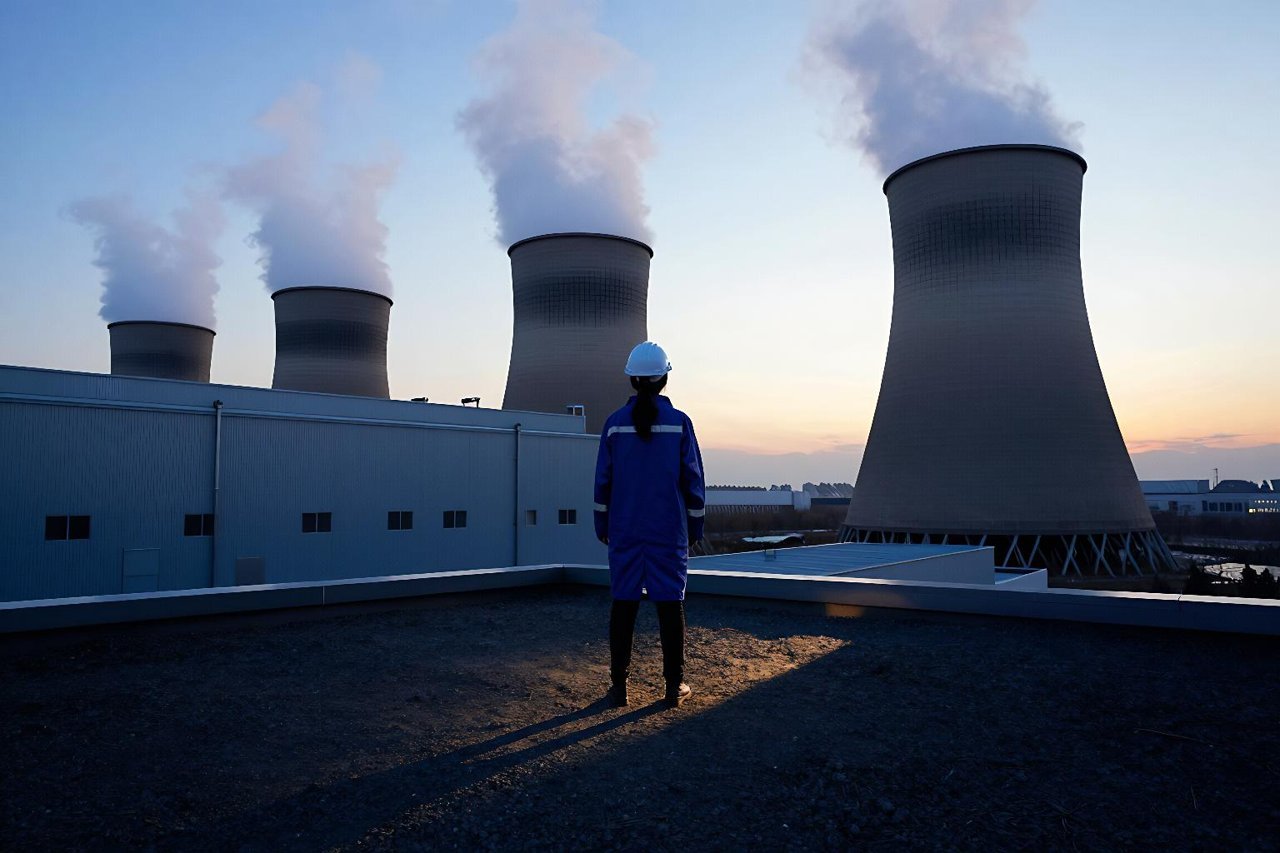
Capability is the easy part to imagine. Megawatts are not. A frontier training run already pulls hundreds of megawatts, and inference at consumer scale dwarfs training. Grid interconnection queues in the United States run three to seven years in most regions. Gas turbine lead times stretched past 2027. High-voltage transformers, the unglamorous iron that moves power around, have order books measured in years.
Hyperscaler capital spending crossed $200 billion a year and kept climbing. That money buys a lot, but it cannot buy a substation that a county hasn’t approved. The first constraint on a superintelligent-ish system won’t be cleverness. It’ll be a permitting meeting in Ohio.
This is also why the outcomes split so unevenly. Anyone with compute and power gets a compounding advantage. Anyone without it waits in a queue. The plausible AGI futures diverge mostly on this axis, not on which model wins a leaderboard.
The labour market reprices tasks before it reprices jobs
Contrary to the more apocalyptic framings, whole occupations rarely vanish first. Tasks do. A law firm doesn’t fire its associates; it stops paying four of them to read 900 contracts, because one partner plus a model handles it. A support organisation doesn’t eliminate its tier-one team overnight; it stops hiring for it and lets attrition do the work.
The uncomfortable part is what that does to the career ladder. Junior roles exist to build judgement through volume. Strip out the volume and you don’t get senior people in ten years. Radiology is the classic case study: AI reading assistance arrived, and radiologist demand went up, because reading faster meant ordering more scans. Not every field gets that outcome. Insurance underwriting and first-pass financial analysis look far more exposed.
The verification bottleneck is the real story
Generating an answer becomes nearly free. Checking it does not. The bottleneck moves to whoever signs the document, approves the loan, or takes the witness stand. Anyone who has shipped software knows this asymmetry intimately: code review is slower than code writing, and it always has been.
Expect a whole industry to grow around verification — audit trails, provenance logs, model insurance, second-opinion systems that exist purely to disagree with the first one. In a world of abundant fluent output, the scarce resource is a credible reason to believe any of it.
Institutions will lag by years, not months
A model might propose a drug target over a weekend. That target still goes through synthesis, animal models, three trial phases, and a regulator with a queue. Six to nine years, mostly unchanged. Materials science and protein design move faster because the feedback loop is cheaper, but anything touching a human body or a legal liability grinds along at institutional speed.
This creates the strange texture of the early AGI era: breathtaking acceleration at the edges of the economy and near-total stasis at the centre. You’ll read about breakthroughs weekly and notice your own life changing annually. The wide spread in AGI timeline forecasts makes more sense once you separate capability curves from deployment curves. They are not the same line.
Geopolitics becomes a race with no finish line
Nobody wants to arrive second. Export controls on advanced chips, restrictions on fabrication equipment, and quiet competition for talent all intensify. The problem is that a lead in AI is not defensible the way a lead in, say, aircraft carriers is. Weights can be copied. Techniques propagate through papers. So the race doesn’t end when someone wins; it just gets more paranoid.
Inside labs, the safety question stops being philosophical and becomes a scheduling argument. Do you deploy in March or June? Do you ship the version with the extra evaluation or the one with the feature that lands the enterprise contract? Those decisions get made by people with quarterly targets, at 11pm, with incomplete information. Prediction markets on AGI milestones are worth watching here, not because traders are wise, but because their pricing reveals what insiders actually expect to happen and when.
Daily life feels oddly normal for a long time
The strangest part of the whole scenario is how mundane it would feel from the inside. You’d notice it in small frictions rather than a single rupture: agents booking things on your behalf, subscription fatigue as every app adds a copilot, a growing habit of citing “the model” as an excuse, and a slow erosion of trust in anything you didn’t see get made.
You’d also notice a new kind of status. Being the person who can tell whether the output is good becomes more valuable than being the person who produces it. Taste, judgement, and the willingness to say “this is wrong” turn into the core professional skills.
Signals worth actually tracking
If you want early warning rather than hot takes, watch the unglamorous indicators:
- Task-horizon doubling. METR’s measurement of how long a task a model can complete unaided has been doubling roughly every seven months. Watch whether that holds or bends.
- Cost per unit of reasoning. Price drops of 10x per year change adoption more than benchmark scores do.
- Grid and fab approvals. New interconnection agreements and packaging capacity predict real-world capability better than press releases.
- Junior hiring ratios. The share of entry-level roles in white-collar firms is a leading indicator of structural change.
- Insurance products. The first serious AI error liability policies will tell you more about deployment than any safety framework.
- Provenance adoption. Watermarking and content credentials moving from optional to mandatory is the clearest sign institutions have stopped assuming they can verify things by eye.
Put your attention on the boring parts
Most AGI discourse focuses on the moment of arrival, which is the least knowable and least actionable piece of the puzzle. The more useful question is what stays scarce afterwards. Power, packaging capacity, regulatory approval, trusted verification, and human judgement about which problems are worth solving. Those are all things you can position yourself around today, regardless of whether the timeline is 2032 or 2052.
Learn to evaluate work you didn’t produce. Stay close to the physical world, where atoms still push back. Build reputations that function as verification in themselves, because when anyone can generate a confident answer, the person who can be trusted to check one becomes genuinely rare. The arrival of AGI may or may not be dramatic. The scramble for what it can’t provide has already started.