

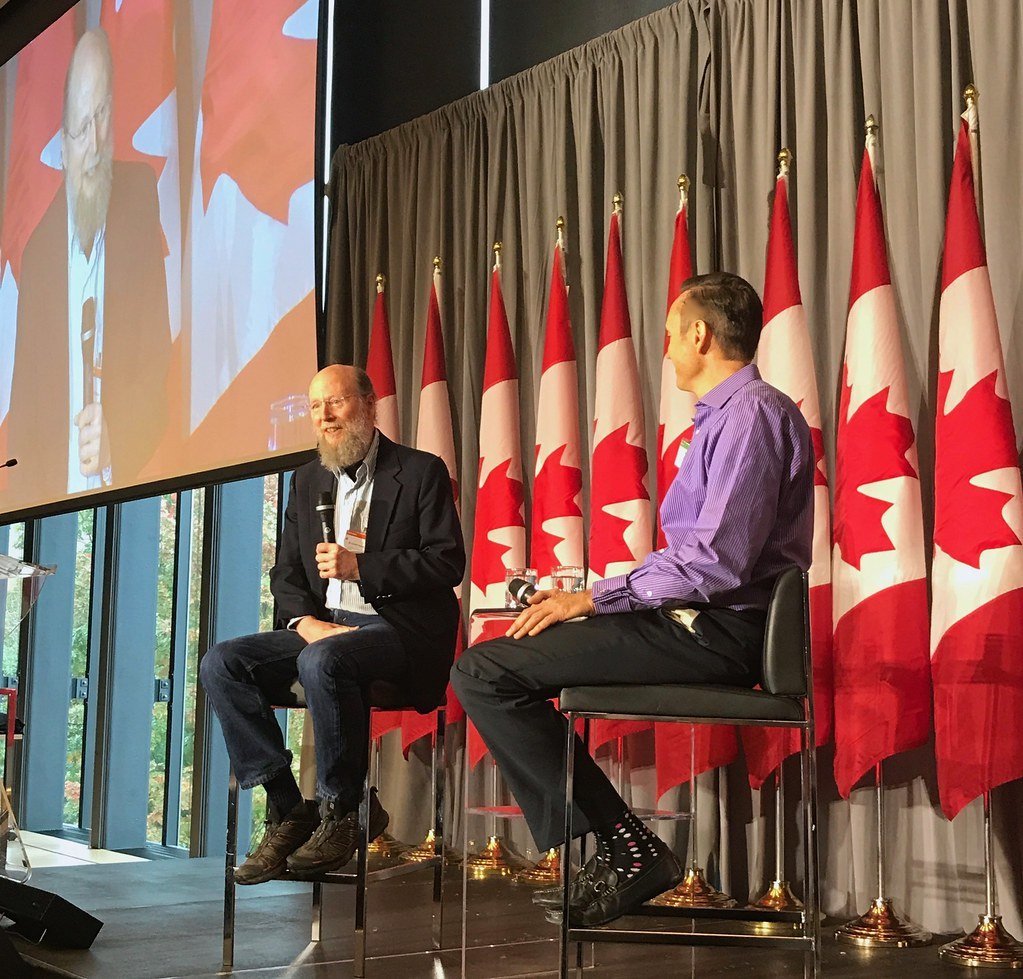
Shane Legg has been giving roughly the same answer for fifteen years. Ask him when machines will match humans across the board and he’ll put something like a 50% chance on 2028, a number he floated long before large language models made the question fashionable. Legg isn’t a commentator. He co-founded DeepMind in 2010, wrote a doctoral thesis on machine superintelligence in 2008, and now holds the title Chief AGI Scientist. Most conversations about DeepMind AGI researchers end up circling the orbit he sits at the centre of.
What follows is a practical map of that orbit: who sets the technical direction, who decides what “general” even means, and who is paid to be worried.
The org chart nobody publishes
DeepMind launched in London in 2010 and was acquired by Google in 2014 for a reported figure north of $500 million. In April 2023 it merged with Google Brain, and the combined Google DeepMind now runs Gemini, the AlphaFold line and a long tail of smaller research groups. Headcount sits in the thousands, spread across London, Mountain View, Zurich and New York.
“DeepMind AGI researchers” isn’t a formal job title there. It’s shorthand for three overlapping clusters: the people who set the direction of frontier models, the ones who study what general intelligence would mean in measurable terms, and the safety staff whose remit is to slow things down when the first two move quickly. That third cluster is bigger than outsiders expect. The company has employed philosophers, policy specialists and formal verification researchers for years, and several hold review roles that can hold up a launch.
The names that keep coming up
Shane Legg and the definition problem
Legg’s 2008 thesis, Machine Super Intelligence, is where a lot of the field’s vocabulary originates. Three years later he and Marcus Hutter published work proposing that intelligence be measured as an agent’s ability to succeed across a broad range of environments rather than on any single task. That framing is still the one most researchers reach for.
He is also on the author list of “Levels of AGI”, a 2023 paper that split the concept into stages: Emerging, Competent, Expert, Virtuoso and Superhuman, scored along two axes of depth and autonomy. It’s worth reading because it quietly concedes something the marketing never does. At the time of writing, no system cleared the “Emerging” bar on a broad reading, and the authors were candid that the word “general” carries most of the weight in the acronym.
Demis Hassabis: the long-horizon operator
Hassabis was a chess prodigy at 13, designed theme-park simulation games in his twenties, then took a PhD in cognitive neuroscience before co-founding DeepMind. The public milestones under his watch are unusually concrete: AlphaGo beating Lee Sedol 4-1 in Seoul in 2016, AlphaFold 2’s performance at CASP14 in 2020, and the 2024 Nobel Prize in Chemistry shared with John Jumper for protein structure prediction.
His stated timeline for AGI has hovered around “a few years, maybe a decade” for most of the last ten years. He frames the goal as understanding the nature of intelligence rather than shipping a product, which is a meaningful distinction when you’re deciding what to build next.
Koray Kavukcuoglu and the scaling camp
Kavukcuoglu moved from research leadership into the CTO role and now oversees the technical strategy behind Gemini. Alongside him sits Oriol Vinyals, a vice president of research and Gemini co-lead, and a wider group whose working assumption was stated bluntly by Nando de Freitas in 2022: it’s all about scale now. Fewer hand-engineered inductive biases, more compute, more data, better objectives. That bet has held up well enough that the sceptics inside the building have largely gone quiet in public.
They built their own scoreboard
DeepMind doesn’t simply chase benchmarks. It writes them. The 57-game Atari suite that anchored the deep reinforcement learning era came out of this lab, and the team contributed heavily to the BIG-bench collaboration. The pattern is consistent: publish an evaluation before the models can pass it, then watch the gap close.
The trouble is that most of these tests measure narrow slices of competence. A system can score well on competition mathematics and still fail to plan a two-week project. If you want to understand what the numbers actually represent, it helps to look closely at what DeepMind’s AGI benchmarks really measure, including the parts the summary tables leave out.
The safety wing isn’t a press office
Google DeepMind published its Frontier Safety Framework in May 2024, built around Critical Capability Levels covering cyber offence, biosecurity, machine learning R&D and autonomous operation. The idea is to identify capability thresholds in advance, run evaluations against them before deployment, and apply mitigations if a model trips one.
Rohin Shah, Geoffrey Irving, Anca Dragan and Murray Shanahan are among the researchers whose names appear repeatedly in this work. Shanahan came to the lab from philosophy and has spent years arguing that the term AGI is fuzzier than most press coverage admits. The framework is voluntary, applies unevenly across products, and has already been revised once. For a closer read on the mechanics, this breakdown of DeepMind’s AGI safety frameworks and the hard problems behind them is more useful than any keynote.
Where the researchers visibly disagree
The lab is not a monolith. Timelines differ by years depending on who you ask. Some researchers treat scaling as sufficient; others think a genuine architectural gap remains around continual learning and long-horizon memory. There’s an ongoing argument about whether “AGI” should be dropped entirely in favour of specific capability claims.
Watch the pattern of predictions rather than any single quote. The dates, the people behind them and the reasoning shift in revealing ways, and Google’s AGI predictions tracked over time show how much of that movement is genuine technical confidence versus competitive positioning.
Reading Gemini as a progress report
Gemini is the most useful public window into what this group can actually build. Multimodal input, very long context, and increasingly agentic tool use are real advances. The gaps are just as visible: sustained autonomy over hours rather than minutes, reliable self-correction, and learning from experience after training ends.
The honest question isn’t whether Gemini passes a vibe check for consciousness. It’s whether the model can hold a goal across a long stretch of interruptions and recover from its own mistakes, which is a far harder and more useful test. An assessment of whether Gemini is AGI, and what it still can’t do, is a decent starting point for calibrating expectations.
How to follow the work without the noise
Most coverage of DeepMind AGI researchers is recycled from conference talks. The primary sources are more informative and considerably less breathless:
- Author searches on arXiv. Track Legg, Shah, Irving and Vinyals by name. New safety papers tend to appear months before the products they describe.
- Model cards and limitations sections. The list of things a model is explicitly not evaluated on is often more revealing than the benchmark table.
- Framework revisions. Each new version of the Frontier Safety Framework tells you which capability the lab now thinks is close enough to warrant a tripwire.
- Hiring pages. Teams that quietly double in size are teams that matter to the roadmap, and postings frequently name the exact problem being worked on.
The signal worth trusting is rarely a podcast soundbite. It’s the distance between what a launch announcement claims and what the next round of internal evaluations quietly tightens up. That gap, more than any single researcher’s forecast, is where the real state of the project shows through.