

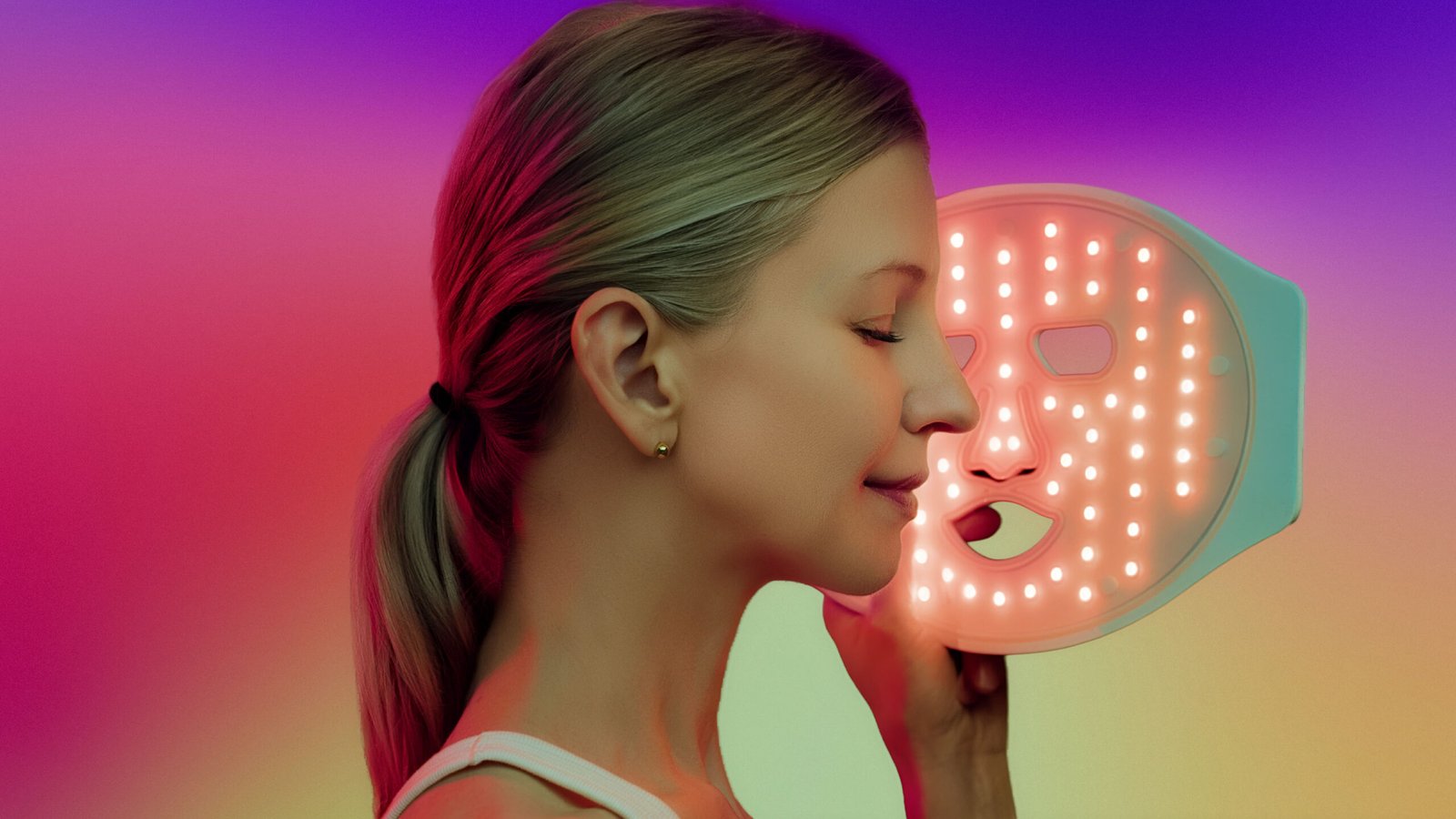
Red light, also known as LED face masks, have become popular skincare devices for people looking to reduce wrinkles, stimulate collagen production, reduce inflammation or clear acne. But as with any health or wellness tech, it’s important that you understand what to look for in an LED mask and how to use it before you put one on your face.
Curious about common mistakes people make with LED face masks that ruin their results, I reached out to a dermatologist and plastic surgeons for their thoughts and advice.
The Best LED Face Masks That Will Improve Your Skin’s Appearance
1. Having unrealistic expectations
If you purchase an LED face mask thinking you’ll get instant, overnight results, think again.
“LED masks are not a quick fix, and most people need to use them consistently for several weeks before they notice a difference,” board-certified dermatologist Dr. Roya Javid told CNET.
For instance, CNET’s favorite LED face mask, the Shark CryoGlow, says that it will take four weeks to see clearer skin and two months to see firmer skin.
2. Not using it consistently
If you don’t use your LED mask as directed and over time, then you definitely won’t see the results you’re expecting.
Dr. Anthony Admire, a board-certified plastic surgeon, facial rejuvenation specialist and founder of AdmireMD Plastic Surgery + Skin Clinic, told CNET that many of his patients only use an LED mask for a week or two and then abandon it when they don’t see dramatic changes.
“Like any form of photobiomodulation, the benefits are cumulative and require regular use over time,” said Admire. Photobiomodulation is a type of low-energy light therapy that uses LEDs to treat skin conditions, promote healing and more.
It’s especially important that you follow the manufacturer’s instructions to achieve results and avoid unwanted side effects.
“In general, regular use matters more than doing longer or more intense sessions,” added Javid. “A simple way to explain it is: LED masks are a little like exercise for your skin. One session will not do much, but regular use over time may lead to noticeable improvement.”

In order for your LED face mask to be effective, you have to use it over time.
Dr. Dennis Gross
3. Purchasing based on social media hype
If you purchase an LED mask based solely on marketing, celebrity endorsements or social media fanfare without looking at its specs and clinical data or making sure it’s FDA-cleared and from a reputable brand, you might not be getting the most bang for your buck. And you definitely want to get the latter, considering that these devices can cost hundreds of dollars.
“The reality is that not all LED devices are created equally and not all are equally effective,” Dr. David Lieberman, a Stanford-trained, double board-certified plastic and reconstructive surgeon at L&P Aesthetics, told CNET.
In particular, you’ll want to focus on the device’s power output, wavelengths and overall quality.
What to look for in an LED mask
All three doctors recommend LED masks with a red light wavelength in the 630 to 660-nanometer range, and near-infrared light between 810 to 850 nm. For acne, Javid recommends blue light around 415 nm, ideally in combination with red light to help reduce inflammation.
Red light mostly targets your superficial skin to improve tone and texture, increase collagen production and reduce inflammation. Near-infrared light, according to Admire, “penetrates more deeply into the dermis and subcutaneous tissues, making it particularly useful for supporting tissue healing, reducing inflammation and promoting postoperative recovery.”
You should also pay attention to the device’s irradiance or power density. While acknowledging there is no one ideal number, Admire recommends devices with an irradiance of 30 to 100 mW/cm² at the treatment surface.
However, Javid said that higher irradiance isn’t always better, as treatment time and total energy delivered to the skin are also significant factors. As a result, you should think twice before purchasing an LED mask from a company that doesn’t disclose the irradiance or treatment dose.
“The technology is supported by good science, but only when the device is capable of delivering a biologically meaningful dose of light,” said Admire.
4. Using it as a skincare replacement
An LED mask is not a replacement for your entire skincare routine. “They can be a helpful add-on, but they do not replace sunscreen, retinoids or other proven skincare treatments,” said Javid.
That goes for any skincare device. While it can be an addition to your current regimen, it isn’t a reason to stop using your other skincare — especially daily sunscreen.

5. Thinking it will replace in-office treatments
When compared to in-office treatments with higher power, LED masks’ results can take longer to become noticeable and will be more subtle.
“For patients looking for a more optimized treatment, I recommend considering a medical practice or clinic that offers professional LED therapy,” said Lieberman. “In-office systems can provide a more controlled treatment with higher energy delivery and may be incorporated into a broader skin health plan or recovery protocol when appropriate.”
According to Admire, at-home LED masks also aren’t a replacement for procedures that address volume loss, structural aging or loss of skin firmness and elasticity.
6. Not paying attention to eye protection
If you’re considering an LED mask without built-in eye goggles, don’t purchase it. Without this eye protection, you could experience eye fatigue or light-induced headaches if you’re sensitive to light or have a certain eye condition.
“People should follow the device’s instructions about eye protection and be especially cautious if they have a light-sensitive condition or take medications that increase photosensitivity,” said Javid.

The bottom line
While an LED mask can be a helpful addition to your existing skincare routine, you shouldn’t purchase one without ensuring that the brand mentions the wavelength, irradiance, clinical data and whether it’s FDA-cleared. Eye protection is also essential.
Know that your LED mask won’t work if you don’t use it consistently and according to the manufacturer’s instructions. It also won’t deliver the same results as in-office treatments.
But once you do your due diligence and approach the device with appropriate expectations, you can safely enjoy your LED mask as part of a skin or self-care regimen.

See full bio