

Close Menu
AI News TodayAI News Today

    Subscribe to Updates

    Get the latest creative news from FooBar about art, design and business.

    What's Hot

    HBO Max: The 26 Absolute Best Movies to Watch

    The US gets the worst phones

    OpenAI CEO apologizes to Tumbler Ridge community

    Facebook X (Twitter) Instagram
    • About Us
    • Contact Us
    Facebook X (Twitter) Instagram Pinterest Vimeo
    AI News TodayAI News Today
    • Home
    • Shop
    • AI News
    • AI Reviews
    • AI Tools
    • AI Tutorials
    • Chatbots
    • Free AI Tools
    AI News TodayAI News Today
    Home»AI Reviews»Speed vs. Depth: How Does Using AI for Work Affect Our Confidence?
    AI Reviews

    Speed vs. Depth: How Does Using AI for Work Affect Our Confidence?

    By No Comments3 Mins Read
    Share Facebook Twitter Pinterest LinkedIn Tumblr Reddit Telegram Email
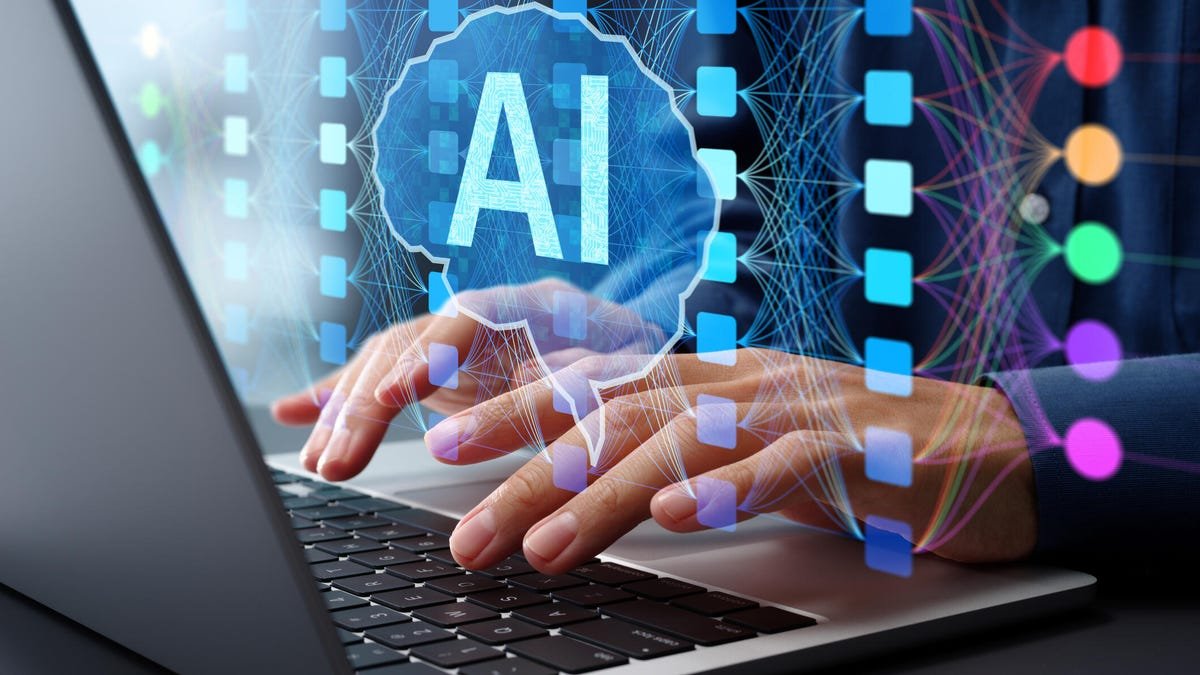
    two hands typing on a laptop while a holograph of a brain with multiple lines feeding into it, inside the brain are the letters AI
    Share
    Facebook Twitter LinkedIn Pinterest Email

    Be careful delegating your work to that chatbot: A new peer-reviewed study published this month by the American Psychological Association found that people who heavily rely on AI tools for work tasks reported feeling less confident in their abilities and had less ownership over their work.

    There has been growing research on how our brains function when we use AI tools. A landmark study from MIT in 2025 found that our brains don’t retain as much information or employ necessary critical thinking skills when writing tasks are outsourced to AI chatbots. 

    This new study aimed to understand how our human behavior, specifically executive functions — like strategic planning and decision making — can change when AI is part of the process. 

    Sarah Baldeo, the study’s author and a Ph.D. candidate in AI and neuroscience at Middlesex University in England, noted in the paper that these findings do not show that AI is harming or causing cognitive decline. Rather, they “highlight variability in how users distribute effort between themselves and AI systems under conditions of convenience and competence.” Meaning, people who use AI are making conscious trade-offs, and their confidence fluctuates as a result.

    The study encouraged nearly 2,000 adults to use AI for a variety of workplace tasks, like prioritizing projects based on deadlines, explaining a strategy and developing plans with incomplete information. It then asked them to self-report their levels of confidence, ownership and AI reliance, including whether they significantly altered the AI-generated outputs. 

    Overall, confidence varied with AI use. A greater reliance on AI was associated with lower confidence in their ability to reason independently. Participants also reported relatively few modifications, meaning they often did not tweak or put their own stamp on what the AI spit out. But those who modified the AI’s work reported feeling more confident and more like the author. Men reported higher reliance on AI than women.

    The trade-off between speed and depth was one of the main themes participants reported.

    “I got an answer faster, but I don’t think I thought as deeply as I normally would,” one of the participants said.

    AI Atlas

    This reflects one of the biggest caveats of using AI tools. Chatbots, for example, can produce text quickly, but it doesn’t always have the same level of subject matter expertise you need. AI tools can also hallucinate, or make up facts, so AI-generated output needs to be verified before it’s used. 

    The office is one of the main places where people use AI tools. We’re moving beyond just chatbots, with agents that can autonomously handle tasks that would’ve otherwise required a human. 

    But these tools aren’t necessarily making our work lives better; one study found they made workdays longer and more unpleasant. As AI becomes increasingly embedded in our work lives, it’s important to understand how it’s shaping our mental attitudes. Qualities like confidence and ownership of our work are important factors in determining the quality of our work life. 

    Affect Confidence Depth speed work
    Share. Facebook Twitter Pinterest LinkedIn Tumblr Email
    Previous ArticleCausal Inference Is Different in Business
    Next Article Why Tokyo is the most important tech destination of 2026
    • Website

    Related Posts

    AI Reviews

    HBO Max: The 26 Absolute Best Movies to Watch

    AI Reviews

    Sharge’s fast Qi2.2 MagSafe battery is down to $70 with a free USB-C cable

    AI Reviews

    Why Cohere is merging with Aleph Alpha

    Add A Comment
    Leave A Reply Cancel Reply

    Top Posts

    HBO Max: The 26 Absolute Best Movies to Watch

    0 Views

    The US gets the worst phones

    0 Views

    OpenAI CEO apologizes to Tumbler Ridge community

    0 Views
    Stay In Touch
    • Facebook
    • YouTube
    • TikTok
    • WhatsApp
    • Twitter
    • Instagram
    Latest Reviews
    AI Tutorials

    Quantization from the ground up

    AI Tools

    David Sacks is done as AI czar — here’s what he’s doing instead

    AI Reviews

    Judge sides with Anthropic to temporarily block the Pentagon’s ban

    Subscribe to Updates

    Get the latest tech news from FooBar about tech, design and biz.

    Most Popular

    HBO Max: The 26 Absolute Best Movies to Watch

    0 Views

    The US gets the worst phones

    0 Views

    OpenAI CEO apologizes to Tumbler Ridge community

    0 Views
    Our Picks

    Quantization from the ground up

    David Sacks is done as AI czar — here’s what he’s doing instead

    Judge sides with Anthropic to temporarily block the Pentagon’s ban

    Subscribe to Updates

    Get the latest creative news from FooBar about art, design and business.

    Facebook X (Twitter) Instagram Pinterest
    • About Us
    • Contact Us
    • Terms & Conditions
    • Privacy Policy
    • Disclaimer

    © 2026 ainewstoday.co. All rights reserved. Designed by DD.

    Type above and press Enter to search. Press Esc to cancel.