

Thea Energy has raised an oversubscribed $100 million Series B led by U.S. Innovative Technology Fund, the fusion startup told TechCrunch. The sum places the company among the better-funded fusion startups, giving it an improved chance at achieving a commercial reactor.
The new funding will help Thea expand manufacturing for its uniquely designed smaller magnets and begin construction of Eos, its “power plant relevant” demonstration device, starting next year. Thea previously closed a $20 million Series A in early 2024. The new round brings total private investment to $130 million, the startup told TechCrunch.
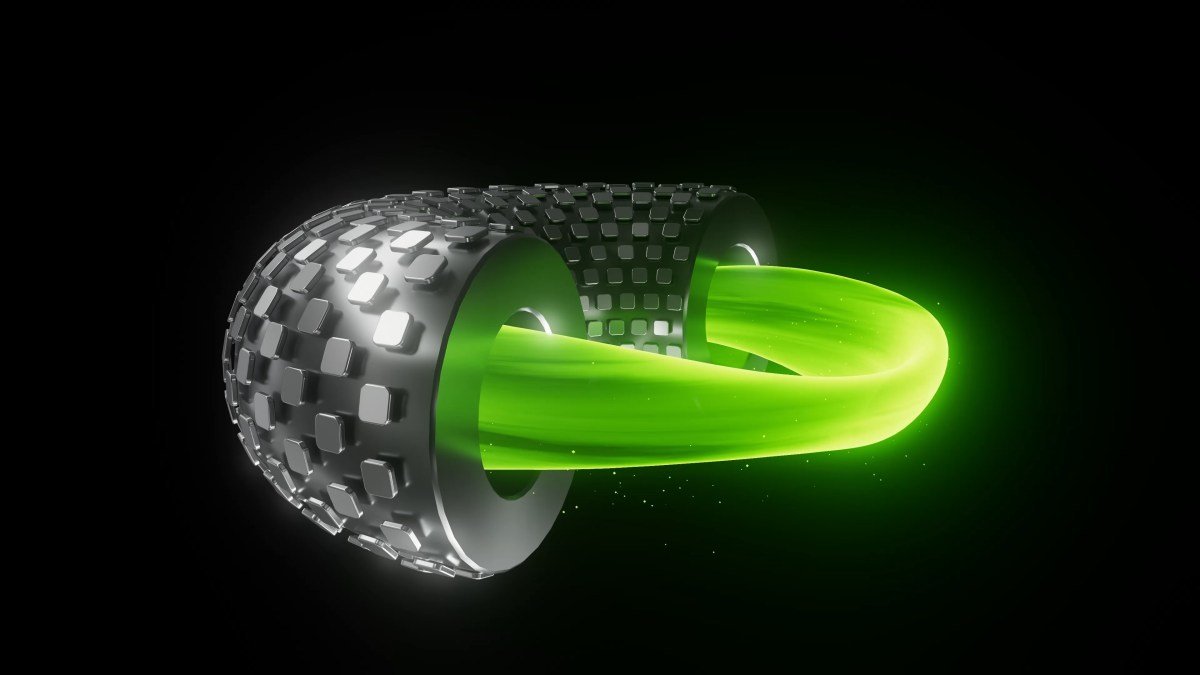
Magnets are at the core of many fusion power plant designs — they are what keeps the superheated matter called plasma compressed and burning hot enough to fuse atoms, which then release heat and energy. But Thea’s magnets are different: Each rectangular magnet can be tuned to create the shape of the reactor’s overall magnetic field. Thea likens these to pixels in a computer monitor, which collectively follow software’s instructions to create the text and images the monitor displays.
For Thea, that flexibility will be important. The type of reactor it’s designing is known as a stellarator. Stellarators are capable of keeping plasma in very stable configurations, but to do so, they have to twist and bend to accommodate the plasma. That’s in contrast to tokamaks, another leading magnetic design, which uses more brute force to keep plasma confined.
But the irregular shape of a stellarator drives up complexity and cost for magnet manufacturing. Thea is betting that by shrouding its reactor core in dozens of regular magnets, it can use software to control the smaller, turnable magnets and create a stellarator-shaped magnetic field inside a much simpler physical structure.
The software should also help with assembling the reactor. Thea has purposefully installed test magnets out of alignment, but the software was able to compensate.
Thea hopes to complete its Eos demonstration reactor in 2030 with a commercial version, known as Helios, coming online in 2034. The timing brings it in line with competitors like Commonwealth Fusion Systems, which has said it hopes to bring its Arc reactor online in Virginia in the early 2030s.
If Thea’s pixel-inspired magnets work, the company could enjoy a manufacturing advantage. The startup has built dozens of iterations of its full-scale magnets in its lab in Jersey City. Meanwhile, other fusion startups pursuing magnetic confinement have had to build massive assembly halls to make reactor-scale magnets.
The small magnets don’t do all the lifting, though. Thea uses 12 magnets of four different shapes outside the planar coils to handle most of the plasma confinement. The 300-plus smaller magnets serve to fine-tune the plasma. Being reliant on larger magnets erodes the company’s manufacturing advantage to some extent.
Still, any simplification of a fusion reactor — which are already some of the most complex devices ever made by humans — will help pave the road to fusion power. An extra $100 million doesn’t hurt, either.
Other investors who participated in the round include General Innovation Capital Partners, Linse Capital, Calm Ventures, Climate Capital, Divergent Capital, Emerald Technology Ventures, Gaingels, Idemitsu Kosan, Overlay Capital, Timescale Ventures, and What If Ventures.
Update: Thea’s early designs called for the use of 12 encircling magnets. They were not added to later versions.
When you purchase through links in our articles, we may earn a small commission. This doesn’t affect our editorial independence.