How did SpaceX streamline the Raptor engine? The Construction Physics newsletter recently dove into the publicly available material on SpaceX’s Raptor engine to explore how the company simplified the design of the machine from the initial Raptor 1 version to the Raptor 3 version. The result is an excellent read on some of the things SpaceX engineers did in their pursuit of an engine to power the super heavy lift, rapidly reusable Starship rocket. Importantly, the article also notes that the Raptor 3 remains a work in progress.
Simpler, but not simple … “While this streamlining has made the Raptor engine simpler in the sense that various individual parts have been eliminated, it was still an enormously complex task to get it to work, and there’s a huge amount of internal complexity added to the Raptor 3 that these pictures don’t show,” the newsletter states. “And the problems haven’t been completely ironed out: the first launch attempt of Starship’s flight test 13 was aborted automatically by the vehicle’s flight software at T-0 (right before liftoff) this past July when several Raptor 3 engines failed to start.”
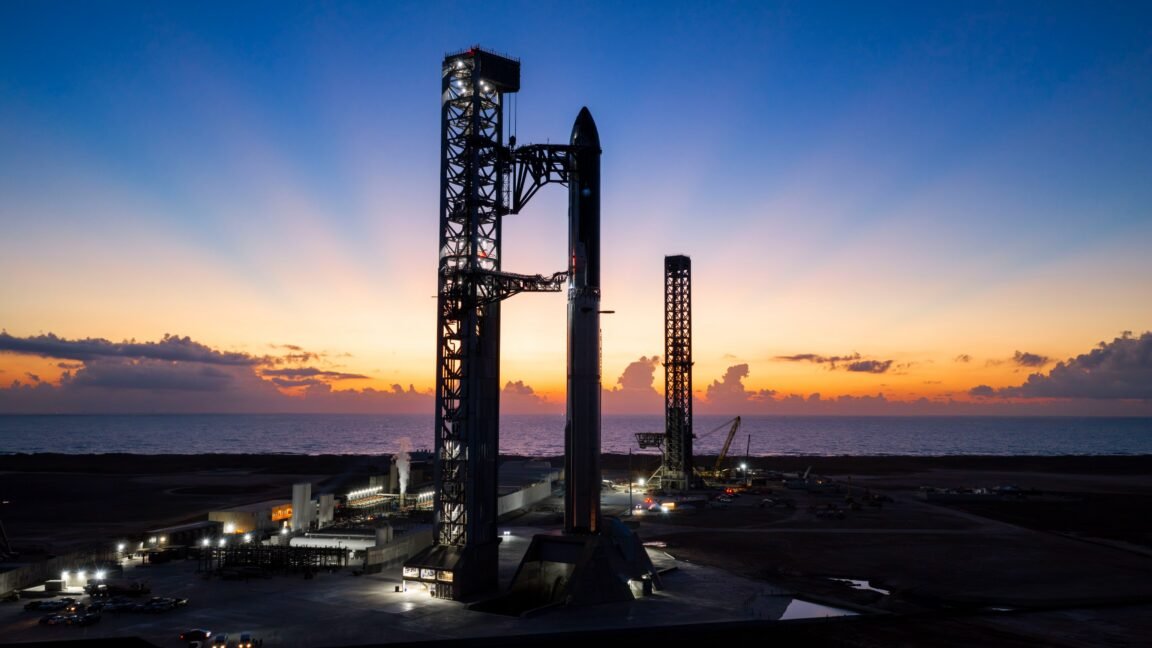
Starship stacked for next orbital flight. SpaceX assembled a Starship-Super Heavy rocket on the launch pad at Starbase in South Texas early Wednesday as it awaited approval for the vehicle’s first orbital flight, Spaceflight Now reports. Liftoff of Starship Flight 14 could come as soon as Monday, Sept. 28, but first SpaceX needs to receive regulatory approval from the Federal Aviation Administration.
A dawn launch … The rocket’s Starship upper stage, designated Ship 41 or S41, began its journey from production site about three miles west of the pad at around 7:45 p.m. CDT (0045 UTC) Tuesday night. Nearly 5.5 hours later, the 52-meter-tall (171 feet) ship was lifted by the launch tower’s chopsticks and carefully placed atop Super Heavy booster B21. Assuming approval from the FAA, SpaceX could launch Flight 14 as soon as 7:15 am CDT (1215 UTC) on September 28 on a nearly 10-hour mission that will see the deployment of 26 next-generation Version 3 Starlink satellites.
Next three launches
September 26: Electron | Owlright, Owlright, Owlright | Māhia Peninsula, New Zealand | 00:15 UTC
September 26: Falcon 9 | USSF-385 | Vandenberg Space Force Base, Calif. | 11:56 UTC
September 28: Starship | Flight 14 | Starbase, Texas | 12:15 UTC