

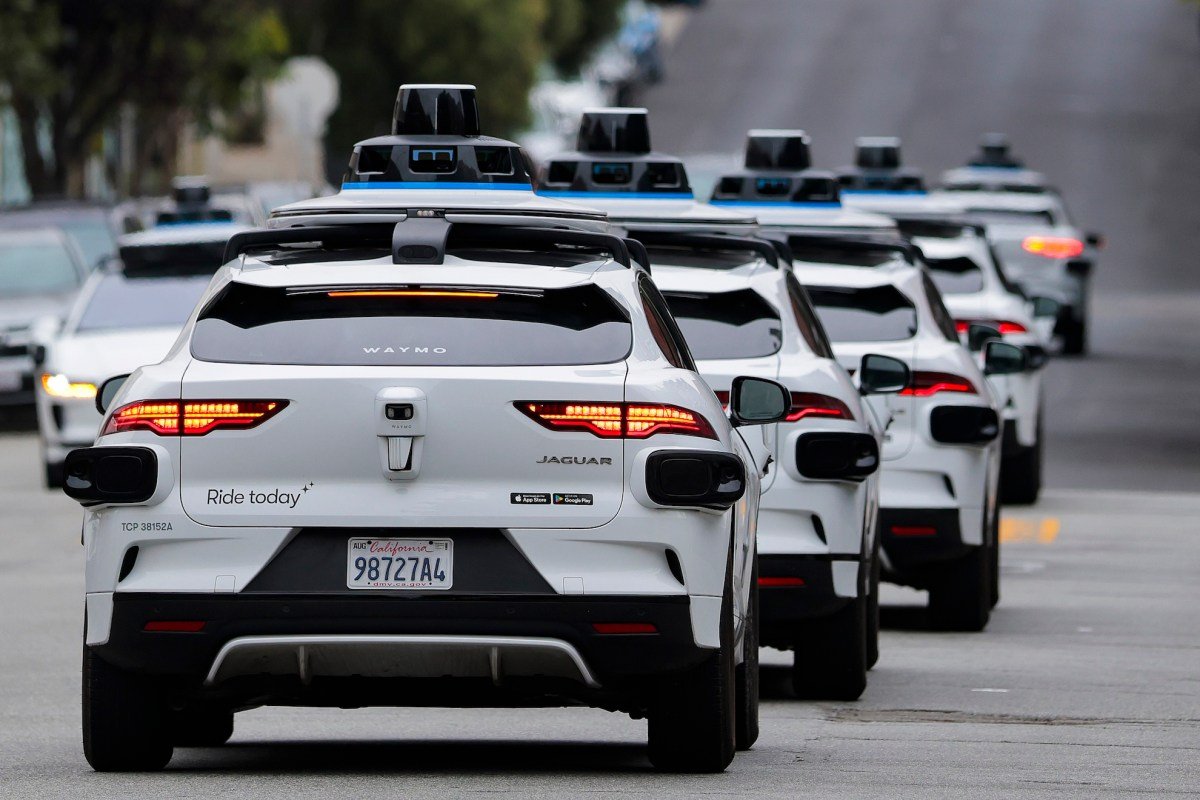
Autonomous vehicle (AV) technology companies like Tesla, Waymo, and Zoox will have to provide first responders with local, on-the-ground support when their robotaxis cause problems under a new California law. The companies could also face penalties if a robotaxi blocks police or firefighters for more than 30 minutes.
Senate Bill 1246, which was signed into law by Gov. Gavin Newsom, sets a series of new rules for AVs designed to improve safety and response times when they become disabled or interfere with emergency responders. The law also creates ways to hold these companies accountable if they don’t.
The law follows a string of high-profile incidents in California in which robotaxis broke down and disrupted traffic, drove into crime scenes, or impeded first responders.
The bulk of those incidents involved Waymo, the largest robotaxi operator in the U.S. , which has about 4,000 autonomous vehicles in its commercial fleet across the country. About 1,200 of those are in the San Francisco Bay Area. A TechCrunch investigation earlier this year identified a number of incidents in which Waymo relied on first responders to manually drive its vehicles when they encountered problems.
Those incidents prompted state and federal lawmakers to call for stricter rules governing robotaxis, particularly how they behave around first responders. The National Highway Traffic Safety Administration (NHTSA) even sent a letter to AV developers demanding that they come up with “solutions” to the problem.
This new California law attempts to address those concerns, at least in the state.
“California has embraced autonomous vehicles, but we cannot embrace innovation at the expense of public safety. When an autonomous vehicle crashes, breaks down, blocks a roadway in an emergency, or gets in the way of law enforcement or first responders, there must be clear accountability,” said state Senator Dave Cortese, who introduced the bill.
Under the law, AV developers can only employ remote drivers who are based in the United States and those drivers must hold a U.S. driver’s license. The requirement is meant to address concerns around how companies use remote operations when autonomous vehicles run into trouble.
The term “remote operations” has been interpreted very broadly and there is still little known about the methods AV companies use. The “remote drivers” term in the law is far more specific. It refers to a human who directly operates or drives the vehicle from afar. Tesla is the only company that has publicly stated that it has remote operators who can take direct control of its robotaxis.
Other companies, including Waymo, have said they use forms of remote assistance, in which the self-driving system remains in control and a human employee can provide guidance or send software commands if needed. Waymo has a global network of remote assistance staff, including in the Philippines, and operates command centers in Arizona and Michigan. Zoox’s remote operations teams are based in the United States, according to the company.
The law will also require AV companies to notify cities, towns, and other local jurisdictions about the location and status of vehicles during system-wide failures and to provide “local incident technicians” who can assist with AV accidents and obstructions. Companies cal also be fined if an AV blocks first responders during an emergency for more than 30 minutes.
Companies including Waymo and Zoox have said they will comply.
“We are grateful for the amendments made to the bill, which ensure autonomous vehicle operators can still feasibly serve Californians,” a Waymo spokesperson said in an emailed company statement. “Waymo is committed to making roads safer in California and continually improving our service.”
The law goes into effect in July 2028. The California Department of Motor Vehicles, which regulates autonomous vehicles in the state, will set guidelines on certain aspects of the new law, including required response times.
When you purchase through links in our articles, we may earn a small commission. This doesn’t affect our editorial independence.