

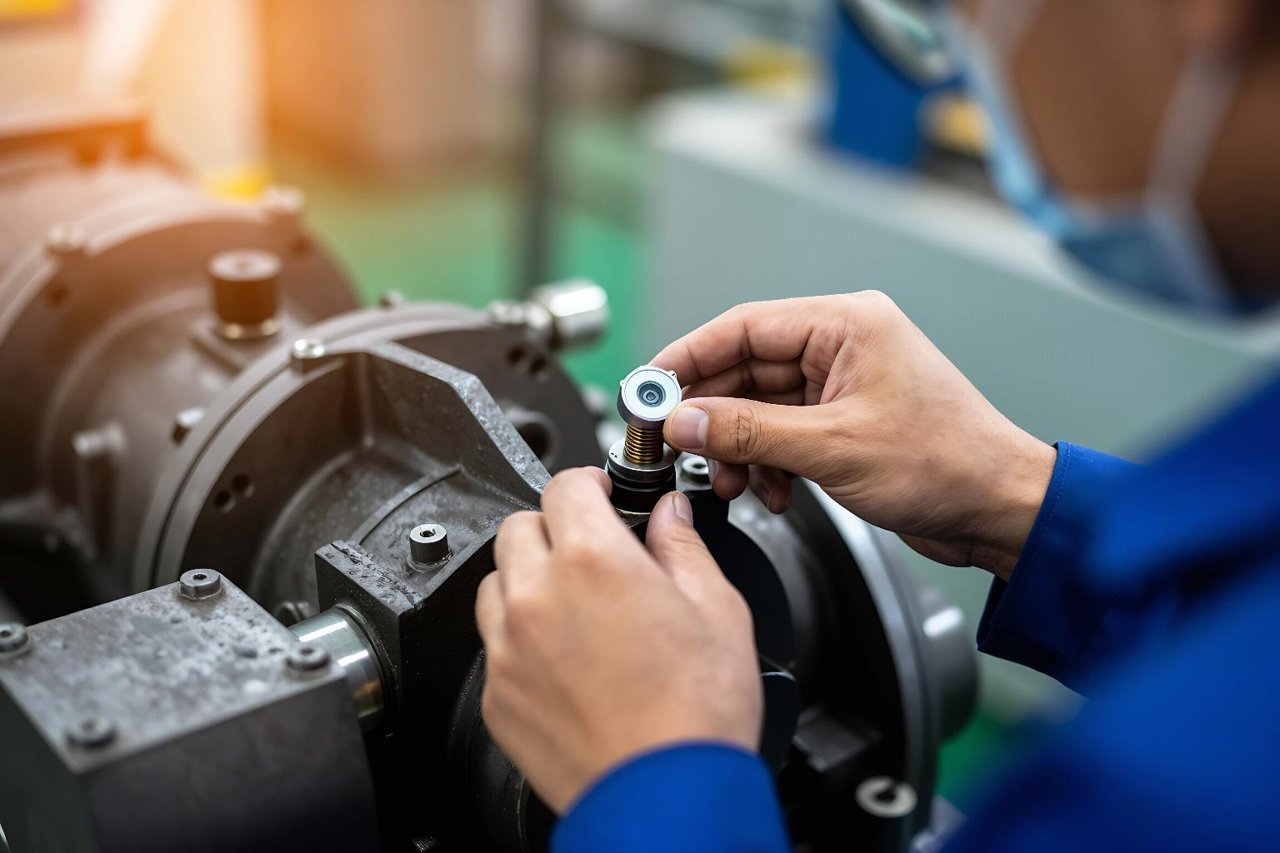
C3 AI rarely fails because the software cannot handle the data. It fails because teams treat it like a platform migration instead of an operations project. The companies that get value in a quarter pick one expensive problem, wire up the minimum data, and put a maintenance planner or supply chain analyst in the loop before anyone talks about enterprise-wide scale.
Take a mid-size plastics manufacturer running 42 extruders. Unplanned downtime costs $18,000 per hour, and the plant averages 38 hours of unplanned downtime per month. That is roughly $684,000 in lost production every month. They used C3 AI to predict gearbox failures on nine critical extruders. Here is the playbook they followed, step by step.
Step 1: Start with a $1M problem, not a platform demo
Start with a problem that has a P&L owner and a number attached. ‘Improve AI maturity’ is not a use case. ‘Reduce unplanned extruder downtime from 38 to 24 hours per month’ is a use case. The number forces trade-offs. It also tells you when to stop.
Use-case filter
- Cost of failure exceeds $500,000 per year.
- At least 6 months of sensor and maintenance history exists.
- The failure mode repeats and has a physical signature: vibration, temperature, pressure, or current.
- One plant manager will own the KPI.
- Payback can happen within two quarters.
If you are still comparing platforms, this look at who’s leading the AI market in 2025 helps frame the build-versus-buy decision. For a deeper architecture primer, see this C3 AI enterprise platform breakdown.
Step 2: Assemble a three-person core team with authority
Three people, not thirty. A steering committee will slow you down. The core team needs an operations lead who owns the KPI and can change schedules, a data engineer who can pull sensor and work-order data, and a C3 AI app developer or implementation partner who can build the types, models, and UI.
The executive sponsor has one job: sign the data access request and approve the first $250,000. The team meets for 30 minutes every Monday. Decisions happen in that call, not in a follow-up document.
Step 3: Connect the data that actually predicts failure
For extruder gearboxes, the team needed six tags at 1 Hz: vibration on the drive end, vibration on the non-drive end, bearing temperature, oil temperature, motor current, and screw speed. They also pulled 18 months of work orders and PLC alarms. They ignored 480 other tags. More data would have added cost and noise, not accuracy.
Minimum viable data set
You need enough labeled failures to validate the model. Aim for at least five confirmed failure events on the target asset type. The plastics team had 14 failures across nine extruders. They trained on 10 and held back 4 for validation. If you have zero or one failure event, pick another asset. Anomaly detection can help, but you still need a few confirmed cases to know whether the alert is useful.
Step 4: Build a thin slice in two weeks
Build three screens: an asset health list, an alert detail view with contributing sensor readings, and a recommended work order. Skip the 3D digital twin. Skip the custom neural architecture. Use C3 AI’s type system to model Extruder, SensorReading, FailureEvent, and WorkOrder. Then train a gradient-boosted model or use C3 AI’s built-in anomaly detection.
Replay the last 90 days. Count how many real failures the model would have caught 24 hours ahead. Target 70% recall and fewer than two false alarms per week. This is the same discipline behind backtesting an AI trading model: replay history, measure precision, and resist tweaking thresholds after seeing the results.
Step 5: Put a human in the loop before you automate
For the first two weeks, every alert goes to a planner for review. The planner marks it ‘confirmed,’ ‘false alarm,’ or ‘already known.’ Those labels retrain the model weekly. At one plant, week one produced 12 alerts. Five were false. The team tightened the vibration threshold from 4.2 mm/s to 5.1 mm/s and added a rule that ignored alerts during scheduled cleaning. By week six, precision hit 84%, and the planner trusted the queue enough to auto-create work orders for high-risk alerts.
Train the floor. A 90-minute session on what the alert means and how to escalate is enough. Broader AI fluency helps, and this guide to building AI skills without drowning in hype is a practical place to start.
Step 6: Measure one number that finance already tracks
Do not report AUC or F1 to the plant manager. Report unplanned downtime hours, maintenance overtime, and scrap rate. The plastics team started at 38 hours of unplanned downtime per month. After 60 days, they averaged 29 hours. At $18,000 per hour, that is $162,000 avoided in a single month. Annualized, it is $1.94 million. The one-plant C3 AI license and implementation cost about $320,000. Payback landed under four months.
What to report to finance
- Unplanned downtime hours per month, before and after.
- Maintenance overtime hours per month.
- Scrap rate on the target asset.
- False alarm rate per week, because it drives planner trust.
- Cost per avoided failure, calculated as program cost divided by confirmed failures prevented.
If you add a generative assistant to summarize maintenance notes, compare Azure OpenAI Service costs and use cases before assuming you need a separate LLM contract. C3 AI can call external models, but the data governance and cost model should be clear first.
Step 7: Scale by cloning the pattern
After plant one, package the app as a template: asset type, data connectors, feature set, alert thresholds, and work order logic. Plant two took 19 days. Plant three took 11. The model needed about 20% recalibration because the extruders ran different polymers. That is normal. Keep a monthly model review. Check drift, data gaps, and false alarm rate. If a sensor goes offline for a week, pause alerts for that asset instead of letting the model guess.
What to do when the pilot stalls
- Data access takes six weeks. Get the plant manager to sign a one-page data request. Start with CSV exports if APIs are blocked.
- No labeled failures. Use maintenance logs and operator interviews to build a failure list. If still under five, switch to a use case with more events, like compressor overheating.
- IT security flags the cloud connection. Use C3 AI’s private cloud or an edge gateway. Bring security into week one, not week eight.
- Planners ignore alerts. Shadow them for a day. If the alert does not match their workflow, fix the UI before adding more models.
A 90-day calendar you can steal
- Days 1-10: Choose use case, name P&L owner, sign data access.
- Days 11-25: Connect 5-10 tags, pull 12-18 months of history, label failures.
- Days 26-40: Build thin-slice app, train model, replay 90 days.
- Days 41-60: Run human-in-the-loop pilot with weekly retraining.
- Days 61-75: Measure downtime and cost. Decide go/no-go.
- Days 76-90: Package template, train plant two, present finance case.
The teams that succeed with C3 AI do not start with a platform strategy. They start with a gearbox that fails too often, a spreadsheet that proves the cost, and a planner who is willing to test 12 alerts a week. Everything else is scale.