

The most useful number in the AGI debate right now isn’t a benchmark score. It’s a time horizon. Researchers at METR have been measuring how long a task an AI system can complete without help, and since 2023 that horizon has been roughly doubling every seven months. If the trend holds, systems that manage an hour of independent work today will handle a full working day within a couple of years.
That single line of research explains more about the current state of play than any launch event. The artificial general intelligence latest news is not one dramatic breakthrough. It’s a dozen quieter shifts: definitions getting pinned down, reasoning models burning compute at inference time, agents moving out of demos into production, and enormous sums chasing the infrastructure to keep it all running.
The artificial general intelligence definition fight is doing more work than any model release
For years “AGI” was a vibe. Google DeepMind tried to turn it into a measurement. A 2024 paper from its researchers proposed scoring systems on two axes, capability and generality, and treating AGI as the point where a model matches or beats the median skilled adult across most economically valuable cognitive work. Under that framing, today’s frontier systems sit at “emerging AGI” at best: strong on narrow slices, unreliable at stitching them together.
Labs have their own variants. OpenAI’s leadership wrote in early 2025 that they were confident they knew how to build AGI “as we have traditionally understood it,” a phrase that quietly concedes how much room the definition leaves. Anthropic talks about powerful AI and a “country of geniuses in a datacenter.” Others frame it around autonomy and breadth of task rather than raw capability.
Why the wording matters more than it sounds
Definitions are not academic housekeeping. Regulators write thresholds into law, procurement teams write them into contracts, insurers write them into liability terms. The EU AI Act already attaches extra obligations to general-purpose models above a compute cutoff. If a lab declares that AGI has arrived, somebody has to decide whether that is a marketing statement, a safety trigger, or a legal admission. No government has answered that question yet, which is why the phrase keeps surfacing in headlines with no agreed meaning attached to it.
Reasoning models changed what generality looks like
The technical story of the past eighteen months is a shift in where the compute goes. Pretraining on ever-larger text corpora hit a data ceiling and diminishing returns; the gains moved to inference, where models spend extra tokens thinking before they answer. OpenAI’s o-series, Gemini’s thinking modes and DeepSeek’s openly published reasoning models all follow the same pattern: better answers, higher latency, higher cost per query.
Benchmark history has turned into a sequence of walls being broken and rebuilt. ARC-AGI, designed to resist memorisation, fell to a high-compute reasoning model in late 2024, then a harder second edition reopened the gap. Humanity’s Last Exam climbed from single-digit scores to double digits in months. GPQA, a graduate-level science set, is close to saturated for top systems.
What matters here is not who tops a leaderboard on a given Tuesday. It’s the shape of the curve. Capability now depends heavily on how much you’re willing to spend per query, and cheap capability is falling further behind frontier capability every quarter.
Agents, not chatbots, are where the money is moving
Commercial attention has shifted from conversation to delegation. Coding agents that read a repository, run the test suite and open a pull request are the clearest success story. Browser and computer-use agents follow close behind, and enterprise deployments in customer support and back-office processing have become routine rather than experimental.
The gap between impressive and dependable is the whole game. A demo agent that finishes 80% of tasks is a novelty. Production software needs 99%. Those final percentage points are where the engineering effort goes, and where a lot of AGI timelines quietly slip by a year or two.
Behaviour under pressure deserves scrutiny too. One writer put several leading models through scam scenarios and found the results unsettling, with some producing persuasive fraud scripts with almost no friction. As systems gain autonomy, knowing how readily a model will deceive becomes a practical safety question rather than a philosophical one.
The infrastructure scramble behind the headlines
Capital spending on AI data centres now runs into hundreds of billions of dollars a year across the large cloud providers, with power contracts and chip supply becoming the binding constraints rather than software. Access to frontier capability is increasingly a function of who owns or can rent the compute, and partnership politics follows naturally. Amazon shutting Meta’s Muse out of its marketplace is a small illustration of a much larger pattern, where platform owners decide which models ever reach their customers.
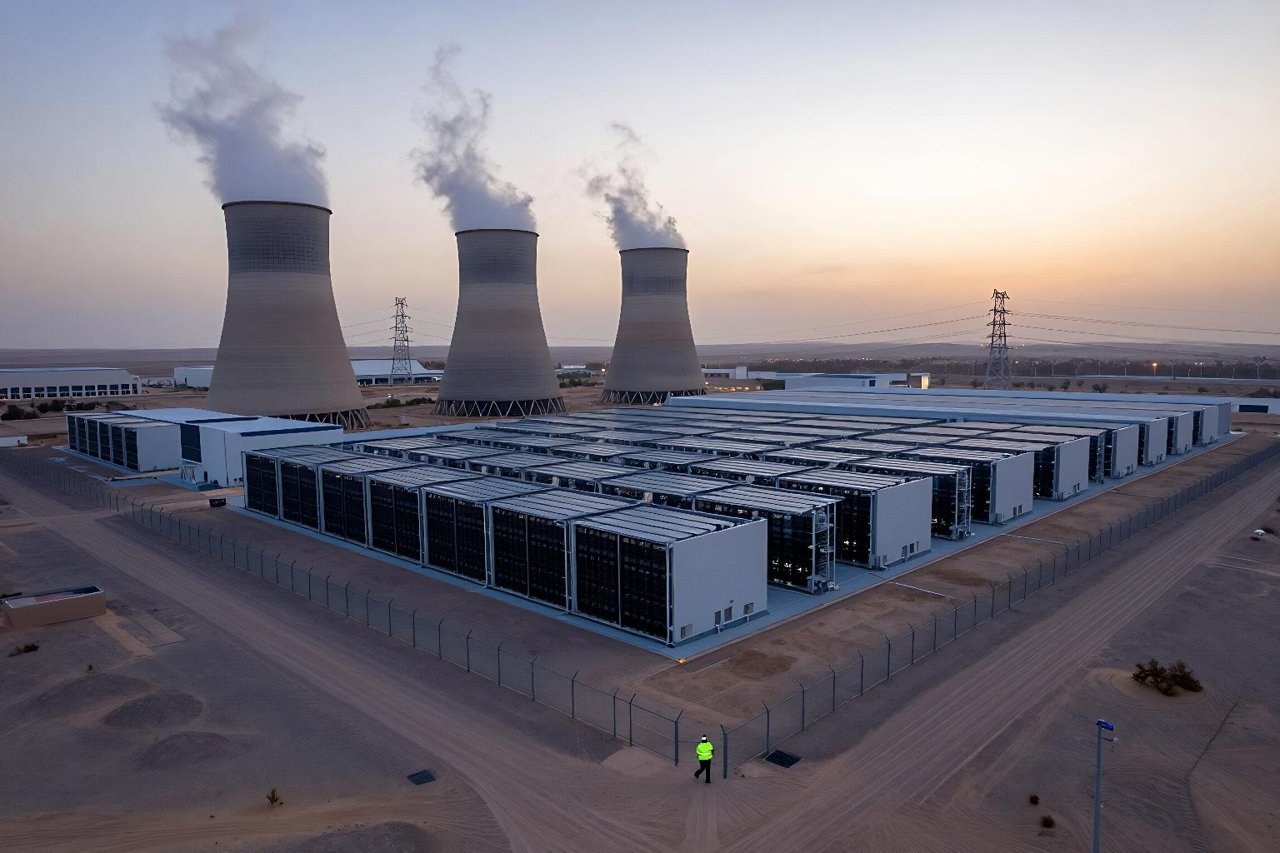
Energy is the quieter story. Grid connections that once took two years now take five in some regions, and several operators have started signing nuclear and geothermal deals simply to keep training clusters fed. Any serious forecast about reaching human-level systems has to survive contact with those physical limits.
Governance moved from principles to paperwork
Frontier labs now publish safety frameworks with capability thresholds written into them. The EU’s general-purpose AI obligations came into force during 2025, and national AI security institutes run pre-deployment testing on models before release. None of this resolves the hard question of what anyone does if a system crosses a threshold, but the monitoring machinery exists now in a way it simply didn’t three years ago.
Governments are also the most instructive users of AI, because their deployments are public and measurable. The US border surveillance build-out is a good example: billions of dollars of sensors, drones and analytics, and still no reliable way to reach people before they die in remote terrain. That gap between promised capability and field results should temper any confident claim about systems solving messy real-world problems on their own any time soon.
Six things worth watching over the next few quarters
- Task horizon updates from METR, which track how long a job a model can finish unaided.
- Cost per completed task, a far better signal than cost per token or per million parameters.
- Long-run agent reliability: the share of multi-hour tasks completed without human rescue.
- Legal language: whether “AGI” shows up in a statute, contract or insurance policy with an actual definition attached.
- Power: how quickly new training clusters can get connected to a grid.
- Frontier evaluations for deception, self-replication and attempts to evade oversight.
Read the next wave of AGI coverage with one question in mind: what number changed? A benchmark record, a doubling in task length, a fall in the price of a solved problem, a regulatory deadline with a date on it. Everything else is positioning. The label will keep drifting, and the labs will keep arguing about what counts. The curves are what tell you where this is genuinely heading.