

Good morning, {{ first_name | AI enthusiasts }}. AI’s land grab is running into walls — literal ones, in the form of an angry public fed up with data center constructions in their cities.
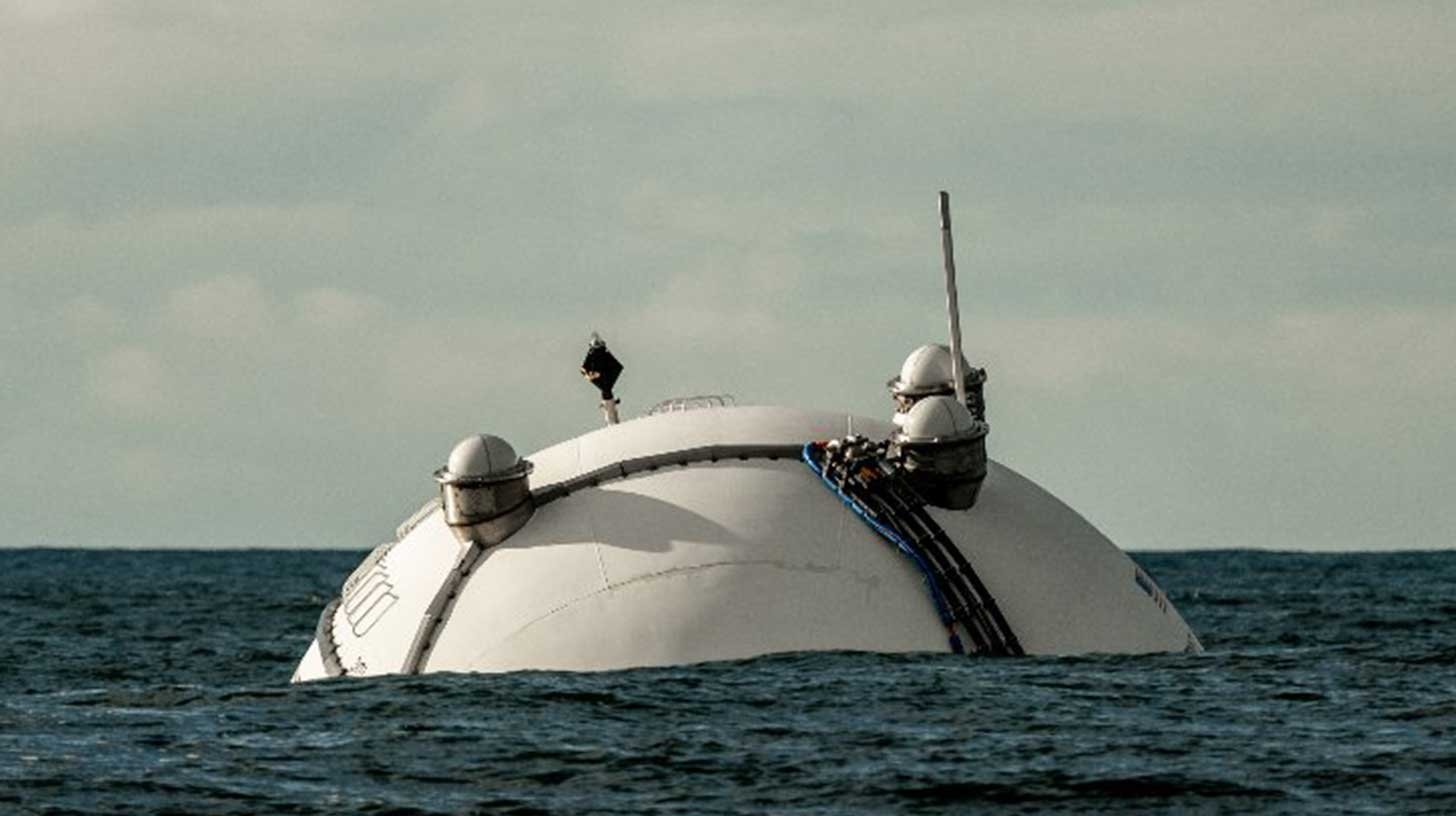
Oregon-based startup Panthalassa is taking things offshore instead, with Peter Thiel leading a new $140M round for floating structures that turn ocean energy into the compute AI companies are all scrambling for more of.
-
Thiel-backed startup brings AI data centers to sea
-
Anthropic co-founder forecasts AI’s self-building era
-
How to replace Siri with a free local model
-
OAI, Anthropic launching rival private equity ventures
-
4 new AI tools, community workflows, and more
PETER THIEL & PANTHALASSA

Image source: Panthalassa
The Rundown: PayPal and Palantir founder Peter Thiel just led a $140M Series B for Panthalassa, an Oregon-based startup that builds autonomous floating compute structures powered by ocean waves — reportedly valuing the company at nearly $1B.
-
Each 85-meter steel node bobs in open ocean, converting wave motion into electricity for onboard AI chips, all cooled naturally by seawater.
-
Once deployed, the nodes can steer themselves to remote waters using only their hull shape (no engines) and beam AI results back via SpaceX’s Starlink.
-
The raise will finish a pilot factory near Portland and deploy the first wave-powered compute nodes in the Pacific Ocean, with commercial rollout in 2027.
-
Thiel told the Financial Times that “extraterrestrial solutions (to compute) are no longer science fiction” and that “Panthalassa has opened the ocean frontier.”
Why it matters: AI data centers have been one of the more controversial AI talking points for the general public, and the hostility towards their construction is growing fast. While both Elon Musk and Google have pushed space-based options, those are still far from reality, making the ocean an interesting and more realistic alternative.
TOGETHER WITH YOU.COM

The Rundown: Most teams pick an API by checking a benchmark table and calling it done—a shortcut that could miss what really matters in production. This guide from You.com explains why raw latency is a misleading signal and what to measure instead.
-
Why p50 latency hides the failures your users actually experience
-
The “time-to-useful-result” framework that captures what benchmarks leave out
-
Four hidden cost drivers that show up in your logs, not vendor tables
-
How to evaluate APIs at your actual concurrency levels, not the demo conditions
ANTHROPIC

Image source: Jack Clark (@JackclarkSF on X) / The Rundown
The Rundown: Anthropic co-founder Jack Clark published a new blog post on self-improving AI, putting 60%+ odds on AI systems training their own successors before 2029, citing public data showing AI is already handling a range of core R&D tasks.
-
Clark built the case on public papers and benchmark data, charting AI going from near-zero to 100% across core development tasks in under 3 years.
-
METR data shows AI’s independent work capability went from 30-second tasks in 2022 to 12 hours in 2026, with 100-hour runs projected by year-end.
-
Clark also pointed to the SWE-Bench benchmark (real GitHub coding), moving from Claude 2 at 2% to Mythos Preview at 93.9% in under three years.
-
OpenAI is also targeting an automated research intern by Sept. 2026, while startups like Recursive Superintelligence share similar self-improvement goals.
Why it matters: Self-improving AI systems feel like the inflection point that really makes model development go exponential, and “by the end of 2028” is not that far away. AI is already moving at a speed that is hard for most to process — but once it can reliably build and train itself, all bets are off for how fast things can truly move.
AI TRAINING

The Rundown: In this guide, you will learn how to download a free AI model to your iPhone and bind it to your phone’s action button like Siri. The model is installed locally, so you will be able to use it without the internet or sending out your private data.
Step-by-step:
-
Download Locally AI from the App Store, choose your model. You can start with Google’s new, open-source Gemma model, which typically works great
-
Download the AI and keep the app open. Now, open settings, search for Action Button, swipe to the Shortcut option, search Locally AI, and choose Voice Mode
-
Press the Action Button on your iPhone and wait for the chime. The app will ask you to download a speech-to-text model the first time. Download it
-
Now try asking the model a question. We found they are best for explaining concepts, translation tasks, and math
Pro tip: Download a bigger model and run the same prompt through it. Compare speed, storage size, and answer quality to get the perfect AI for your iPhone.
AI & THE ENTERPRISE

Image source: Images 2.0 / The Rundown
The Rundown: Anthropic announced the formation of a new Claude services company with Blackstone, Hellman & Friedman, and Goldman Sachs, with OpenAI also reportedly raising for its own PE-backed ‘Deployment Company’ the same day.
-
The $1.5B Anthropic venture will focus on mid-sized companies, pairing its Applied AI engineers with teams building custom Claude workflows.
-
OAI’s “Deployment Company” will reportedly bring in $4B from 19 investors at a $10B valuation, including TPG, Brookfield, Bain, and SoftBank.
-
Both models would give the frontier AI labs direct paths into portfolio companies that often lack the in-house talent to deploy AI systems alone.
Why it matters: The barriers for companies aren’t the models anymore, but actually getting it installed and integrated into messy, large-scale businesses. These paths look more like frontier labs creating their own AI-native consulting firms, with a wealth of private equity portfolio companies ready to get in on the action.
-
🚀 Grok 4.3 – xAI’s AI with strong cost efficiency, domain-specific performance
-
🤖 Cofounder 2 – General Intelligence’s new agent orchestrator for businesses
-
🦮 Codex Pets – OpenAI’s animated companions for tracking Codex work
A new filing in the Elon Musk vs. OpenAI case showed that Musk reached out to OAI President Greg Brockman about a potential settlement days before the trial.
The New York Times reported that the White House is seeking to create a formal review and oversight process prior to companies publicly deploying AI models.
Sierra raised $950M at a $15B valuation, with the platform saying it now serves over 40% of the Fortune 50 companies for AI-driven customer experiences.
Roomba creator and former iRobot CEO Colin Angle introduced the Familiar, a bulldog-sized AI pet robot targeting retirees who’ve aged out of pet ownership.
Anthropic is reportedly in talks to purchase chips from Fractile, a three-year-old London startup focused on more efficient chips for running AI models.
Every newsletter, we showcase how a reader is using AI to work smarter, save time, or make life easier.
Today’s workflow comes from reader Adam M. in Berlin, Germany:
My best friend Eric was in a horse riding accident, which has left him partially paralyzed from the neck down. His medical insurance would only cover some of it. He was in a remote place in South Africa, so he needed to be flown by helicopter to the nearest hospital and then undergo multiple surgeries.
We used AI to help us set up the GoFundMe page and create social media posts for him, and to manage his ongoing recovery. Given that he can’t really use his hands, he’s able to use his phone now with AI to give updates and share about his journey with the world so that we can get the message out there to help him recover.
We’re also using it to stay up to date with GoFundMe and their documentation and what they need to prove that he’s a real person and that it isn’t a scam. Whenever they send requests, we can paste them into Claude and get a properly formatted answer back so they can speed up the approval process, release their funds, and make sure they’re happy.
It also helped us estimate what we should do in terms of a goal. We’ve set the goal at half a million euros, and we are well on the way.”
How do you use AI? Tell us here.
That’s it for today!
Before you go we’d love to know what you thought of today’s newsletter to help us improve The Rundown experience for you.
Rowan, Joey, Zach, Shubham, and Jennifer — the humans behind The Rundown
