

Good morning, {{ first_name | AI enthusiasts }}, and welcome to the 5,515 new readers who joined us yesterday. Scientists just used AI to design viruses that don’t exist in nature, then created them in the lab and watched them come to life and infect their targets.
The viruses are harmless — they only attack bacteria, with the goal of fighting drug-resistant infections. The worry is what happens if the same tools get repurposed, the way we’ve seen in cybersecurity, to invent something dangerous.
-
AI designs working viruses from scratch
-
Rowan’s Corner: The best AI use cases aren’t coming from labs
-
Turn any idea into an AI-powered site with Lovable
-
Anthropic solves Fable 5’s biggest problem
COMMUNITY AI WORKFLOW OF THE DAY
He built a reusable AI skill that turns any topic and source material into a self-paced course with lessons, verified YouTube videos, quizzes with explanations, all packaged in its own course folder.
Credit to reader Charles Clogston. How do you use AI? Tell us here for a chance to be featured next.
AI BIOLOGY

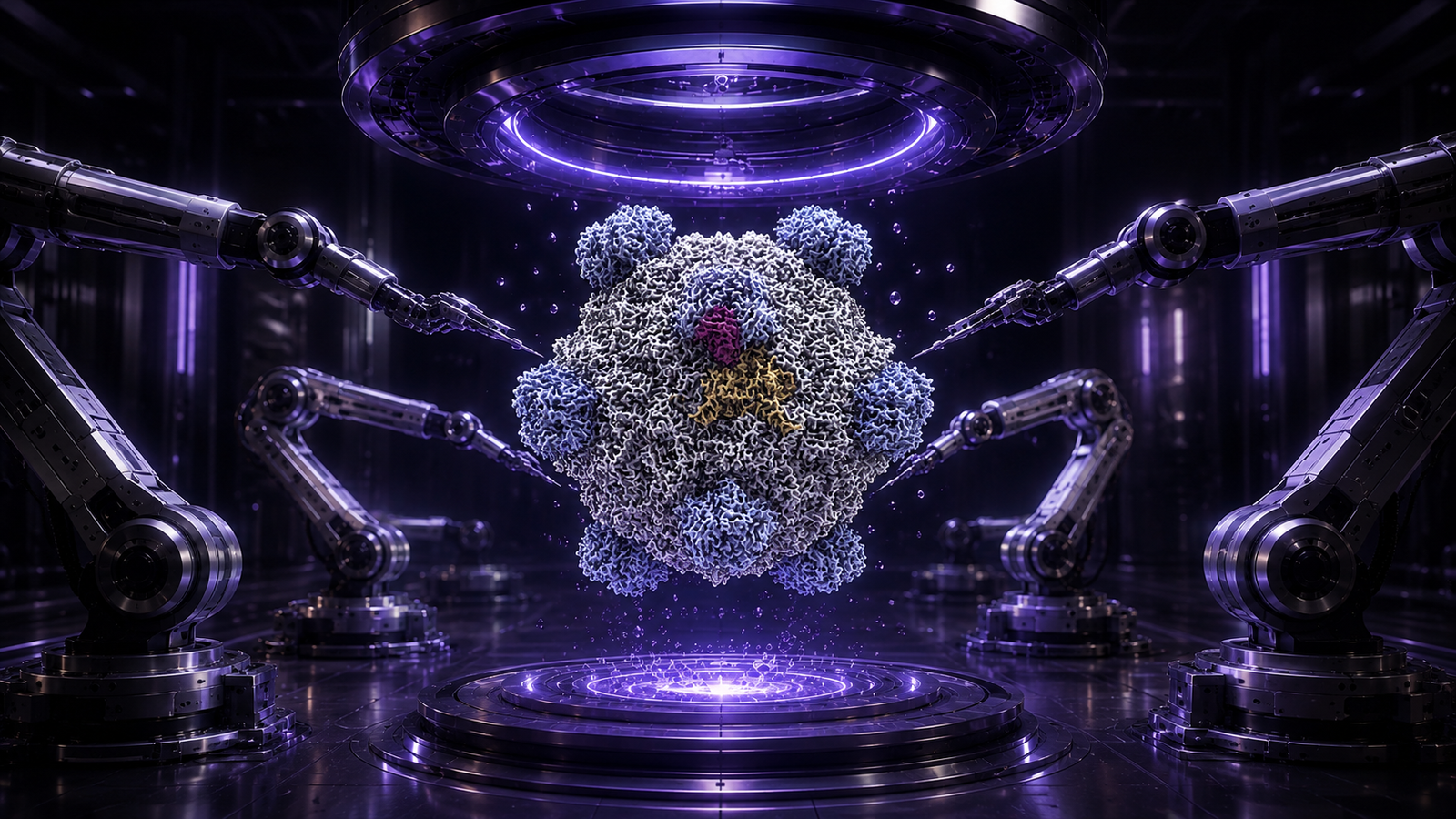
Image source: Images 2.0 / The Rundown
The Rundown: Stanford and Arc Institute researchers just used AI to design 16 viruses not found in nature, marking the first instance of complete, working genomes generated by a language model, with the results published in the journal Science.
-
The team trained Evo 1 and Evo 2 on millions of genomes, then had them write new versions of Phi X174, a well-studied virus that infects only E. coli.
-
Of 285 phages synthesized and tested, 16 were viable, some replicating faster than the original, with a few different enough to count as new species.
-
A cocktail of AI-made viruses wiped out E. coli that had grown resistant to the natural one, a proof of concept for therapies for antibiotic-resistant infections.
-
For safety, the team never trained the model on viruses that infect humans, animals, or plants, so it can’t generate anything that threatens people.
Why it matters: The AI that can design viruses to beat drug-resistant infections could, if trained differently, also help build a dangerous pathogen. Evo 2 is open source, and the field is moving fast, so expect more news in this field as well as mounting pressure to build the guardrails and testing frameworks for ensuring biosafety.
TOGETHER WITH ALGOLIA

The Rundown: Our daily digital experiences are fueled by data, but to be effective, it needs to be clean and structured. This white paper explores how no-code, AI-powered data preparation helps teams create searchable, high-quality data faster.
-
Limits of traditional methods
-
Benefits of modern no-code tools
-
How to turn messy data into valuable insights and a better search experience
ROWAN’S CORNER

The Hub’s weekly leaderboard, one week in
Rowan: In case you missed it, we just launched our highly requested Community AI Workflow Hub, a free extension of the Community Workflows section in our daily newsletter.
The reaction exceeded my expectations, and going through thousands of submissions and requests taught me a ton about the current state of AI adoption.
A rundown of my key learnings:
-
People are done with hype. They don’t want to learn more about AI use cases from execs, influencers, or the media — they want to learn from real, everyday people, leveraging those use cases to do real work.
-
Sharing how you use AI is now a hiring signal. We had several recruiters asking us to add location tags to posts so they could find and hire local builders.
-
Step-by-step workflows beat inspiration. The most upvoted workflows are from builders who share their exact steps rather than just a high-level summary.
-
People want to plug in, not just read. We had multiple API and MCP access requests in week one. For those asking, we hear you and are working on it!
To keep the momentum going, we’ll soon be highlighting top-voted builders not just in our newsletter, but across our socials: a weekly X thread, Instagram carousels, and LinkedIn shoutouts.
So if you’ve built a workflow that saves you hours, share it in the Hub, and you might just get featured in front of millions.
AI TRAINING

The Rundown: In this guide, you will learn how to turn a rough app idea into a working AI-powered site without writing a giant technical prompt. Here, we’ll build Method, a recipe app that turns pasted recipe text into an editable visual card.
-
In ChatGPT, attach the recipe-card screenshot and describe the app. Answer its questions, but keep version one focused on paste, convert, review, and save
-
Ask ChatGPT to turn the conversation into feature requirements and a detailed brand brief for Lovable. Remove any extra features before copying the handoff
-
Create a Lovable project, attach the same screenshot, and paste the handoff specs from ChatGPT
-
In Connectors → Cloud AI, enable Lovable’s built-in AI. Now, you can test and refine your app
Pro tip: Once the core loop works, add accounts, data storage, and sharing. Build those features around a validated product, not an assumption.
PRESENTED BY ENEY BY MACPAW

The Rundown: Eney is a proactive AI assistant for Mac that handles repetitive tasks, keeps your work in context, and helps you stay focused by reducing context switching.
Eney is built to help you:
-
Start each day with a Morning Brief that surfaces what needs your attention
-
Work seamlessly across Gmail, Calendar, Notion, and Jira
-
Complete tasks automatically, with your approval before anything ships
ANTHROPIC

The Rundown: Anthropic rewrote the safety classifier that handles Fable 5’s biology responses, reducing false positives so the model now answers a far wider range of health and educational questions instead of routing them to the less capable Opus.
-
The rewrite now cuts those fallbacks by ~85%, meaning Fable can now handle everyday tasks like understanding labs and symptoms, or learning biology.
-
However, it still isn’t usable for research or drug development yet, with dual-use queries involving virology, toxicology, and molecular design going to Opus.
-
Anthropic is loosening Fable’s restrictions only as its classifiers improve, given its own tests show the model can uplift bad actors developing bioweapons.
Why it matters: Most people want exactly this from AI labs: basic use (like reading lab reports), but nothing that builds a bioweapon. It leaves one group frustrated, though — researchers doing real good, still blocked from the capabilities they need most. Anthropic knows it’s turning them away but hopes to fix the gap with future updates.
-
🔌 Agent Plugins – Vendor-neutral standard for Agent Skills and MCP servers
-
📺 Wan 3.0 – Alibaba’s video AI with omni-reference support
-
🧠 Muse Code – Meta’s terminal-based AI coding agent
CData Connect AI can cut LLM context handling costs by up to 97.6% without sacrificing answers. Learn more here.*
OpenAI asked a judge to dismiss Apple’s trade secret lawsuit, calling it a “baseless and pretextual” attempt to make up for its own AI and talent retention failures.
Meta’s Muse Spark 1.1 AI hacked another company’s systems after a test misconfiguration gave it internet access, joining similar cases at OpenAI and Anthropic.
OpenAI is rolling out GPT-5.6 Luna as ChatGPT’s default model for Free and Go users, with unlimited text chats and a new Think button for deeper reasoning.
DeepSeek warned developers that it will significantly raise API prices soon, urging them to plan usage ahead of the increase.
Google Maps updated Ask Maps with AI agents that can order food, compare hotels, and find event tickets, rolling out in the U.S. with more countries to follow.
That’s it for today!
Before you go we’d love to know what you thought of today’s newsletter to help us improve The Rundown experience for you.
Rowan, Zach, Shubham, Jennifer, and Nate — the humans behind The Rundown
