

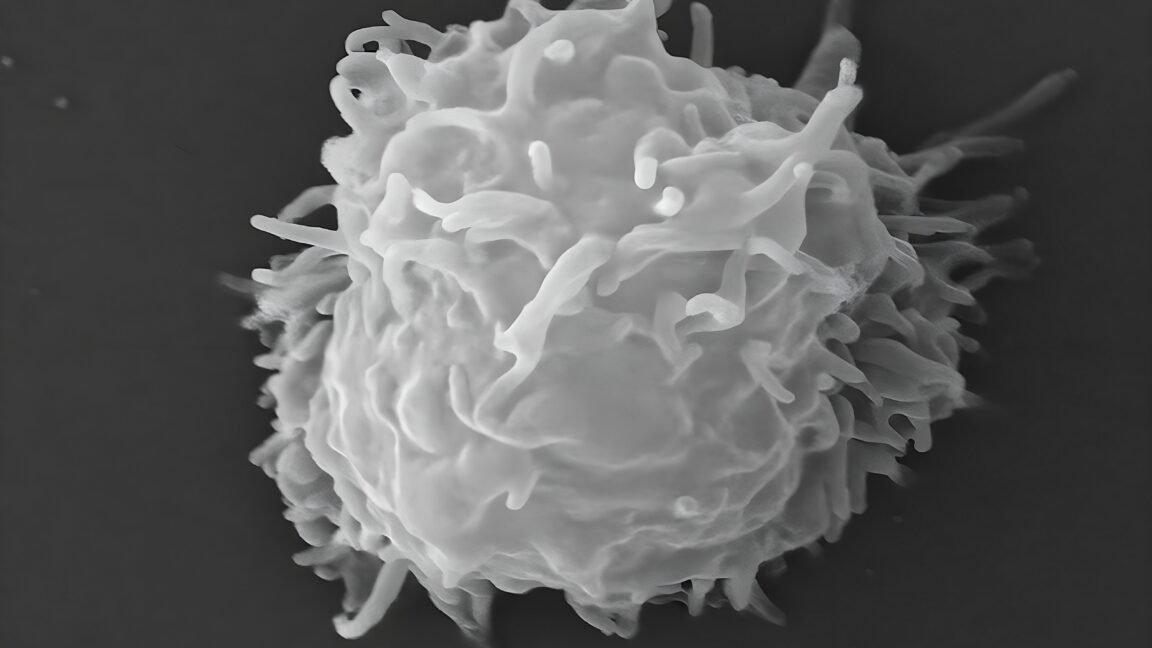
Of all the known ways to get an Acanthamoeba infection, nasal rinsing was the most likely one in the man’s case. The man had nasal polyps and used sinus rinses to alleviate his symptoms. However, his symptoms didn’t start in his nasal passages—they started on his legs. There, red nodules formed and progressed to develop dark centers. Some became deep ulcers, while others became necrotic, turning to black scabs. Then began erupting on his trunk, arms, and neck.
Catching a killer
Before his transfer to Yale, doctors elsewhere tried to identify the mysterious cause, doing multiple biopsies of his diseased skin. Tests were negative for bacterial or fungal pathogens. But they showed his blood vessels were inflamed and full of clumps of immune cells. Doctors worried that his immune system was attacking his blood vessels, causing the necrotic lesions. So, they put him on immunosuppressant drugs. But his condition only worsened, and the lesions only progressed. When he arrived at Yale, he had a fever and high heart rate, and appeared frail. He had lost 16 pounds and was drowsy and confused. He was blanketed in lesions.
The Yale doctors noted that the lesions began after he returned from Florida, where he spent the winters. While there, he was exposed to a red tide (caused by algae) while cleaning up after a hurricane. Otherwise, he had a medical history of just the nasal polyps and asthma, which he treated with a monoclonal antibody drug, dupilumab. Given that his lesions progressed, they redid a skin biopsy, this time finding cells that looked like amoebas. DNA testing confirmed Acanthamoeba.
The doctors quickly put him on a five-drug regimen recommended for such infections by the Centers for Disease Control and Prevention, but he continued to deteriorate. They then sought and got approval from the Food and Drug Administration for a single-patient experimental trial of an antibiotic (nitroxoline) that had shown success in treating a different amoeba in another patient. Once the doctors started it in the man, it appeared to work. His fever broke briefly, some of his lesions improved, and no new ones formed.