

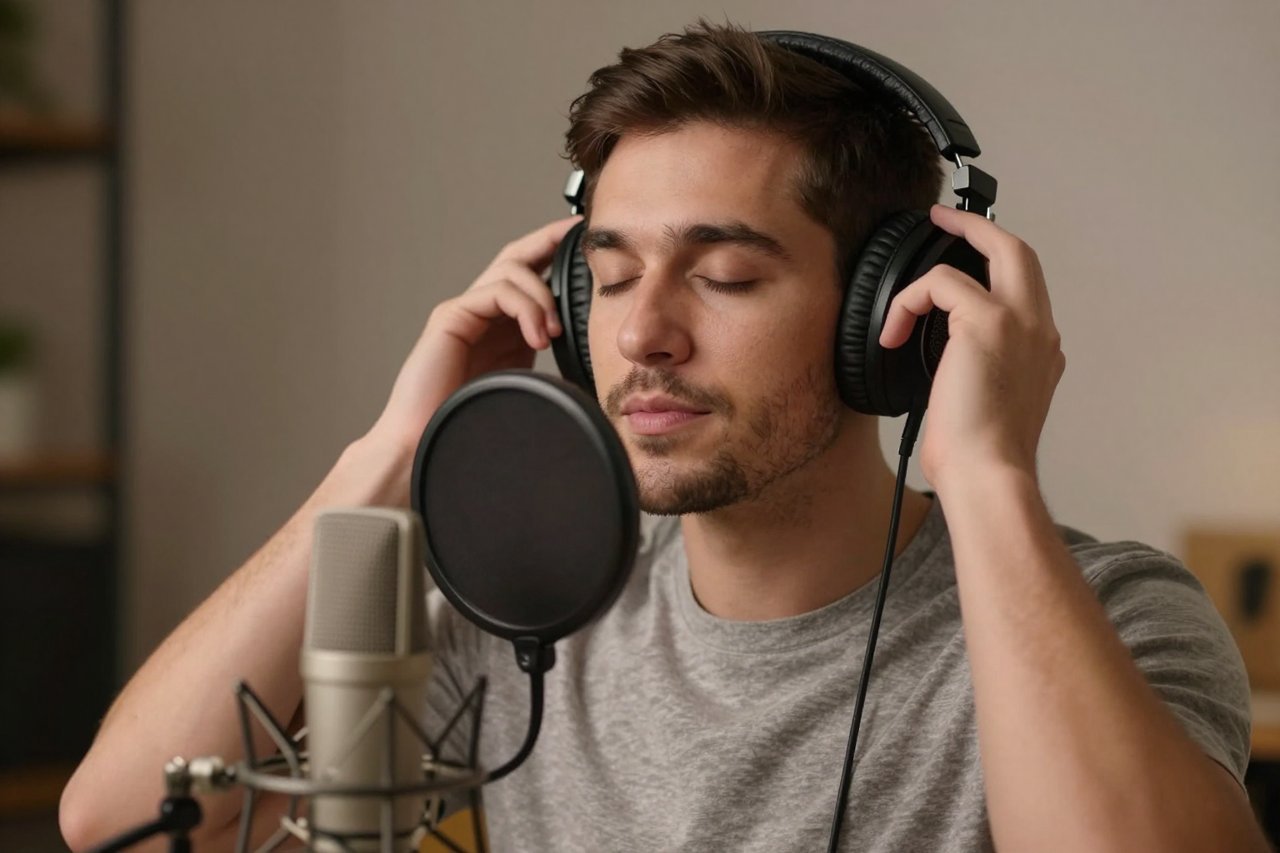
When I first heard an ElevenLabs-generated voice deliver a dramatic monologue, I had to double-check I wasn’t listening to a voice actor. It wasn’t just that the words came out clearly. There was a quiet crack in the delivery, an almost imperceptible pause before a hard sentence, the kind of thing that gets stripped out by every other synthetic voice engine.
That was early 2023. Since then, the platform has exploded in adoption, and the technology has kept improving at a rapid clip. Today, independent YouTubers use it to dub their videos into half a dozen languages, publishing houses turn decades-old backlist titles into audiobooks, and game studios generate hundreds of NPC voice lines without renting a recording booth.
But does ElevenLabs deserve the hype? This review walks through the features, pricing, and practical scenarios where it genuinely helps, so you can decide if it’s worth your attention.
What Is ElevenLabs and Where Did It Come From?
ElevenLabs is an AI audio company that builds text-to-speech, voice cloning, and video dubbing tools. It started in 2022 when two childhood friends, Piotr Dabkowski and Mati Staniszewski, decided to bring together what they had learned at Google and Palantir to take on the hardest problem in speech synthesis: making computers sound less like computers.
By early 2023, the public beta was live and generating enough word of mouth to push the company into a unicorn valuation just months later. It also became a magnet for investment, raising tens of millions in later funding rounds. The story behind the brand is compelling, but the company would not have survived long if the output didn’t deliver. The underlying model emphasizes prosody, emotion, and timing rather than dumping out monotone syllables.
Why the Voices Sound So Much More Human
Most text-to-speech engines create a predictable waveform from phonemes. ElevenLabs goes a step further. Trained on tens of thousands of hours of expressive speech, the system learns to predict where emphasis should fall, when a pause matters, and how a voice should change pitch. It then applies that knowledge to the text you provide.
Creators also get fine control after hitting the generate button. In the editor, you’ll see a handful of sliders that change the performance:
- Stability controls how consistently the voice behaves. Lower stability introduces natural variation; higher stability keeps the same delivery.
- Similarity defines how close the output is to the original voice sample.
- Style exaggeration pushes the performance to be more dramatic or subdued.
For years, everyone could read a paragraph of text and listen to a robot say it. These sliders turn simple text into a director’s chair.
Core Features Worth Exploring in 2025
Text-to-Speech with a Sense of Timing
The primary tool is simple to use. Paste text into the audio studio, pick a voice from the collection, and click Generate. You’ll get a high-quality MP3 or WAV file ready for download. The software also supports multilingual synthesis across dozens of languages, and when a paragraph contains foreign phrases, it detects and speaks them correctly instead of mangling the pronunciation.
Different voices suit different tasks, and that is where ElevenLabs excels. Need a warm, reassuring voice for a meditation app? You will find it. Need a street-smart younger voice for a social media clip? That is also there. You can customize the exact voice profile by adjusting the sliders until it matches your mental picture.
Fast and Nuanced Voice Cloning
Voice cloning on ElevenLabs comes in two flavors. Instant Voice Cloning requires only a minute or so of clean sample audio, and it spits out a passable clone almost immediately. Professional Voice Cloning asks for far more data and returns a more robust replica that you can use for consistent narration across series or audiobooks.
The process has grown safer, too. The platform verifies you own or have permission to use a voice, rather than letting you grab a favorite celebrity podcast and make them say anything. It’s not bulletproof, but it represents a real shift in responsibility. If you’ve come over from other cloning tools, you might recognize some of the headaches we cover in our guide to voice cloning on Voxtral with a missing encoder; ElevenLabs handles much of that debugging for you.
AI Dubbing for Video Content
The Dubbing Studio is one of the most powerful additions. You upload a video file or paste a link, and ElevenLabs splits the audio into segments, translates it into the language you choose, and syncs the new voice back to the visuals. Because dubbing preserves emotional range, the result feels closer to a genuinely dubbed film than to a robotic overlay on a YouTube clip.
In practice, this makes it possible to take one video and repurpose it for 30 different language markets within a day. The time savings are absurd.
Voice Design and Community Voices
Beyond cloning, the platform includes an experimental Voice Design tool for times when you want to manufacture a vocal persona from nothing. It lets you play with pitch, breathing, and other attributes the way a musician shapes a synthesizer. If you are after something less technical, the Community Library contains thousands of user-created voices you can use with a single click.
Where People Actually Fit It Into Their Workflow
Pick any industry that leans on recorded sound, and you will find someone experimenting with ElevenLabs. The most common use cases include:
- Authors and self-publishers turn existing books into audiobooks without hiring a full cast of narrators.
- YouTubers and streamers dub their content into multiple languages for foreign audiences.
- Indie game developers generate hundreds of small NPC lines without renting a booth.
- Online course creators update training materials in minutes instead of spending a day in post-production.
- People who have lost their natural voice preserve it via a custom clone and use it in daily life.
That last one is often overlooked in the conversation about deepfake risk. The technology has a legitimate, heartwarming side too.
How ElevenLabs Handles Competition
ElevenLabs is not the only game in town. Google, Microsoft, OpenAI, and a pile of smaller startups all offer synthetic audio, but most of them are built around a reading voice rather than a performance voice. If you want total control and don’t mind doing some heavy lifting, Coqui AI offers an open-source route with a passionate community. Yet Coqui often demands technical patience for a result that doesn’t always reach the same level of polish.
In a growing sea of AI productivity tools, ElevenLabs has avoided the trap of becoming a jack of all trades. It concentrates on audio and does it incredibly well, which is why it regularly appears in roundups like our list of the best AI apps actually worth installing in 2025.
The Cost of Lifelike AI Voice
Pricing might be the biggest barrier for casual users. You can try ElevenLabs for free, but the monthly credits amount to roughly 10 minutes of audio, which dries up fast if you are producing anything substantial.
- Starter ($5/month) brings 30,000 credits per month, enough for roughly 30 minutes.
- Creator ($22/month) gives you 100,000 credits, around 100 minutes of audio.
- Pro ($99/month) jumps to 500,000 credits and adds priority inference.
Those figures come from official pricing at the time of writing. Annual billing gives you a couple of months free over a year. If you are serious about commercial work, you will want at least the Creator plan, because commercial licensing and professional voice cloning require a paid tier.
The Ethical Line Between Cloning and Stealing
No piece about voice cloning is honest without acknowledging what can go wrong. Fake AI cover songs and impersonations of public figures have become easy to create. In that context, ElevenLabs has built a more robust safety scheme than many competitors. The company requires user verification, monitors voices, and asks for consent before cloning real people.
For creators, this means you cannot simply clone any voice from YouTube without legal exposure. That friction is annoying, but it is the kind of boundary that helps the field avoid a cottage industry of unethical impersonations. If you borrow a voice from the Community Library, double-check its usage constraints before putting it in an ad campaign. Treat it with the same license discipline you would apply to music.
Getting Hands-On with ElevenLabs
Registering takes a couple of minutes, and once you verify your email and accept the terms around responsible use, you land in a dashboard that feels refreshingly approachable. A clear text field sits next to a voice picker, and the process works the way you’d expect.
The real learning curve comes from exploring how different voices respond to the sliders. A few starting points that work well:
- For steady narration, set stability around 70% and style exaggeration low.
- For conversational content, drop stability to 40-50% and raise style exaggeration above 60%.
- Leave similarity at about 75% until you know how the voice reacts.
The Studio view is where longer projects come together. You can add multiple characters, adjust individual line timing, and export a cohesive audio file that sounds like it was recorded in a professional session.
One pro tip: start with a voice that is already in the right ballpark instead of trying to design the perfect voice from scratch. The defaults are surprisingly good, and tweaking a solid base voice saves an enormous amount of time.
After spending a week with the platform, it is hard to deny its impact. ElevenLabs has pushed synthetic speech past a threshold many thought was decades away. It can keep your audience engaged, your production budget low, and your creative possibilities wide open. The question is no longer whether the voice sounds human enough. It is what you want that voice to say next.