

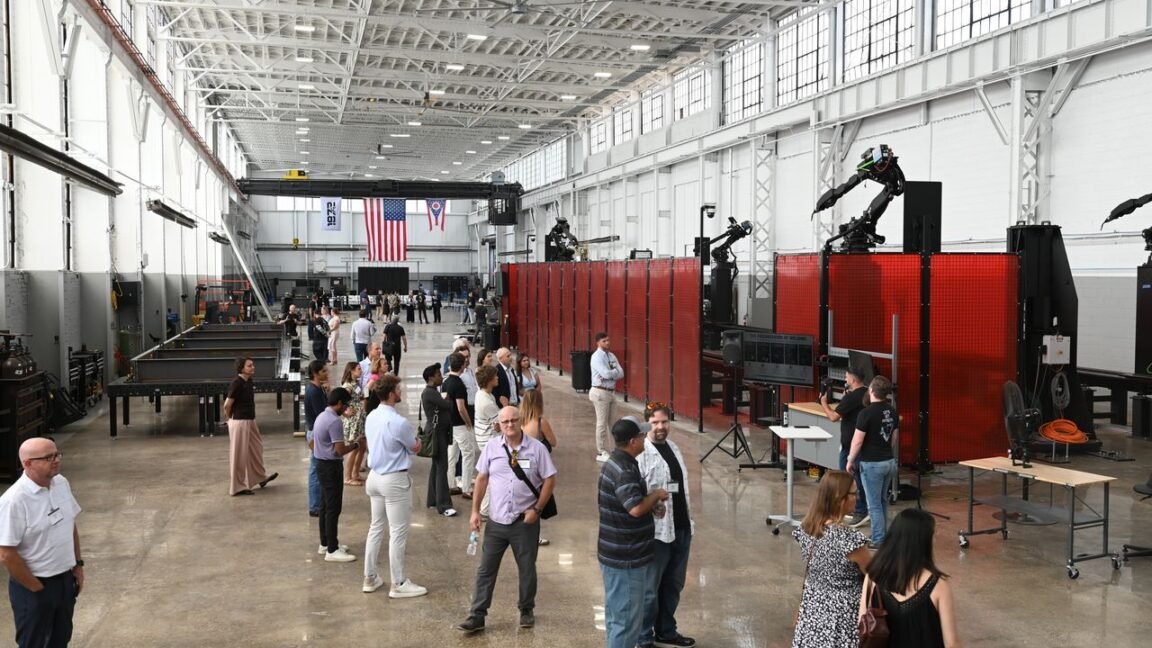
From rocket engines to steel skids
The 1872 cofounders, including Summers, Brian Mongilio, and Michael Grant, all bring relevant experience from having formerly worked for SpaceX. Summers oversaw the engineering team responsible for integrating and fabricating the Raptor engines that power the Super Heavy booster rocket for SpaceX’s Starship launch system.
The Raptor team’s use of “intelligent software” for tracking and managing the physical manufacturing of Raptor hardware became the “secret sauce” for implementing changes rapidly and precisely, according to Summers.
“We had software engineers that were working with our hardware engineers to not only develop the engine but to develop the system that would build the engine,” Summers told Ars. “Every engine was so different, and we were pushing so much change through the system that without that software, it would have been impossible to know what we needed to build, what we actually built, or how we were going to build it.”
That enabled the Raptor team to take the engine from a heavily instrumented, first full-scale concept to a production version within three years, Summers said. By comparison, he pointed out how a typical jet engine development life cycle can exceed two decades.
With the new company 1872, the cofounders decided to first focus on automating production of rectangular steel skids because they are “lower precision components” compared to something like an aerospace-grade part for a rocket, Summers said. That leaves more room to be wrong from an automation standpoint while still churning out a useful steel component.
“We’re starting with more of the less sexy components on the critical infrastructure side that are really important to our ability to build stuff, and that consume a ton of skilled labor and resources,” Summers said.