

Close Menu
AI News TodayAI News Today

    Subscribe to Updates

    Get the latest creative news from FooBar about art, design and business.

    What's Hot

    DOGE’s wild, unverifiable savings claims discredited in US government report

    The best instant cameras for 2026

    New official 30th anniversary Quake mission pack adds new maps and mechanics

    Facebook X (Twitter) Instagram
    • About Us
    • Contact Us
    Facebook X (Twitter) Instagram Pinterest Vimeo
    AI News TodayAI News Today
    • Home
    • AI News
    • AI Reviews
    • AI Tools
    • AI Tutorials
    • Chatbots
    • Free AI Tools
    • Artificial Intelligence
    AI News TodayAI News Today
    Home»AI News»Large genome models used to design new viruses
    AI News

    Large genome models used to design new viruses

    By No Comments3 Mins Read
    Share Facebook Twitter Pinterest LinkedIn Tumblr Reddit Telegram Email
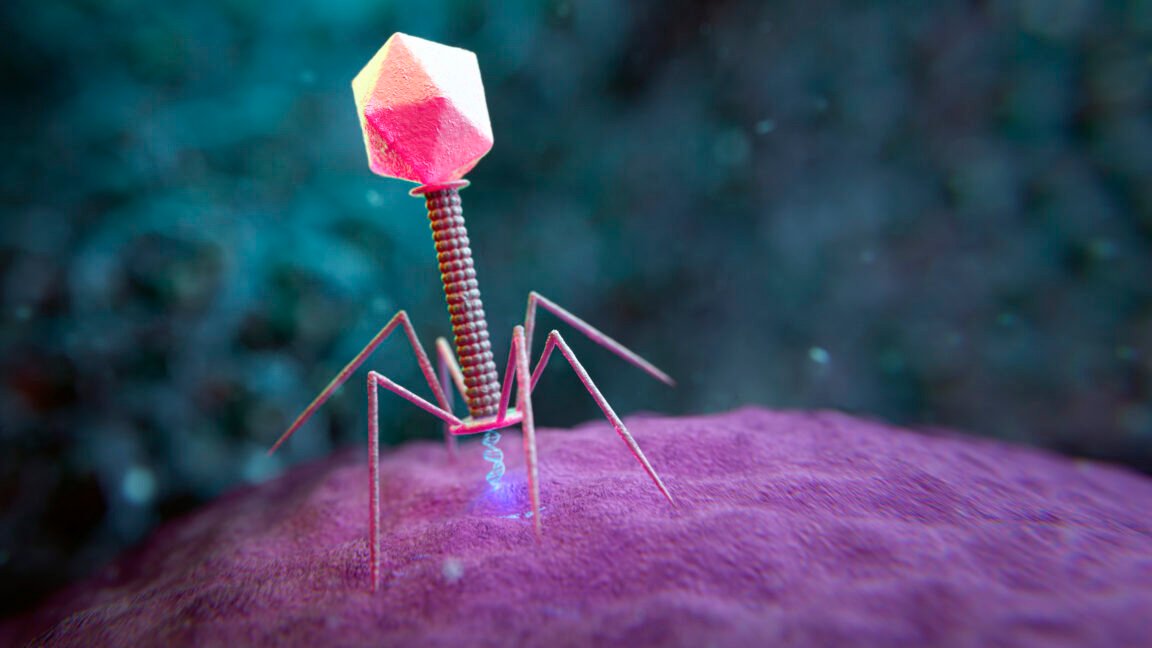
    Cartoon image of a virus perched on the surface of a cell, in the process of inserting its genetic material into the cell.
    Share
    Facebook Twitter LinkedIn Pinterest Email

    The same, yet different

    In some ways, these designed viruses were quite similar to the original ΦX174, but in other ways they were quite distinct.

    For the “the same” perspective, the most effective viruses in the group of 285 tended to look a lot like the original. The overall fraction of viable viruses was only 16 out of the 285 outputs tested (5.6 percent). But if you looked only at the outputs that were most similar to the original ΦX174 (those with 98 percent sequence similarity and up), viability rose to 46 percent. So, if you don’t look a lot like a normal ΦX174, chances are good that you’re not going to work as a virus at all.

    Most of the viable viruses had the same set of genes found in the original. None of them had even a single change in the stretch of DNA where the duplication of the virus’s genome starts.

    All of that is in keeping with past studies that have shown that making even a single base change that alters just one amino acid in one of the proteins made from the virus’s genome had, on average, a 20 percent chance of inactivating the virus entirely. ΦX174 doesn’t just fear change; it’s typically murdered by it. Accordingly, the changes suggested by the AI produced a population of viable viruses that, on average, looked a lot like the original.

    But, as individuals, the viruses were fairly distinct. One of them lost one of the viral proteins entirely, compensating for its loss with changes elsewhere in the genome. Another added an entirely new gene. Many had genes that were either longer or shorter than the original. One even replaced one of the ΦX174 genes with a gene from a very distantly related virus.

    The researchers did an interesting analysis based on the idea that any one amino acid change had a 20 percent chance of inactivating the virus. Doing the math, they say that any viruses with less than 25 changes have only a 2.3 percent chance of being viable. Of the 300 or so viruses the AI output, five viruses fell in that range, and three of them were viable. At above 25 individual amino acid changes, the chances of producing a viable virus are essentially zero. Yet nearly a quarter of the AI-suggested viruses that had more than 25 changes were viable, including two that had over 50 amino acid alterations.

    design genome large Models Viruses
    Share. Facebook Twitter Pinterest LinkedIn Tumblr Email
    Previous ArticleSuno shares plans to combat spammy AI music
    Next Article Moderna’s mRNA flu shot earns FDA approval after rollercoaster review
    • Website

    Related Posts

    AI News

    DOGE’s wild, unverifiable savings claims discredited in US government report

    AI News

    Do AI tutors know when to help and when to hold back?

    AI News

    Cloudflare launches Kitesurf, a browser built for AI agents

    Add A Comment
    Leave A Reply Cancel Reply

    Top Posts

    DOGE’s wild, unverifiable savings claims discredited in US government report

    0 Views

    The best instant cameras for 2026

    0 Views

    New official 30th anniversary Quake mission pack adds new maps and mechanics

    0 Views
    Stay In Touch
    • Facebook
    • YouTube
    • TikTok
    • WhatsApp
    • Twitter
    • Instagram
    Latest Reviews
    AI Tutorials

    Quantization from the ground up

    AI Tools

    David Sacks is done as AI czar — here’s what he’s doing instead

    AI Reviews

    Judge sides with Anthropic to temporarily block the Pentagon’s ban

    Subscribe to Updates

    Get the latest tech news from FooBar about tech, design and biz.

    Most Popular

    DOGE’s wild, unverifiable savings claims discredited in US government report

    0 Views

    The best instant cameras for 2026

    0 Views

    New official 30th anniversary Quake mission pack adds new maps and mechanics

    0 Views
    Our Picks

    Quantization from the ground up

    David Sacks is done as AI czar — here’s what he’s doing instead

    Judge sides with Anthropic to temporarily block the Pentagon’s ban

    Subscribe to Updates

    Get the latest creative news from FooBar about art, design and business.

    Facebook X (Twitter) Instagram Pinterest
    • About Us
    • Contact Us
    • Terms & Conditions
    • Privacy Policy
    • Disclaimer

    © 2026 ainewstoday.co. All rights reserved. Designed by DD.

    Type above and press Enter to search. Press Esc to cancel.