

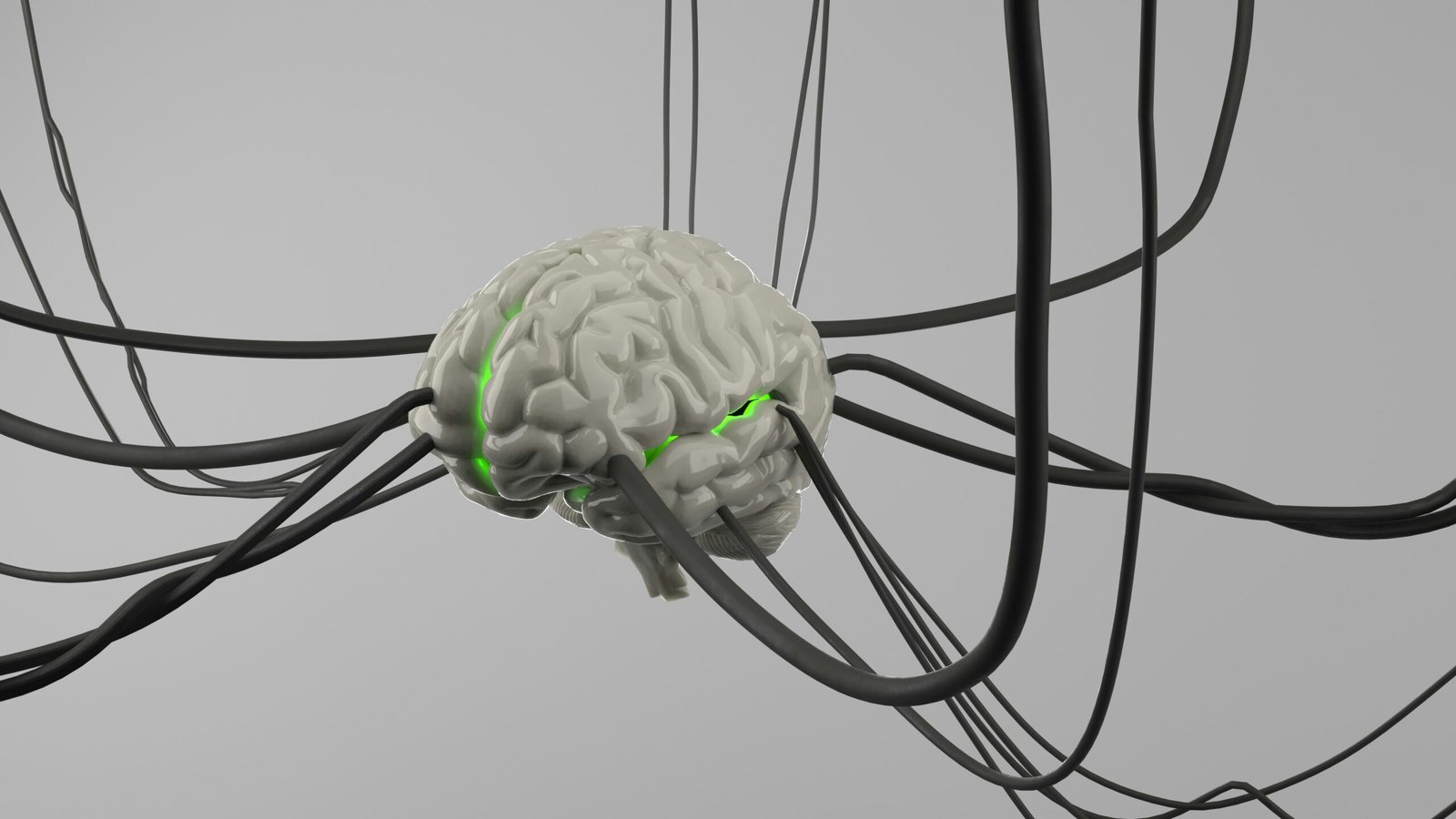
into the world of generative AI adoption for almost the past three years now. We’ve spent the last three years learning how to talk to AI, but what if I told you that the next big shift will be learning how not to let AI think for us?!
With the growing exposure of AI in our personal and professional lives, and as I talk to my peers, industry leaders, and experts about the skills that matter the most today around AI, I hear one word the most— prompting.
Prompting is now considered a basic foundational skill for effective AI interaction. We have moved on from the strategy of adopting generative AI in everyday work to creating “conversational” partnerships between humans and AI agents that are precise, contextual, and goal-oriented. And this partnership is essential for bridging the gap between high-level human intent and valuable, actionable AI output.
All that to say, the people getting the most value from AI aren’t the best prompters; they’re the ones actively regulating their thinking while they use it!
This group doesn’t just think with AI—they actively think about how they’re thinking while using AI. And this skill may quietly become the defining human advantage in the AI era. That skill is: metacognitive regulation.
What Is Metacognition, Really?
Metacognition is “thinking about your own thinking”.
It is the awareness of your thoughts and the ability to control, monitor, and adjust to your own thinking in pursuit of a goal.
Since this whole new horizon of human-AI interaction has opened up in front of us, I have been reading a lot about concepts in psychology and cognitive science, which is where I learned about metacognition.
Metacognition is an internal human system that notices when you’re rushing, when you’re overconfident, when you’re emotionally attached to an idea, when your reasoning has gaps, or when you’ve accepted an answer simply because it sounded convincing. And now, this is about to become incredibly important in the AI-driven world we live in!
Think about this: when was the last time you had an original thought and you pursued it without consulting the internet?
The large language models of today are extraordinarily good at producing outputs that feel complete even when they are shallow, a little wrong, or subtly narrow your thinking, all without you noticing. This is where metacognitive regulation becomes essential.
The strongest AI users with their metacognition constantly monitor:
- whether they actually understand the output,
- whether they agree with it,
- whether they’re being intellectually lazy,
- whether AI is expanding their reasoning or replacing their own creative thought.
This self-awareness is going to be the real differentiator in the AI skillset that I feel nobody is talking about right now.
The Difference Between AI Users and AI Thinkers
As my organization and I work with AI adoption in my 9-5, or talking to peers in conferences and meetups, I sense that something interesting is emerging: while most of the workforce today is using AI agents passively and/or outsourcing thinking in exchange for speed, a much smaller group of people is using AI differently. These users aren’t asking AI to replace reasoning but instead, they are using AI agents to stress-test, expand, organize, or challenge their own personal reasoning (low brag but this is how I intend and use AI as of today).
Instead of saying “give me the answer to problem x”, these smart AI users ask:
- What assumptions am I missing?
- What would invalidate my argument?
- Can you critique my logic?
- What perspective have I ignored?
- Why does this conclusion feel incomplete?
In the next few months, your fluency with AI will not directly correlate to your technical capabilities, but I see it increasingly becoming a test of cognitive awareness.
AI today doesn’t just automate work; it is here to change cognition.
In one of my last posts, I wrote that one of the most under-discussed aspects of Generative AI is that it does not merely accelerate tasks, it reshapes habits.
So What Does A Metacognitive AI User Look Like?
Metacognitive regulation is not about becoming better at prompting. It’s about being more intentional about your own thinking while working with AI.
The best AI users don’t blindly optimize for speed and output—they stay mentally present. They know when to pause, question, challenge, refine, and think independently.
I’ll give you an example –
Before (A typical AI user): “Summarize this report and give recommendations.”
After (A metacognitive user): “Summarize this report, and tell me what assumptions you’re making, where the data might mislead me, and what conclusions would not be justified.”
Becoming truly fluent with AI means resisting the urge to outsource every difficult cognitive moment. Here’s what that looks like in practice:
- Challenge AI outputs
AI can prematurely close the loop on thinking if left unquestioned. I say, challenge the output produced by the AI agent more. Come up with contradictions to that output, and remember that the fastest answer isn’t always the most correct.
- Sit with uncertainty long enough to develop an original thought
As humans, we do not really like discomfort, confusion, and iteration. And thanks to the AI agents, you can have multiple perspectives on a business question within seconds. But metacognitive users resist that urge and sit with ideas long enough to form their own perspective.
- Hold competing ideas simultaneously
AI can generate a code with 400 lines or a wireframe for a dashboard in seconds, but thoughtful users evaluate them instead of rushing to resolution. I love when my work has nuances because that leads to me thinking of the grey area and working through the weeds of it.
- Continuously revise your assumptions
Don’t use AI to validate what you already believe. Instead, try to be a little more thoughtful and use AI proactively to uncover the blind spots in your data, analytics and storytelling. Ask yourself: Why do I agree with this? What would make me change my mind? Is there a different perspective I can think of?
- Use AI as a cognitive partner, not a replacement
The most effective users treat AI as a brainstorming partner, a devil’s advocate, or a reflective mirror and retain ownership over judgment, reasoning, and decision-making.
As humans, we work with a lot of cognitively expensive activities in our analytics jobs, which AI can shortcut instantly. And that is the superpower and risk of relying on AI. Because if every difficult moment in thinking is outsourced to a machine, humans will lose cognitive endurance. Let the decision fatigue get you somewhere!
Metacognitive Regulation Will Become A Leadership Skill
In my honest opinion, this conversation becomes especially important when we think about the leaders and decision-making of tomorrow. In environments with strong AI adoption, leaders will face new challenges: abundance of information, cognitive overload. The bottleneck is no longer access to information, it’s actually discernment.
Which means the modern leader’s role shifts from “who has the answers?” to “who can regulate thinking effectively enough to make sense of overwhelming cognitive input?”
This is where I introduce another concept from psychology that will become incredibly relevant – neuroleadership.
Neuroleadership focuses on how people regulate attention, emotion, decision-making, and cognition in complex environments.
AI environments are extremely cognitively complex and without metacognitive regulation, AI can amplify confirmation bias, shallow reasoning, reactive decision-making, false confidence, and cognitive fatigue. But with strong metacognitive skills, AI becomes a tool for deeper reflection and better strategic thinking.
Final Thoughts
The Future of AI Work Might Depend on Human Self-Awareness
There’s a growing assumption that the future belongs to people who can work fastest with AI, BUT I think the future will belong to people who can remain intentional while working with AI. In 2–3 years from now, I am expecting to see that “prompt quality” will be commoditized but cognitive discipline won’t be.
And perhaps that’s the irony of the AI era: the more intelligence we can generate on demand, the more valuable self-awareness becomes.
That’s it from my end on this blog post. Thank you for reading! I hope you found it an interesting read!
…………….
Rashi is a data wiz from Chicago who loves to analyze data and create data stories to communicate insights. She’s a full-time senior healthcare analytics consultant and likes to write blogs about data on weekends with a cup of coffee.