

Close Menu
AI News TodayAI News Today

    Subscribe to Updates

    Get the latest creative news from FooBar about art, design and business.

    What's Hot

    New forensic evidence supports Egyptian “retainer sacrifice”

    Can ‘super intelligence’ and a non-binding safety pact solve AI’s image problem?

    Google froze its open source bug bounty program due to a ‘significant rise’ in AI submissions

    Facebook X (Twitter) Instagram
    • About Us
    • Contact Us
    Facebook X (Twitter) Instagram Pinterest Vimeo
    AI News TodayAI News Today
    • Home
    • AI News
    • AI Reviews
    • AI Tools
    • AI Tutorials
    • Chatbots
    • Free AI Tools
    • Artificial Intelligence
    AI News TodayAI News Today
    Home»AI News»New forensic evidence supports Egyptian “retainer sacrifice”
    AI News

    New forensic evidence supports Egyptian “retainer sacrifice”

    By No Comments2 Mins Read
    Share Facebook Twitter Pinterest LinkedIn Tumblr Reddit Telegram Email
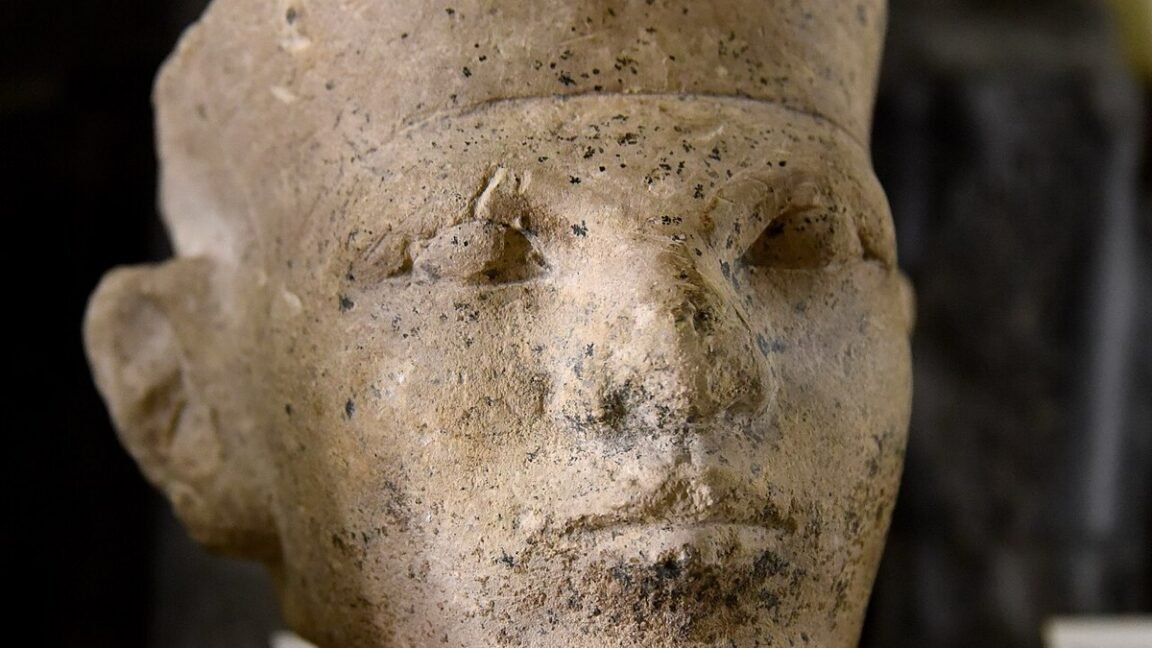
    Limestone head of a king, thought by Flinders Petrie to be Narmer, on the basis of the similarity to the head of Narmer on the Narmer Palette. This has not been generally accepted by Egyptologists.
    Share
    Facebook Twitter LinkedIn Pinterest Email

    Telltale fractures

    Campbell re-examined the 46 crania to ascertain age and sex, as well as clues about their health and how the individuals may have died. Her findings with regard to biological sex were largely consistent with Petrie’s, although Campbell cautions that it’s difficult to make a conclusive finding based only on the skulls; one would need the pelvic bones to be sure. Even if she had the funds and the time to re-excavate those remains, it would be extremely difficult to match the bones to their respective crania.

    Most interesting was the presence of linear fractures in 18 of the skulls (about 39 percent), suggesting blunt force trauma. Such fractures would have knocked the individuals unconscious, causing internal bleeding and likely death, per Campbell. Some of the skulls also showed signs of sharp-force trauma, including signs of chopping to one of the skull’s eyes. As for how the others might have died, scholars have suggested asphyxiation, strangulation, or poisoning.

    Petrie didn’t note any evidence of fatal trauma on the remains, but the field has advanced considerably over the last century. “I don’t think he missed them because he was a pretty careful observer,” said Campbell. “He just didn’t know what he was looking at. It’s only in the past few decades that we’ve gotten a much clearer understanding of how to differentiate the timing of an injury. A lot of that is studying how dry bone, fresh bone, bone that is exposed to different types of forces will react to different types of insults. If you don’t know that a bone is going to break differently if it’s 100 years old versus 1,000 years old versus 6 days old, you would see a crack and go, ‘Oh, well, it probably happened during excavation.’ That’s not uncommon, unfortunately.”

    While Egyptian rulers are often shown smiting enemies with a mace, such a weapon would have caused depressed fractures, not the lineaer variety observed here, so it is more likely to have been a flat, wide, lighter weapon of some kind. “It’s really hard to say specifically,” said Campbell. “It could be as simple as a board. Petrie thought it could have been a sandbag. Honestly, sandbags are very heavy, and I think the force required to swing a large sandbag might’ve caused more damage, but you could easily fashion some kind of wooden club. People use makeshift weapons all the time.”

    Egyptian evidence forensic retainer sacrifice supports
    Share. Facebook Twitter Pinterest LinkedIn Tumblr Email
    Previous ArticleCan ‘super intelligence’ and a non-binding safety pact solve AI’s image problem?
    • Website

    Related Posts

    AI News

    Can ‘super intelligence’ and a non-binding safety pact solve AI’s image problem?

    AI News

    Google froze its open source bug bounty program due to a ‘significant rise’ in AI submissions

    AI News

    TechCrunch Mobility: Reining in robotaxis

    Add A Comment
    Leave A Reply Cancel Reply

    Top Posts

    New forensic evidence supports Egyptian “retainer sacrifice”

    0 Views

    Can ‘super intelligence’ and a non-binding safety pact solve AI’s image problem?

    1 Views

    Google froze its open source bug bounty program due to a ‘significant rise’ in AI submissions

    1 Views
    Stay In Touch
    • Facebook
    • YouTube
    • TikTok
    • WhatsApp
    • Twitter
    • Instagram
    Latest Reviews
    AI Tutorials

    Quantization from the ground up

    AI Tools

    David Sacks is done as AI czar — here’s what he’s doing instead

    AI Reviews

    Judge sides with Anthropic to temporarily block the Pentagon’s ban

    Subscribe to Updates

    Get the latest tech news from FooBar about tech, design and biz.

    Most Popular

    New forensic evidence supports Egyptian “retainer sacrifice”

    0 Views

    Can ‘super intelligence’ and a non-binding safety pact solve AI’s image problem?

    1 Views

    Google froze its open source bug bounty program due to a ‘significant rise’ in AI submissions

    1 Views
    Our Picks

    Quantization from the ground up

    David Sacks is done as AI czar — here’s what he’s doing instead

    Judge sides with Anthropic to temporarily block the Pentagon’s ban

    Subscribe to Updates

    Get the latest creative news from FooBar about art, design and business.

    Facebook X (Twitter) Instagram Pinterest
    • About Us
    • Contact Us
    • Terms & Conditions
    • Privacy Policy
    • Disclaimer

    © 2026 ainewstoday.co. All rights reserved. Designed by DD.

    Type above and press Enter to search. Press Esc to cancel.