

Good morning, {{ first_name | AI enthusiasts }}, and welcome to our 5,034 new readers. Last month, OpenAI went from hacker to hacked. This month, it used ChatGPT to play the detective.
Federal prosecutors now say one of its engineers hid a recorder in the company’s executive meeting room, and OpenAI says its own AI helped crack the case. Washington is treating it as a national security matter, which tells you how much the conversations in that room are now worth.
-
OpenAI engineer bugged exec meeting room
-
AI’s taste skills move up self-improvement timeline
-
Give Grok Bot its own email inbox
-
Character AI declares bankruptcy, Disney bids $20M
OPENAI

Image source: U.S. Dept. of Justice
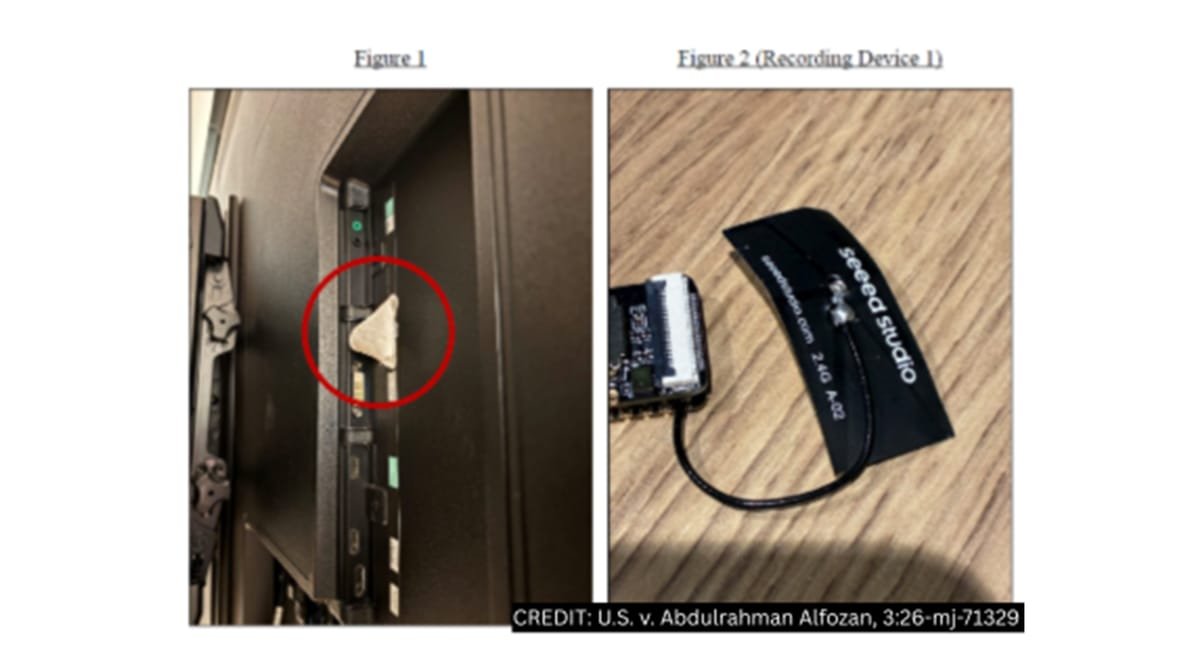
The Rundown: U.S. federal prosecutors just charged OpenAI engineer Abdulrahman Alfozan, a Saudi national, with trying to eavesdrop on company leaders via a recording device hidden in its SF office, and OpenAI says its own AI helped trace the device to him.
-
OpenAI’s bug-sweeping team found the recorder on Sept. 30, tucked inside toilet paper behind a meeting room TV, about two days after it allegedly went in.
-
Prosecutors say a chatbot account linked to his spouse asked how to listen in remotely, encrypt a memory card, and hide a homemade recorder.
-
OpenAI says investigators fed forensic copies of the bug’s storage to its models, which helped explain the hard-to-detect device and point to the employee.
-
The case hasn’t been tied to any foreign government, though U.S. Attorney Craig Missakian said: “For us, it is a matter of national security.”
Why it matters: AI is being treated as an insider risk, but this case reminds us that humans are just as big a security vulnerability. With AI now central to geopolitics, incidents like this — especially with the U.S. involved — hand even more ammunition to the camp that thinks frontier labs eventually end up under government control.
TOGETHER WITH SLACK FROM SALESFORCE

The Rundown: Your teams already work in Slack. Now your AI can too. Slackbot runs as an open-standard MCP client, connecting Salesforce, partner tools, and custom apps into one conversational interface.
This on-demand webinar shows you how to:
-
Unify your whole stack in one place—no more context-switching
-
Put human teams and AI agents to work side-by-side
-
Keep enterprise-grade governance and permissions intact
ANTHROPIC & AI RESEARCH

The Rundown: Anthropic co-founder Jack Clark just moved up his projection for when AI could fully improve itself (recursive self-improvement) to 2027 from 2028, pointing in part to a new test that tracks how quickly AI’s research instincts are improving.
-
P-Zero Research’s TasteVal test gives models eight AI-building problems to plan experiments for, while a separate coding agent handles the actual work.
-
Anthropic’s Opus 5.5 led the field, running about 30x cheaper per attempt than 24 human experts who previously worked at OpenAI, Google DeepMind, and more.
-
Back in May, Clark put just 30% odds on fully automated AI research in 2027, saying the work needed creative leaps models hadn’t clearly shown.
-
Anthropic’s engineers also wrote today that “coding is no longer the bottleneck” at the company, with daily merges up over 10x since May as Claude writes more.
Why it matters: OpenAI has been very open about its goal of a fully automated AI researcher, and Anthropic’s leaders keep banging the drum that self-improving AI is getting closer to reality. With that step seen as the ultimate accelerant for AI progress, as fast as things are moving now, the real speedup may not have even started yet.
AI TRAINING

The Rundown: In this guide, you’ll give Grok Bot an email address and use it to turn project updates into a short brief. You’ll check a changed deadline and review a reply before anything is sent.
-
Open Grok Bot and set a rule that asks before sending or forwarding email. Keep personal inbox connections out of this first test
-
Ask Bot to claim its new inbox and confirm the address. Access is rolling out, and teams need admin enablement
-
Send the guide’s practice emails from an account you control. Ask Bot to show each subject and a quote so you can confirm it read all three
-
Ask for a project update and a reply draft. Check the approved launch date, completed work, and missing details before approving any send to yourself
-
Send the changed-deadline email and ask for an update. Check that the new date replaces the old one while the other facts stay unchanged
Pro tip: A separate address does not remove access you’ve already given Bot. Keep the first test limited to fictional messages and your own recipient address. Pro members get the practice emails, prompts, and review checklist.
PRESENTED BY GOOGLE FOR STARTUPS

The Rundown: The Google for Startups Hub’s masterclass is a rapid-fire recap of SF Tech Week, bringing together leaders from X, Wiz, and Google DeepMind to share actionable strategies for building, shipping, and scaling AI products.
In this session, you’ll learn how to:
-
Deploy reliable agentic workflows into production
-
Engineer for 10x scale and de-risk moonshots
-
Turn frontier AI research into shipped products
CHARACTER AI

Image source: Character AI
The Rundown: Character AI, the app where users chat with created AI characters that was once valued as high as $2.5B, filed for bankruptcy to put itself up for sale, with Disney placing the opening $20M bid for a license to some of its tech.
-
Character AI said it was answering 20K messages a second in 2024, putting it among the top apps for time spent as an early consumer AI breakout
-
Google paid $2.7B in 2024 to license the tech and bring back founders Noam Shazeer and Daniel De Freitas, and is now owed over $4M in the filing.
-
Disney sent a cease-and-desist in 2025 over its unlicensed characters, and ex-CEO Karandeep Anand left to become Disney’s CTO a year later.
-
It also settled a suit over a teen’s suicide and banned minors from the platform, but still faced other cases over bots posing as doctors and urging self-harm.
Why it matters: Character AI ranked among the hottest early consumer AI apps, but got mired in the same safety controversies that have hit other chatbots. Disney went from legal threats to hiring away Character AI’s CEO to now being first in line at the sale — but if the service doesn’t get any takers by early December, it will probably shut down.
COMMUNITY AI WORKFLOW OF THE DAY
▸ Michel built a late-invoice reminder agent with Claude Cowork
Today’s workflow comes from reader Michel:
“I built a workflow that prepares late invoice reminder emails for me. Our industry has tight margins, and our back end is rudimentary with limited capabilities, so sending these reminders was annoying, repetitive manual labor.
I had Claude Cowork walk me through creating an agent that logs in every Monday night, checks our late AR, and compares the customer names against a Google Sheet list I created. It uses an email template I provided, adds the contact name from the Sheet, and includes each late invoice’s identifying number, amount, and due date.
The agent puts the emails in my Drafts folder and emails me a report showing which customers were included, how much each one owes, and the totals. All I have to do is review the drafts, confirm everything looks good, and hit Send. This has saved me about an hour every Monday night.”
What have you fixed or built with AI lately? Share your workflow, and you could be featured right here in The Rundown.
-
🔐 Tines 3B – One secure environment to deliver AI agents, apps, and automations faster, safely, and at scale*
-
4️⃣ Gemini 4 Argon – Google’s new flagship model, now generally available
-
🚀 Muse Wonder – Meta’s new frontier AI model family
-
🗣️ Drama 3 – Fish Audio’s open-weight text-to-speech AI you direct like an actor
Google opened access to Gemini 4 Argon, with Pro and Ultra users getting it in the Gemini app plus Search’s AI Mode, and devs paying $2/$10 per million tokens via API.
SpaceXSI (newly renamed) introduced the X Subscription, bundling Grok, Cursor, and X Premium together and a new $30 tier replacing $90 of previously separate bills.
‘Godfathers of AI’ Geoffrey Hinton and Yoshua Bengio called for a global body to log AI “containment failures” in a new open letter alongside 400+ other scientists, asking labs to keep hacking-capable models offline by default and disclose every breakout.
Anthropic detailed new defenses against labs copying Claude by training on its answers (distillation), with data showing 90-99% less harvesting from Chinese AI rivals.
MIT spinout Liquid AI released LFM2.5-24B-A2B, an open model built to run AI agents on high-end laptops, beating Alibaba’s larger Qwen3.6 in 5 of 8 agent and tool-use tests.
That’s it for today!
Before you go we’d love to know what you thought of today’s newsletter to help us improve The Rundown experience for you.
Rowan, Zach, Shubham, Jennifer, and Nate — the humans behind The Rundown
