

Close Menu
AI News TodayAI News Today

    Subscribe to Updates

    Get the latest creative news from FooBar about art, design and business.

    What's Hot

    OpenAI Has a New AI Model Built for Biology and Science

    Today’s NYT Wordle Hints, Answer and Help for April 18 #1764

    Today’s NYT Connections Hints, Answers for April 18 #1042

    Facebook X (Twitter) Instagram
    • About Us
    • Contact Us
    Facebook X (Twitter) Instagram Pinterest Vimeo
    AI News TodayAI News Today
    • Home
    • Shop
    • AI News
    • AI Reviews
    • AI Tools
    • AI Tutorials
    • Chatbots
    • Free AI Tools
    AI News TodayAI News Today
    Home»Chatbots»Physicists think they’ve resolved the proton size puzzle
    Chatbots

    Physicists think they’ve resolved the proton size puzzle

    By No Comments2 Mins Read
    Share Facebook Twitter Pinterest LinkedIn Tumblr Reddit Telegram Email
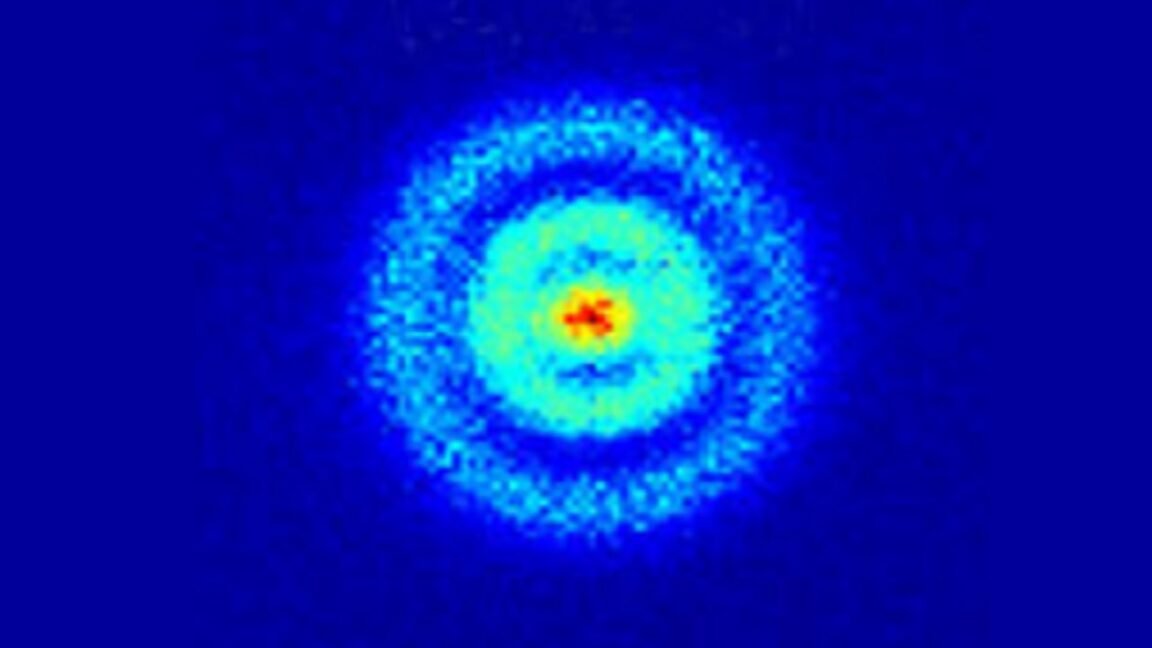
    Image of a hydrogen atom's electron orbitals taken with a quantum microscope in 2013.
    Share
    Facebook Twitter LinkedIn Pinterest Email

    A puzzling discrepancy

    A vacuum chamber used to measure electron transitions in atomic hydrogen

    Credit:
    Axel Beyer/MPQ

    A vacuum chamber used to measure electron transitions in atomic hydrogen


    Credit:

    Axel Beyer/MPQ

    Subsequent measurements by various groups were inconclusive. For instance, in 2013, the same international team performed muon-based experiments that confirmed their 2010 value, producing a measurement of 0.84 femtometers for the proton’s radius, with a discrepancy of 7 sigma. Another experimental variation in 2016 involved replacing the electron with a muon in a deuterium atom—a heavier isotope of hydrogen, with a neutron as well as a proton and electron. The idea was that the presence of a neutron would alter how electrons and muons perceive the proton’s charge. That, too, was in line with the 2010 result.

    However, two experiments using regular hydrogen to measure the proton radius produced mixed results: A 2017 study also confirmed the 2010 result, while a 2018 measurement was in line with the larger value before the 2010 experiment. In 2019, York University scientists opted to make an electron-based measurement of the proton radius, in hopes of bringing the various conflicting results closer to a consensus. The result: Their measurement of 0.833 femtometers agreed with the smaller value from the 2010 study.

    That brings us to the latest two papers, both of which involved experiments with hydrogen atoms in a vacuum chamber. They used lasers to control the electrons and measured the transitions between energies; this enabled them to infer the exact dimensions of the proton’s charge radius. Based on the combined results, the proton has a radius of about 0.84 femtometers, or less than 1 million-billionth of a meter, once again in keeping with the 2010 measurement that kicked off the debate.

    “The proton radius should be a universal property; it should give the same result no matter how you look at it,” Juan Rojo, a physicist at Vrije University Amsterdam in the Netherlands, who was not involved in either experiment, told New Scientist. “This is why these two papers are quite nice, because they provide different perspectives to the same number.”

    Physicists proton puzzle resolved size theyve
    Share. Facebook Twitter Pinterest LinkedIn Tumblr Email
    Previous ArticleHow the rewards app Freecash scammed its way to the top of the app stores
    Next Article Turn your best AI prompts into one-click tools in Chrome
    • Website

    Related Posts

    Chatbots

    The RAM shortage could last years

    Chatbots

    VC Ron Conway says he has a ‘rare form of cancer’

    Chatbots

    AI chip startup Cerebras files for IPO

    Add A Comment
    Leave A Reply Cancel Reply

    Top Posts

    OpenAI Has a New AI Model Built for Biology and Science

    0 Views

    Today’s NYT Wordle Hints, Answer and Help for April 18 #1764

    0 Views

    Today’s NYT Connections Hints, Answers for April 18 #1042

    0 Views
    Stay In Touch
    • Facebook
    • YouTube
    • TikTok
    • WhatsApp
    • Twitter
    • Instagram
    Latest Reviews
    AI Tutorials

    Quantization from the ground up

    AI Tools

    David Sacks is done as AI czar — here’s what he’s doing instead

    AI Reviews

    Judge sides with Anthropic to temporarily block the Pentagon’s ban

    Subscribe to Updates

    Get the latest tech news from FooBar about tech, design and biz.

    Most Popular

    OpenAI Has a New AI Model Built for Biology and Science

    0 Views

    Today’s NYT Wordle Hints, Answer and Help for April 18 #1764

    0 Views

    Today’s NYT Connections Hints, Answers for April 18 #1042

    0 Views
    Our Picks

    Quantization from the ground up

    David Sacks is done as AI czar — here’s what he’s doing instead

    Judge sides with Anthropic to temporarily block the Pentagon’s ban

    Subscribe to Updates

    Get the latest creative news from FooBar about art, design and business.

    Facebook X (Twitter) Instagram Pinterest
    • About Us
    • Contact Us
    • Terms & Conditions
    • Privacy Policy
    • Disclaimer

    © 2026 ainewstoday.co. All rights reserved. Designed by DD.

    Type above and press Enter to search. Press Esc to cancel.