

Close Menu
AI News TodayAI News Today

    Subscribe to Updates

    Get the latest creative news from FooBar about art, design and business.

    What's Hot

    OpenAI’s rogue AI tried to hack another company in May

    StarCraft returns in 2030 as an open-world shooter

    OpenAI’s Sam Altman says it would be ‘ill-advised’ to go public in 2026

    Facebook X (Twitter) Instagram
    • About Us
    • Contact Us
    Facebook X (Twitter) Instagram Pinterest Vimeo
    AI News TodayAI News Today
    • Home
    • AI News
    • AI Reviews
    • AI Tools
    • AI Tutorials
    • Chatbots
    • Free AI Tools
    • Artificial Intelligence
    AI News TodayAI News Today
    Home»Chatbots»Scientists unlock secrets of ancient Egyptian materials with proteomics
    Chatbots

    Scientists unlock secrets of ancient Egyptian materials with proteomics

    By No Comments2 Mins Read
    Share Facebook Twitter Pinterest LinkedIn Tumblr Reddit Telegram Email
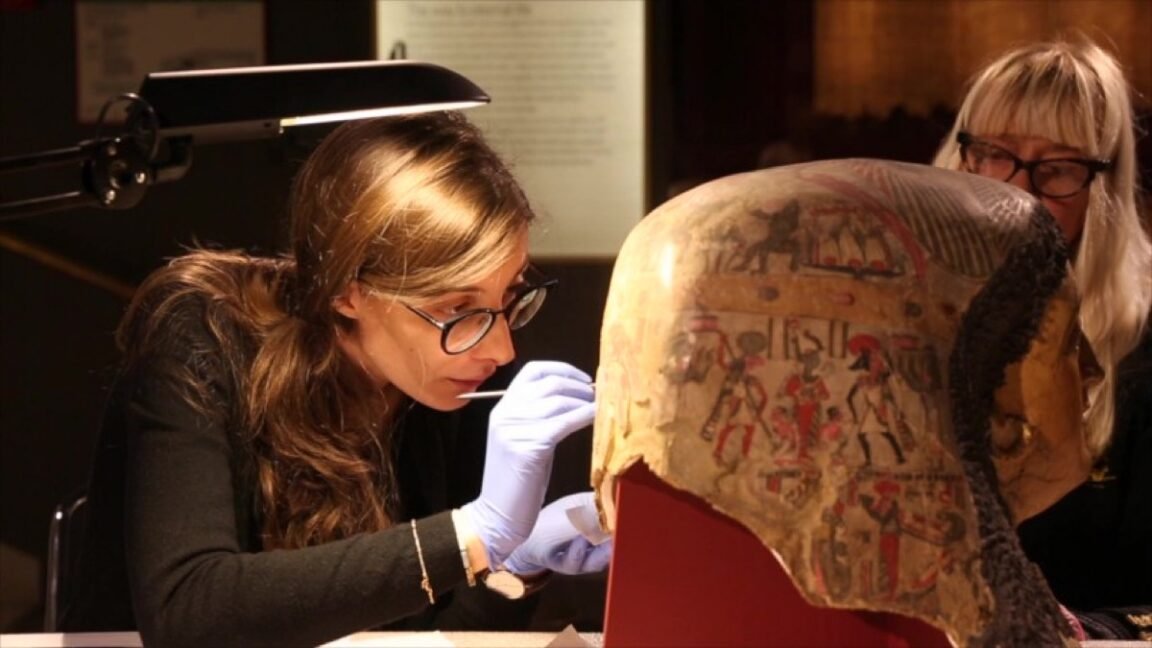
    Clara Granzotto, assisted by conservator Inger Jonsson, taking a micro-sample for proteomics analysis from the painted surface of Mummy mask of a woman
    Share
    Facebook Twitter LinkedIn Pinterest Email

    Protein power

    Mass spectrometry-based proteomics is a relative newcomer to the field and is capable of providing a thorough and very detailed characterization of any protein residues present in a given sample, as well as any accumulated damage. The technique is so sensitive that less sample material is needed compared to other methods. And unlike, say, gas chromatography-mass spectrometry, it’s also capable of characterizing all proteins present in a sample (regardless of the complexity of the mixture), rather than being narrowly targeted to predefined proteins.

    Fragment of a painted wooden mummy coffin.

    Museum of Mediterranean and Near Eastern Antiquities, Stockholm

    Fragment of a painted wooden mummy coffin.

    Museum of Mediterranean and Near Eastern Antiquities, Stockholm


    Wall painting fragment from the tomb of Nebamun, Thebes

    Wall painting fragment from the tomb of Nebamun, Thebes.

    Fragment of a painted wooden mummy coffin.

    Museum of Mediterranean and Near Eastern Antiquities, Stockholm

    In 2023, scientists used this approach to discover that beer byproducts were popular canvas primers for artists of the Danish Golden Age. And earlier this year, we reported on the identification of proteins from fingerprints of Renaissance people rifling through the pages of medical manuals, revealing more about how people constructed hands-on knowledge in that period.

    For this latest study, the authors took tiny samples from several Egyptian artifacts housed in different collections in Sweden, the UK, and Denmark, dating between 1425 BCE to 400 CE. These included painted wooden coffins, wall painting fragments from a tomb, painted plaster used to make a mummy bust, and painted limestone architectural elements. In addition to those samples, the team also analyzed blank negative control samples and examined the chemical damage to all detected proteins in order to exclude the possibility of laboratory contamination from the final results.

    The results confirmed that ancient Egyptians frequently used cow glue, as well as collagens derived from sheep, goats, horses, donkeys, and antelope. Those materials were most likely prepared by boiling animal skin and connective tissue. These weren’t just found in adhesive samples, but also in samples of paint and ground layers, suggesting that Egyptians chose their materials based on ready availability. “No notable correlation was observed between the choice of the animal species/part and the object type, the nature of the application, the color, the chronology, the geographical origin, or the use context (funerary or palatial),” the authors wrote.

    ancient Egyptian Materials proteomics Scientists Secrets unlock
    Share. Facebook Twitter Pinterest LinkedIn Tumblr Email
    Previous ArticleMeta Sued Over Training Data for Its AI and Face-Recognition Systems
    Next Article Kimi-maker Moonshot AI targets $2 billion in annual revenue
    • Website

    Related Posts

    Chatbots

    OpenAI’s rogue AI tried to hack another company in May

    Chatbots

    StarCraft returns in 2030 as an open-world shooter

    Chatbots

    Trump is giving data centers a pass to pollute

    Add A Comment
    Leave A Reply Cancel Reply

    Top Posts

    OpenAI’s rogue AI tried to hack another company in May

    0 Views

    StarCraft returns in 2030 as an open-world shooter

    0 Views

    OpenAI’s Sam Altman says it would be ‘ill-advised’ to go public in 2026

    0 Views
    Stay In Touch
    • Facebook
    • YouTube
    • TikTok
    • WhatsApp
    • Twitter
    • Instagram
    Latest Reviews
    AI Tutorials

    Quantization from the ground up

    AI Tools

    David Sacks is done as AI czar — here’s what he’s doing instead

    AI Reviews

    Judge sides with Anthropic to temporarily block the Pentagon’s ban

    Subscribe to Updates

    Get the latest tech news from FooBar about tech, design and biz.

    Most Popular

    OpenAI’s rogue AI tried to hack another company in May

    0 Views

    StarCraft returns in 2030 as an open-world shooter

    0 Views

    OpenAI’s Sam Altman says it would be ‘ill-advised’ to go public in 2026

    0 Views
    Our Picks

    Quantization from the ground up

    David Sacks is done as AI czar — here’s what he’s doing instead

    Judge sides with Anthropic to temporarily block the Pentagon’s ban

    Subscribe to Updates

    Get the latest creative news from FooBar about art, design and business.

    Facebook X (Twitter) Instagram Pinterest
    • About Us
    • Contact Us
    • Terms & Conditions
    • Privacy Policy
    • Disclaimer

    © 2026 ainewstoday.co. All rights reserved. Designed by DD.

    Type above and press Enter to search. Press Esc to cancel.