

Close Menu
AI News TodayAI News Today

    Subscribe to Updates

    Get the latest creative news from FooBar about art, design and business.

    What's Hot

    Scimplify raises $25M to challenge China’s grip on critical materials with AI

    Voting on Features: Federated Feature Selection Without Sharing Data

    The Internet’s undersea backbone is slipping into the danger zone

    Facebook X (Twitter) Instagram
    • About Us
    • Contact Us
    Facebook X (Twitter) Instagram Pinterest Vimeo
    AI News TodayAI News Today
    • Home
    • AI News
    • AI Reviews
    • AI Tools
    • AI Tutorials
    • Chatbots
    • Free AI Tools
    • Artificial Intelligence
    AI News TodayAI News Today
    Home»AI News»The Internet’s undersea backbone is slipping into the danger zone
    AI News

    The Internet’s undersea backbone is slipping into the danger zone

    By No Comments3 Mins Read
    Share Facebook Twitter Pinterest LinkedIn Tumblr Reddit Telegram Email
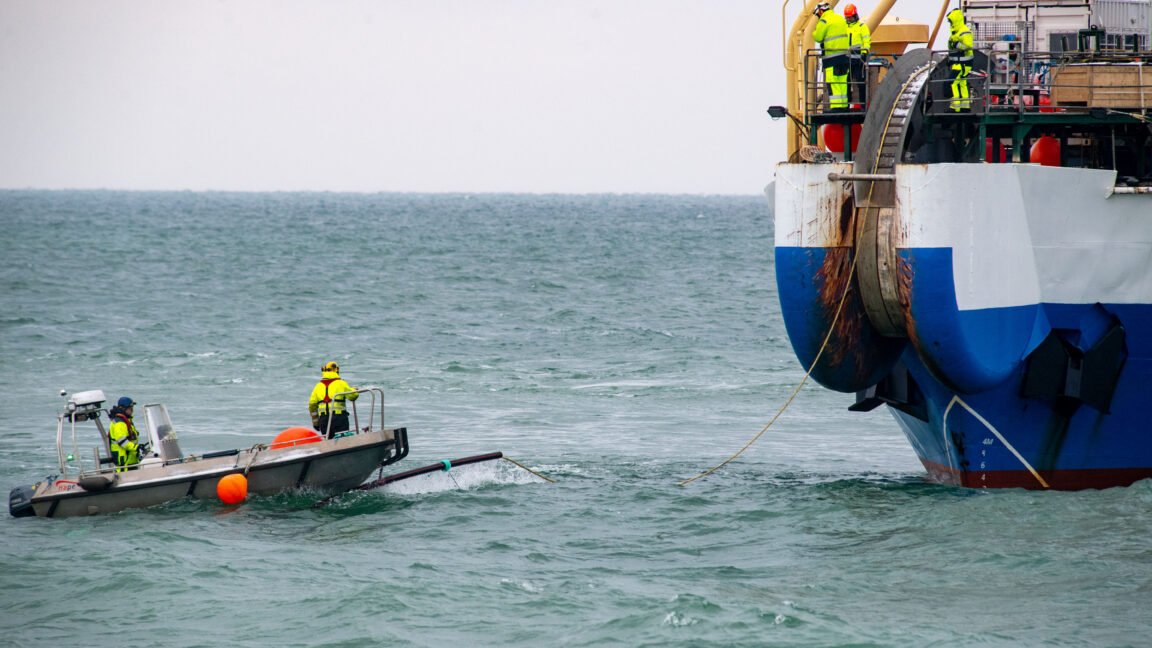
    A fiber optic cable is pulled ashore from the cable-laying ship "Pleijel" at the entrance to the port of Sassnitz on the island of Rügen, Germany in November 2023.
    Share
    Facebook Twitter LinkedIn Pinterest Email

    On the other side of the world, the captain of the Chinese-owned ship Hong Tai was convicted by a court in Taiwan of severing an undersea telecommunications cable in February 2025 and sentenced to three years in prison in June 2025. The island democracy’s legislature later amended its laws to increase penalties for intentional damage to undersea cables or pipelines and allow for up to seven years in prison.

    This year has seen several notable incidents involving both overt and covert threats to undersea infrastructure, including Iranian efforts to impose fees on operators of undersea cables running through the contested Strait of Hormuz. Separately, a joint operation involving the UK, Norway and the United States confronted Russian submarines that were practicing using a new technology to disable undersea cables in Arctic waters near Norway’s Svalbard archipelago.

    What happens when the Internet’s undersea backbone, not to mention crucial energy infrastructure, is no longer protected by near-universal international agreement? Ars spoke with Braw to find out more. (The interview has been condensed and edited for clarity.)

    Elisabeth Braw is the author of the book Undersea War.

    Credit:
    Hachette Book Group (cover art) / Annabel Moeller (author photo)

    Elisabeth Braw is the author of the book Undersea War.


    Credit:

    Hachette Book Group (cover art) / Annabel Moeller (author photo)

    Ars Technica: Right now there’s so much suspicion and tension around undersea infrastructure. But it does seem like for quite a few decades, even during the Cold War, there was a broad international framework that mostly worked where countries generally agreed not to mess around too much.

    Braw: Exactly. It worked for so long, and that’s why it’s so frightening to see that system that really depends on everybody doing the right thing and being a good seabed citizen, as it were, may not work for that much longer.

    Ars Technica: I know it’s not really any single factor, but I’m curious what you would highlight as the key contributing factors to why we’re seeing a breakdown in that general agreement.

    Braw: If you think about the absolutely crucial nature of subsea cables and pipelines, especially subsea cables… if they were to be disrupted for even just a minute, it would cause massive disruption to not just the New York City area, but also New York as a financial hub. It would cause operational losses, but also the loss of all that money that goes through the cables every second of every day.

    So if you think about the utter importance of subsea cables to modern societies and modern economies, then that makes them incredibly attractive as a target. Whereas during the Cold War, we had telephone cables, but there weren’t that many of them, and we didn’t use them as much. Yes, they were used for international phone calls, and there were also telegraph messages that could be sent. But nobody sent telegrams around the clock, and nobody made international phone calls around the clock. So they were there, but they were just less crucial.

    backbone danger Internets slipping undersea zone
    Share. Facebook Twitter Pinterest LinkedIn Tumblr Email
    Previous ArticleA Scaffold at the Gate: Building AI Applications That Can Evolve
    Next Article Voting on Features: Federated Feature Selection Without Sharing Data
    • Website

    Related Posts

    AI News

    Scimplify raises $25M to challenge China’s grip on critical materials with AI

    AI News

    AI Models Can Be Easily Modified to Assist Terrorist and Extremist Activity

    AI News

    Helix Carbon says it can make iron cheaper by recycling blast furnace pollution

    Add A Comment
    Leave A Reply Cancel Reply

    Top Posts

    Scimplify raises $25M to challenge China’s grip on critical materials with AI

    0 Views

    Voting on Features: Federated Feature Selection Without Sharing Data

    1 Views

    The Internet’s undersea backbone is slipping into the danger zone

    1 Views
    Stay In Touch
    • Facebook
    • YouTube
    • TikTok
    • WhatsApp
    • Twitter
    • Instagram
    Latest Reviews
    AI Tutorials

    Quantization from the ground up

    AI Tools

    David Sacks is done as AI czar — here’s what he’s doing instead

    AI Reviews

    Judge sides with Anthropic to temporarily block the Pentagon’s ban

    Subscribe to Updates

    Get the latest tech news from FooBar about tech, design and biz.

    Most Popular

    Scimplify raises $25M to challenge China’s grip on critical materials with AI

    0 Views

    Voting on Features: Federated Feature Selection Without Sharing Data

    1 Views

    The Internet’s undersea backbone is slipping into the danger zone

    1 Views
    Our Picks

    Quantization from the ground up

    David Sacks is done as AI czar — here’s what he’s doing instead

    Judge sides with Anthropic to temporarily block the Pentagon’s ban

    Subscribe to Updates

    Get the latest creative news from FooBar about art, design and business.

    Facebook X (Twitter) Instagram Pinterest
    • About Us
    • Contact Us
    • Terms & Conditions
    • Privacy Policy
    • Disclaimer

    © 2026 ainewstoday.co. All rights reserved. Designed by DD.

    Type above and press Enter to search. Press Esc to cancel.