

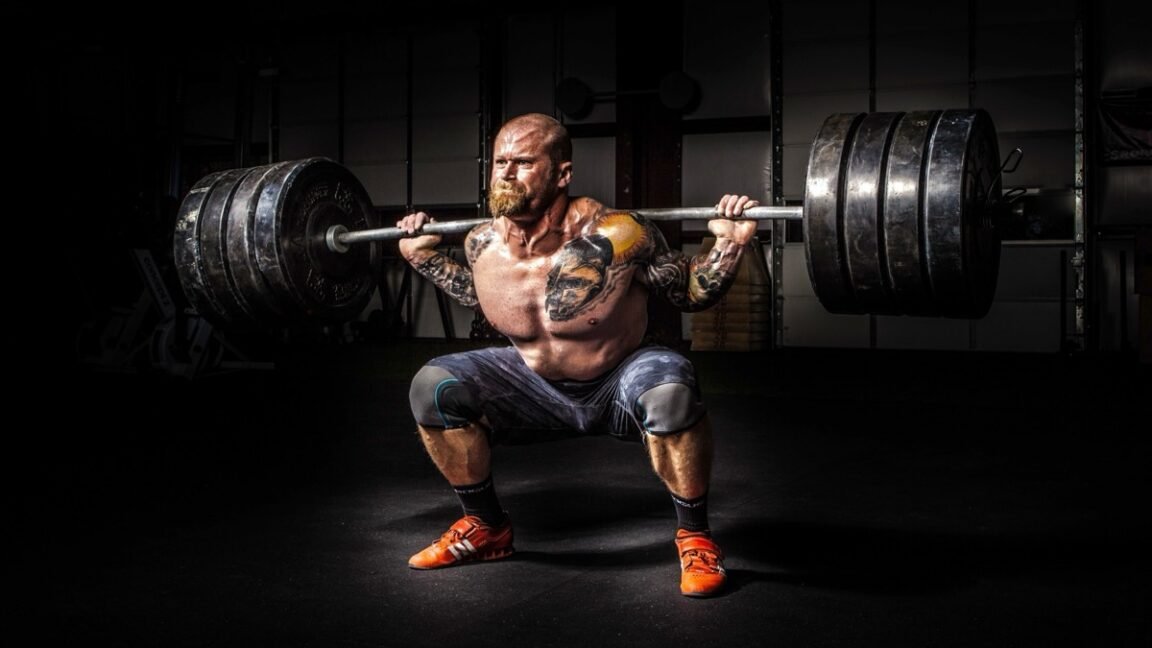
Precisely which features make for the best barbell is still a puzzle. Olympic barbells have the same weight, diameter, and length, but other aspects can differ from brand to brand, such as the materials used. Most are made of some sort of steel, with stainless and chrome coated being the most common, and the respective mechanical properties can make a small difference to a given bar’s whip, according to Langlois. Specifically, the stiffness of the bar (the Young’s modulus) can vary quite a bit. “We don’t have a good feel for this because no barbell manufacturers will tell you exactly how they make the bar,” he said. “It’s all proprietary.”
There can also be variation in the coupling mechanism between the shaft (where you hold onto the bar) and the sleeve (where you load the plates), which can affect how much the bar bends. Sleeves can be bearing (with moving bearings inside for faster rotation), bushing (a solid piece with no moving parts), a hybrid of the two, or just bare steel. Barbell manufacturers typically recommend bushing sleeves for slower, heavy lifts and bearing sleeves for faster Olympic lifting. “The coupling mechanism varies between bushings, bearings, or bare steel,” said Langlois. “Bearings seem to have the best coupling, and that’s what most expensive barbells use.”
So what’s next? “We know that the bar matters,” said Langlois. “We know that it changes shape, changes frequency, with load. So now we’re going to take data with real Olympic weightlifters [men and women] so we can see exactly how they use the whip and how the bar matters for them.”