

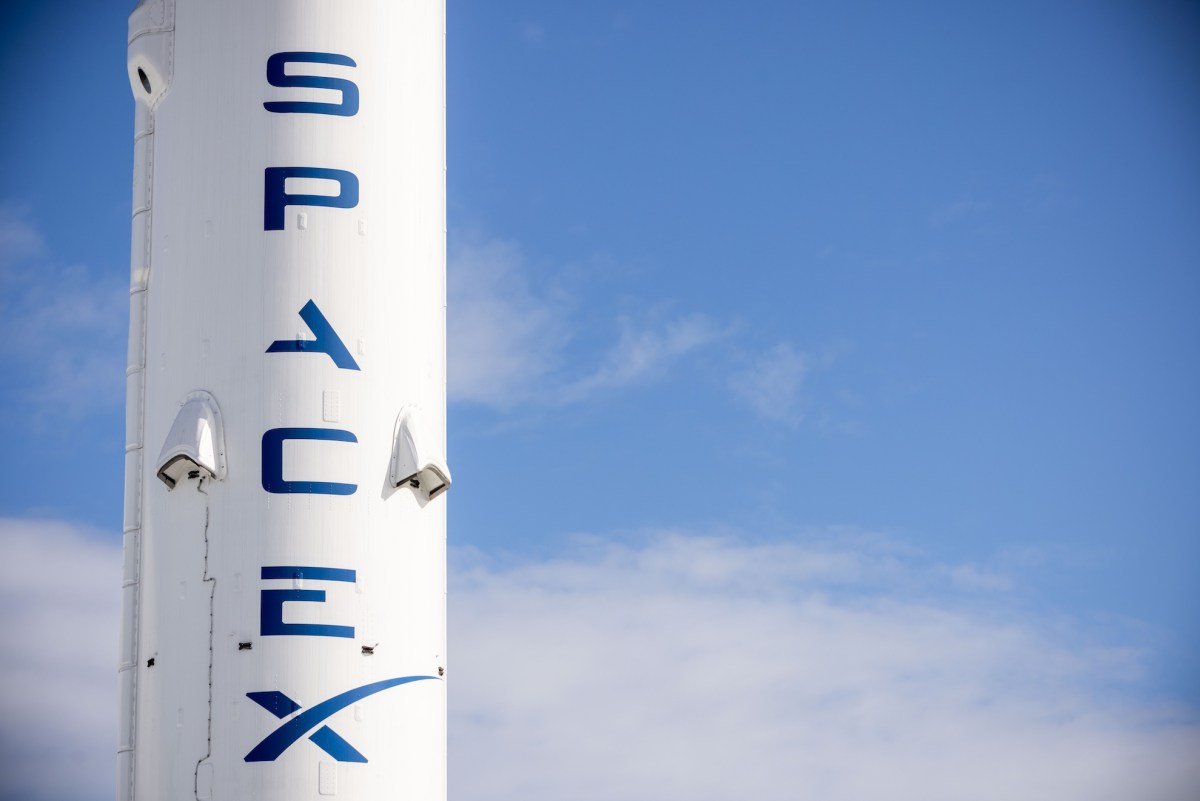
SpaceX, the aerospace company founded by Elon Musk 24 years ago, has finally made its IPO filing public. And once the company goes public, Musk will be at its center as CEO, CTO, and Chairman of the board.
The hefty filing, posted after markets closed Wednesday, shows a company that has developed far beyond its initial pursuit of reusable rockets — although its long-term mission to create a multi-planetary species remains intact. SpaceX is now a technology conglomerate working on satellites and AI, and has become one of the world’s most valuable private companies.
When it goes public later this year on the Nasdaq exchange, it will become one of the most valuable publicly-traded companies. (Nvidia currently holds the crown with a market cap of $5.4 trillion.) SpaceX has chosen the ticker “SPCX” for the listing.
The regulatory filing, known as an S-1, offers the most vivid and financially illuminating public dissection of SpaceX’s business to date. And it comes just weeks ahead of what’s expected to be the largest IPO ever, both in terms of potential money raised (expected to be around $75 billion) and overall valuation (reportedly $1.75 trillion). It contains 36 pages of risk factors to SpaceX’s business, and details legal fights it faces following the absorption of Musk’s artificial intelligence and social media companies — battles SpaceX says will likely cost it $530 million.
Many of the headline details have been reported in the weeks since SpaceX first submitted a confidential version of its S-1 filing to the Securities and Exchange Commission on April 1. The company lost about $4.9 billion in 2025 on revenue of more than $18 billion, as Reuters reported last month.
The filing details a business that is currently dominated by SpaceX’s Starlink satellite internet offering, which generated more than half of the company’s revenue last year — around $11 billion. It also shows how much SpaceX has burned to get to this point: more than $37 billion lost since inception, according to the S-1.
XAI, the artificial intelligence company Elon Musk created and recently merged into SpaceX, is not helping on that front. The filing shows SpaceX directed around 60% of its capital spending in 2025 to its AI division, or around $20 billion. And yet that division — which houses the chatbot Grok — lost billions last year, and only grew revenue by about 22%. That’s far below the reported revenue growth rates at frontier AI labs.
But the company is, of course, making a lot of astronomical promises in the filing. One of the biggest? That it has “identified the largest actionable total addressable market in human history” of $28.5 trillion. The company attributes an enormous portion of that — $22.7 trillion — to “enterprise applications” of AI.
It’s all about the rocket
Despite SpaceX’s complex business, much of its future is pegged to the success of Starship, the fully reusable heavy-lift rocket that has had a series of explosions and technical revamps over the past several years. The company is expected to conduct the 12th launch of Starship as early as this week, and much is riding on its success.
SpaceX said in the filing that it expects Starship to begin payload delivery to orbit in the second half of 2026, leaving little room for error. Assuming SpaceX can hit that milestone, the company plans to begin using Starship to send its Starlink broadband satellites into orbit in the second half of 2026 and its next-generation V2 mobile satellites in 2027.
SpaceX’s plans for Starship stretch far beyond satellite launches. The company wants to use the rapidly reusable spacecraft, which is designed to deliver 100 metric tons to Earth’s orbit, for Mars exploration and to launch orbital AI data centers into space.
Pushing toward that goal has been costly for SpaceX, the S-1 filing shows. The space segment of the company invested heavily in research and development for the Starship program, spending $3 billion in 2025 and $930 million in the first quarter of 2026.
The cost is worth it, in SpaceX’s view. The company said Starship is critical to reducing the cost of reaching orbit by 99% or more relative to the historical average launch cost.
Starry-eyed visions
The S-1 details SpaceX’s many extreme goals, like making life multi-planetary, reaching the moon and Mars, and building orbital networks of satellites that can do space-based computing.
But there are other flashy, futuristic ideas included in the filing, too.
SpaceX is apparently still interested in using its Starship rocket as a terrestrial transportation system — an idea Musk first proposed in 2017. The company says it plans to “develop ultra-fast long-haul point-to-point Earth transport using Starship, enabling passengers and cargo to travel between major cities in a fraction of current transit times, revolutionizing global logistics and passenger travel with unprecedented speed and efficiency.”
The company caveats this idea as a “future market,” so it’s not anywhere in the near-term picture. As a result, the merits and risks of the idea of point-to-point travel doesn’t get the same kind of scrutiny in the filing as SpaceX’s core business.
Another “future market” listed is “space tourism.” SpaceX has flirted with this in the past, allowing private citizens to fly to space on its Dragon spacecraft. It also once planned a mission around the moon with Japanese billionaire Yusaku Maezawa, but that got canceled long before it could happen. In the filing, SpaceX says it expects “increasing interest in human space travel as it becomes easier and more common to access space.”
SpaceX executives also believe that the company will one day enable manufacturing facilities in-orbit and on the moon and Mars.
“We aim to establish in-space manufacturing facilities that leverage the unique microgravity conditions of space to produce materials, pharmaceuticals, and advanced components that are difficult or impossible to manufacture on Earth, opening new high-value industrial markets,” the filing reads. Facilities on the moon and Mars would be focused on producing fuel, construction materials, and other “essential resources,” along with solar energy production.
Lastly, SpaceX believes it could one day get involved in asteroid mining operations. As it is listed as another “future market,” there is little detail about how SpaceX plans to tackle this idea.
Total control
Make no mistake, this is Elon Musk’s company. Per the filing, Musk will be the the CEO, CTO, and Chairman of the SpaceX board after the IPO.
The S-1 shows he owns 93.6% of SpaceX’s Class B stock, which comes with 10 votes per share. Musk is therefore currently sitting on 85.1% of the voting power at SpaceX. That number is expected to drop following the IPO but will stay above 50%, allowing SpaceX to dodge certain rules about having independent directors on its board.
He was also handed a new compensation package at the beginning of this year, which could net him as many as 1 billion shares of Class B stock if he hits increases the value of SpaceX to $7.5 trillion and the “establishment of a permanent human colony on Mars with at least one million inhabitants.” He stands to reap even more shares if the company is able to to create space-based data centers capable of delivering “100 terawatts of compute per year.”
When you purchase through links in our articles, we may earn a small commission. This doesn’t affect our editorial independence.