

Hello and welcome to Regulator, a newsletter for Verge readers about tech politics, political tech, and how they’re muddying the waters of Washington, DC. My birthday is this week, and if you’re not a Verge subscriber but would like to wish me a happy birthday, you should subscribe here, because that would be the best gift of all. (Tips sent to tina.nguyen+tips@theverge.com would be a very good gift, too.)
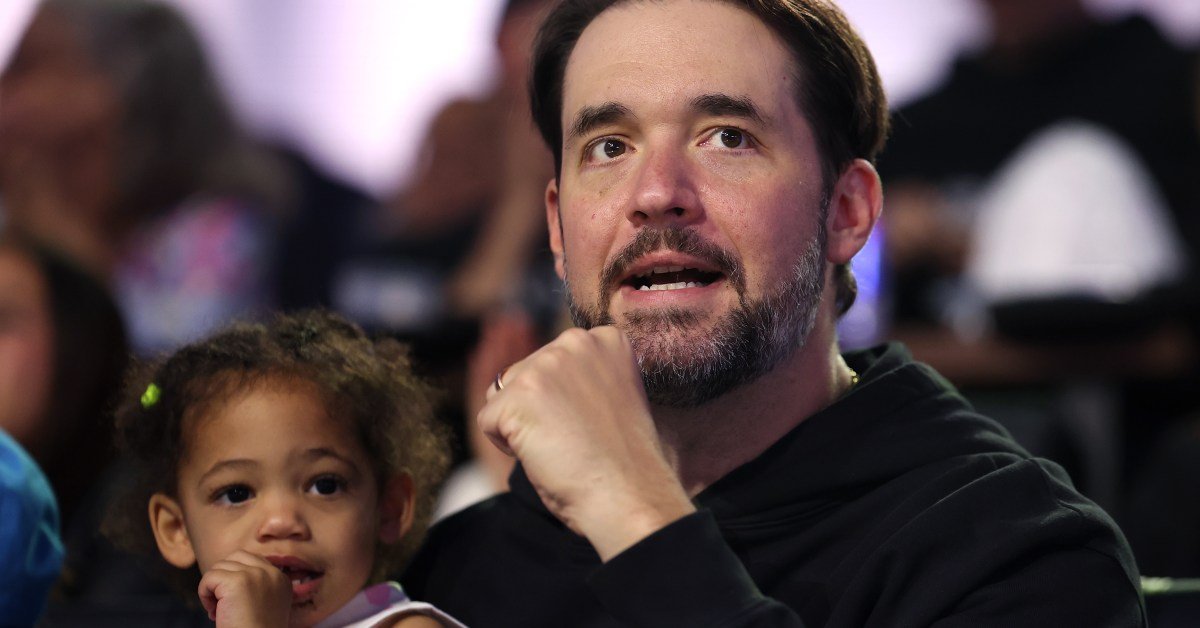
Last night, I watched Alexis Ohanian, venture capitalist and cofounder of Reddit, stun a room of Washington insiders by criticizing the Trump administration’s immigration policies. This happened in front of at least one senior administration official: Michael Kratsios, the director of the Office of Science and Technology Policy and science adviser to President Donald Trump.
Ohanian was being inducted into the Consumer Technology Association’s CT Hall of Fame when he made these remarks at its annual Digital Patriots Dinner. (CTA is more widely known as the group that throws the Consumer Electronics Show in Las Vegas.) But at the end of his acceptance speech, Ohanian, whose grandparents had immigrated to America after fleeing the Armenian genocide, made what appeared to be spontaneous remarks calling for a path to citizenship for undocumented immigrants. After a year of watching tech CEOs supplicating themselves to Trump, this was a bit of a shock to the system. His full remarks, below:
April 24th will be the remembrance day for the Armenian genocide. It’s a sensitive word for some people here, but yes, it was a genocide. [My grandparents] fled and somehow made it through Ellis Island — uneducated, refugees of a foreign war — and this country took them in. And a few generations later, you’ve got me.
The other thing is: My mom overstayed her visa for about four years before I was born, and thankfully, ICE did not round her up, because, instead, she ended up getting a green card and became a proud American citizen. And so, the other thing I’ll also mention, is that if y’all love Reddit, you love $30 billion worth of market cap, thousands of American employees, and tons of innovation — because you know Reddit data basically powered all those LLMs with training data — if you love all those things, then please keep in mind that the son of an undocumented immigrant was the one who helped you [unintelligible]. This country absolutely needs secure borders, and, for so many of the people who are here, they need a pathway.
And please, before we generalize, and before we demonize, and before we villainize, just remember that the people who appreciate this country, often more than those of us who are lucky enough to be born here like myself, are the ones who had to earn their way in. So let’s not lose sight of that.
Ohanian, who stepped down from Reddit in 2020 and now runs the 776 Fund, has expressed similar views on social media, but it hits differently when he says it in person, to the faces of Kratsios, several other administration officials, and industry lobbyists who need to maintain good relationships with the sitting administration. This is, after all, a White House whose massive economic decisions are based on nothing more than vibes and whether they like the person they’re interacting with.
Other honorees included allies of the consumer tech industry, like Sen. Rand Paul (R-KY), and Reps. Jay Obernolte (R-CA) and Ted Lieu (D-CA), who both co-chaired the House AI Task Force. Fun fact: According to Lieu, only four sitting members of Congress have computer science degrees, including him and Obernolte. (Obernolte also has the distinction of holding an advanced degree in artificial intelligence, and being the founder of FarSight Studios, a video game studio.)
Tim Apple is not falling far from the Trump
Not every tech executive is out there critiquing the Trump administration. In fact, this was the week that Tim Cook announced that he would step down as CEO of Apple, and while there’s a lot everyone can say about his relationship with Trump (including the time Cook gave Trump a gold statue), the president has a long-standing habit of bragging about how often powerful people have humiliated themselves and begged for favors, and Cook — or as he called him, “Tim Apple” — was no exception. As he recounted fondly on Truth Social:
“For me it began with a phone call from Tim at the beginning of my First Term. He had a fairly large problem that only I, as President, could fix. Most people would have paid millions of dollars to a consultant, who I probably would not have known, but who would say that he knew me well. The fees would be paid but the job would not have gotten done. When I got the call I said, wow, it’s Tim Apple (Cook!) calling, how big is that? I was very impressed with myself to have the head of Apple calling to ‘kiss my ass.’”
He then goes on to describe how often Cook “would call me, but never too much, and I would help him where I could,” and suggested that he had given Cook and Apple “3 or 4 BIG HELPS” over the years. “He makes these calls to me, I help him out (but not always, because he will, on occasion, be too aggressive in his ask!), and he gets the job done, QUICKLY, without a dime being given to those very expensive (millions of dollars!) consultants around town who sometimes get it done, and sometimes don’t.”
It’s not immediately clear which of Trump’s policies are included in the “3 or 4 BIG HELPS.” But there are several recent examples of Trump explicitly carving out favors for Apple, including a tariff exemption last year after Apple committed to investing $100 billion into manufacturing iPhone parts in the United States. (Thanks to Trump’s “liberation day” tariffs, Apple had been facing a $1 billion increase in production costs.)
It’s unlikely that this sort of Truth Social post about Tim Cook will disappear anytime soon. In the press release announcing his departure, Apple noted that Cook, who will become the company’s executive chairman, “will assist with certain aspects of the company, including engaging with policymakers around the world.” And Trump is still setting US trade policy — sometimes impulsively — so Cook, who’s built a reputation as a talented Silicon Valley Trump whisperer, now has more time to spend calling Trump’s cell phone directly.
The Crenshawshank redemption
The other day, I was thinking about how the political world treats the internet, and social media in particular, as this mysterious, shiny new thing that only the most talented and brilliant politicians can master. And then I realized that social media’s usage in politics isn’t exactly new. Barack Obama began using Twitter in March of 2007, during his first presidential campaign — which was 19 years ago.
First of all, remembering this makes me feel old. But second, it reminded me about the news cycles, commentary, and general political theorizing about how Obama had been a social media innovator, using it as a messaging tool, a vehicle for his small-dollar fundraising (which set a record at the time), and a way to directly address voters. But then I began thinking about how Obama’s digital influence faded after he left office, even though he did try to remain online. Remember the Netflix deal? And the Spotify podcast deal? Neither did I, until just now.
I then started to catalog all the politicians who’ve tried to prove that they’re Good At The Internet over the past two decades — from Hillary Clinton to Gavin Newsom, from Ron Paul to Ron DeSantis — who’ve hired thousands of 20-somethings and poured hundreds of millions of dollars into burnishing their online presence. (Trump is obviously the best at it, but remember, he spent millions of dollars to build his own social media platform after he got kicked off of Twitter.) If you consider this history, rather than a series of ephemeral phenomena, a cyclical trend reveals itself: A politician becomes good at the internet, perhaps even great, but then eventually falls off.
This week I published a feature about one of those former internet darlings: Rep. Dan Crenshaw, the millennial Texas Republican who was once heralded as the internet-savvy leader of the post-Trump GOP, but was primaried out of office in March. The piece peels back the curtain on the downfall of a guy who simply could not log off (and has some juicy details too). One of my takeaways was how successful he’d been at Twitter — but only in the period when Twitter had strict policies on hate speech and disinformation, would deplatform people for harassment, and had a strict 280-character cap on posts. In other words, the platform was trying to prevent users from being able to spread lies about Crenshaw.
Lies on the internet was Crenshaw’s weak spot. At one point, his 2018 campaign director, Brendan Steinhauser, told me that Crenshaw would get particularly upset if someone was spreading lies about him on the internet, and that he and his staff would have to restrain Crenshaw from going online to defend himself: “He was pretty disciplined. But he sometimes wanted to be like, ‘This guy’s just lying about me.’ We’re like, ‘Of course he’s lying about you. It’s politics.’ But we definitely were encouraging him not to punch down.” My observation: The moment that those things went away — i.e., the moment that Elon Musk began messing with Twitter’s terms of use — it allowed Crenshaw to be less disciplined than he used to be.
A brotherhood of shitposters
There’s a lot that ended up on the cutting room floor for this piece, but I spoke with Alex Bruesewitz, the Gen Z MAGA influencer who arguably surpassed Crenshaw as the Republican Party’s top internet guy, and how he built his career by relentlessly triggering him. I found this quote from Bruesewitz — who, among other things, convinced Trump to launch a TikTok account and connected him with the podcast bros that helped Trump win over young white men — to be illustrative of the MAGA influencer culture:
“I come from the right wing internet. It’s kind of like a brotherhood with the memers, with the random shitposters. And so when they saw the congressman coming after me, they felt like he was coming after all of us. And so the gamers would pile on. So I tweet something; moments later, a meme account with 400,000 followers is making memes of Dan that spreads like wildfire. And it was kind of a spiraling effect from there for him.”
It certainly explains why this piece on DHS’s white supremacist memelord was nearly impossible to report out!
I’ve officially determined that the TMZ Capitol Hill reporter is just as good at triggering the Washington media as the MAGA influencers are:

(For the non-DC readers, this piece from DCist is a good primer on why Tatte has such a bad reputation in town.)
Anyways, see you next week, unless you’re at the Grindr party on Friday.