

That has changed. The machines are yet unbuilt, but the money is flowing: Companies and investors put $6.1 billion into humanoid robots in 2025 alone, four times what was invested in 2024.
What happened? A revolution in how machines have learned to interact with the world.
Imagine you’d like a pair of robot arms installed in your home purely to do one thing: fold clothes. How would it learn to do that? You could start by writing rules. Check the fabric to figure out how much deformation it can tolerate before tearing. Identify a shirt’s collar. Move the gripper to the left sleeve, lift it, and fold it inward by exactly this distance. Repeat for the right sleeve. If the shirt is rotated, turn the plan accordingly. If the sleeve is twisted, correct it. Very quickly the number of rules explodes, but a complete accounting of them could produce reliable results. This was the original craft of robotics: anticipating every possibility and encoding it in advance.
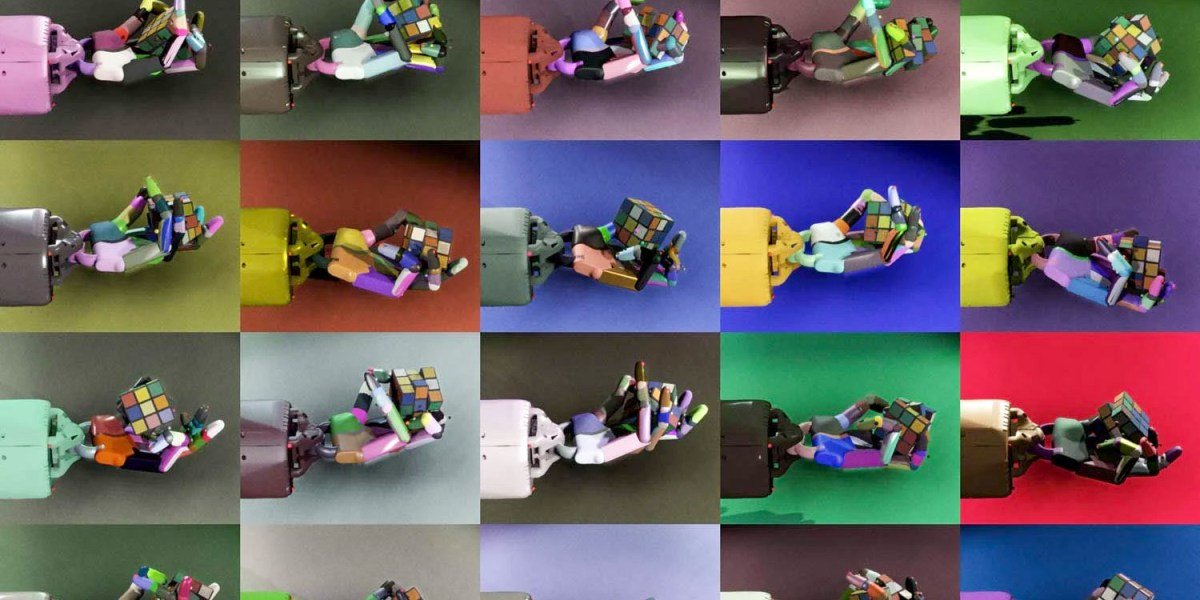
Around 2015, the cutting edge started to do things differently: Build a digital simulation of the robotic arms and the clothes, and give the program a reward signal every time it folds successfully and a ding every time it fails. This way, it gets better by trying all sorts of techniques through trial and error, with millions of iterations—the same way AI got good at playing games.
The arrival of ChatGPT in 2022 catalyzed the current boom. Trained on vast amounts of text, large language models work not through trial and error but by learning to predict what word should come next in a sentence. Similar models adapted to robotics were soon able to absorb pictures, sensor readings, and the position of a robot’s joints and predict the next action the machine should take, issuing dozens of motor commands every second.
This conceptual shift—to reliance on AI models that ingest large amounts of data—seems to work whether that helpful robot is supposed to talk to people, move through an environment, or even do complicated tasks. And it was paired with other ideas about how to accomplish this new way of learning, like deploying robots even if they aren’t yet perfect so they can learn from the environment they’re meant to work in. Today, Silicon Valley roboticists are dreaming big again. Here’s how that happened.
Jibo
Jibo
A movable social robot carried out conversations long before the age of LLMs.
An MIT robotics researcher named Cynthia Breazeal introduced an armless, legless, faceless robot called Jibo to the world in 2014. It looked, in fact, like a lamp. Breazeal’s aim was to create a social robot for families, and the idea pulled in $3.7 million in a crowdsourced funding campaign. Early preorders cost $749.
The early Jibo could introduce itself and dance to entertain kids, but that was about it. The vision was always for it to become a sort of embodied assistant that could handle everything from scheduling and emails to telling stories. It earned a number of devoted users, but ultimately the company shut down in 2019.
COURTESY OF MIT MEDIA LAB
In retrospect, one thing that Jibo really needed was better language capabilities. It was competing against Apple’s Siri and Amazon’s Alexa, and all those technologies at the time relied on heavy scripting. In broad terms, when you spoke to them, software would translate your speech into text, analyze what you wanted, and create a response pulled from preapproved snippets. Those snippets could be charming, but they were also repetitive and simply boring—downright robotic. That was especially a challenge for a robot that was supposed to be social and family oriented.