

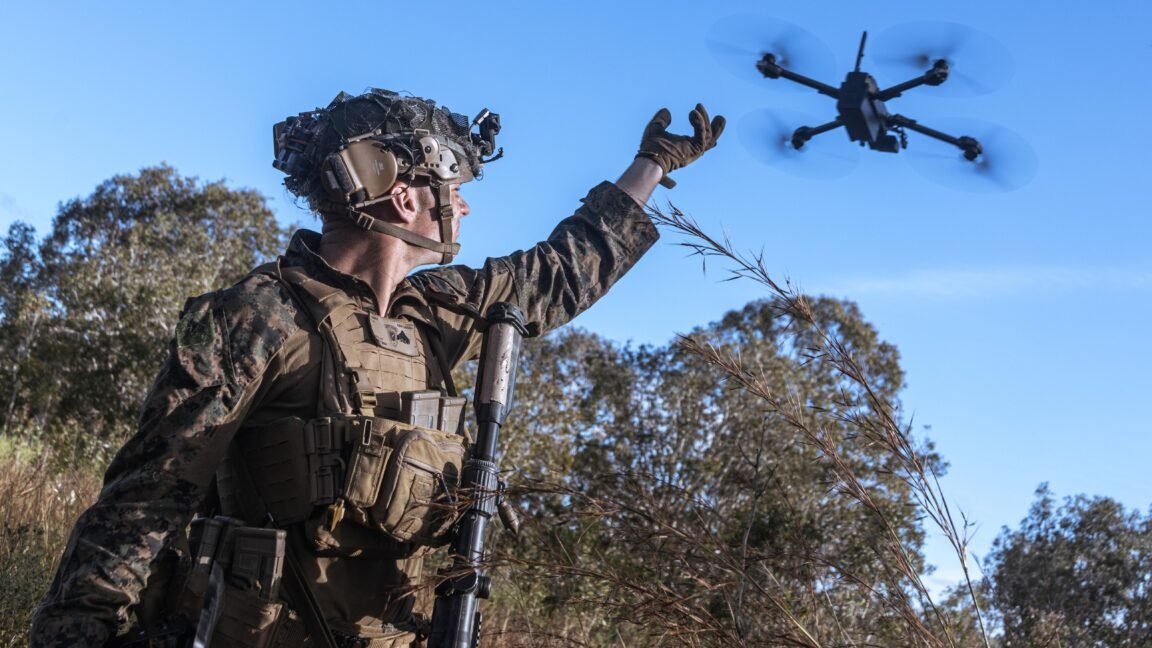
Pentagon officials emphasized that most of the money would go toward procuring drone and autonomous warfare technologies that already exist, and is largely separate from additional funding that would bolster US domestic manufacturing capacity to build such weapon systems. “That $70 billion is all going into existing systems and technologies,” said Hurst. “The industrial base support is entirely separate.”
The fast-changing pace of drone warfare
The US military already has a long history of developing and deploying drones during its Global War on Terrorism campaign, including MQ-1B Predator and MQ-9 Reaper drones that have performed surveillance and strike missions while operating at medium or high altitudes. But recent conflicts, especially the Russo-Ukrainian War, have shown how smaller quadcopter-style drones and longer-range, one-way strike drones acting like missiles can reshape the modern battlefield and force opposing sides to adapt quickly to new innovations and strategies.
Another sign of the times comes from how large numbers of inexpensive, Iranian-made Shahed drones have proven effective in attacking cities and energy infrastructure across Ukraine and the Middle East. Such drones cost as little as $20,000 to manufacture and can overwhelm air defense systems—even inspiring the US military to recently adopt its own version reverse-engineered from the original Iranian design.
The ongoing US-China rivalry has also seen both countries’ militaries racing to develop new ways to harness AI-enabled, autonomous drone swarms and other uncrewed technologies in preparation for a potential conflict in the Pacific.
“The evolution we’ve seen in the battlefield is this evolution of technologies in the timeframe of weeks, not the typical years we see with our defense production,” said Lt. Gen. Steven Whitney, director of force structure, resources, and assessment for the Pentagon’s Joint Chiefs of Staff, during the Pentagon press briefing. “So it’s really critical we work with industry to get that capability fielded.”
Whether or not the US military boosts its drone and autonomous warfare spending to such a degree in the coming fiscal year depends on US lawmakers, who must first approve the Pentagon budget. The proposed $1.5 trillion budget for the US military would represent the largest year-over-year increase in defense spending since World War II, according to Reuters.