

Close Menu
AI News TodayAI News Today

    Subscribe to Updates

    Get the latest creative news from FooBar about art, design and business.

    What's Hot

    Pope Leo XIV is not a fan of AI-generated art

    US military ends long-running program to spot nuclear missile launches

    Paramount and Warner Bros. Discovery to become Skydance

    Facebook X (Twitter) Instagram
    • About Us
    • Contact Us
    Facebook X (Twitter) Instagram Pinterest Vimeo
    AI News TodayAI News Today
    • Home
    • AI News
    • AI Reviews
    • AI Tools
    • AI Tutorials
    • Chatbots
    • Free AI Tools
    • Artificial Intelligence
    AI News TodayAI News Today
    Home»AI News»US military ends long-running program to spot nuclear missile launches
    AI News

    US military ends long-running program to spot nuclear missile launches

    By No Comments2 Mins Read
    Share Facebook Twitter Pinterest LinkedIn Tumblr Reddit Telegram Email
    US military ends long-running program to spot nuclear missile launches
    Share
    Facebook Twitter LinkedIn Pinterest Email

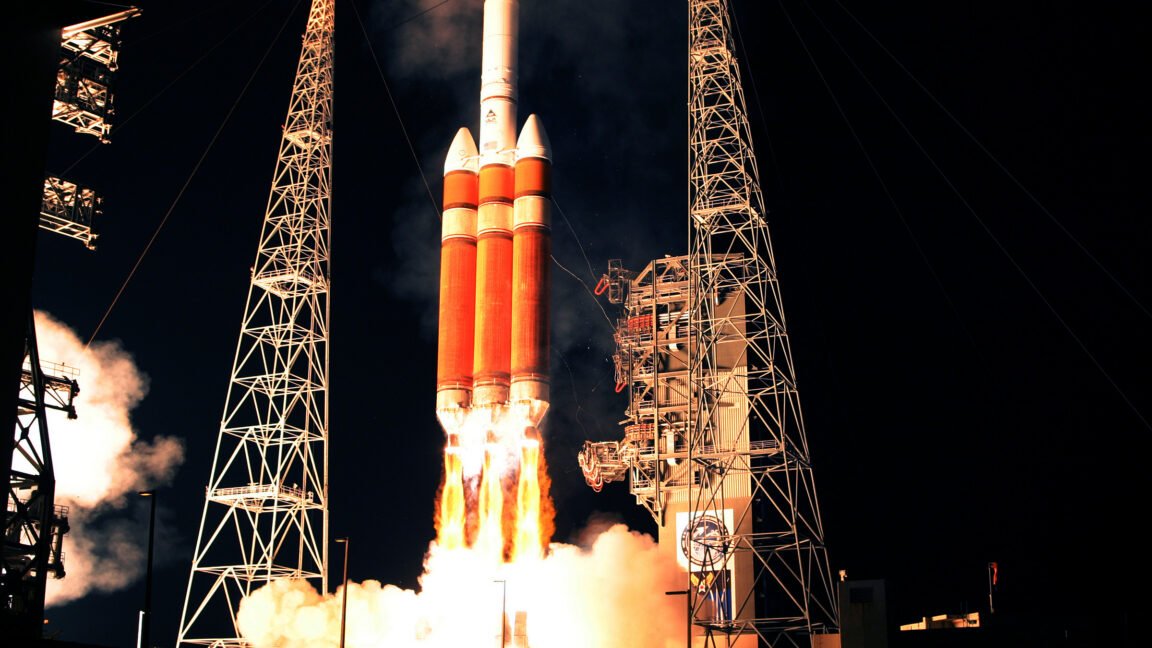
    In late 1970, a Titan IIIC rocket launched from Space Launch Complex 40 at what was then called Cape Canaveral Air Force Station. It carried a top-secret payload for the US military.

    Much has changed in spaceflight since then. The Titan IIIC would bow out in 1982 after dozens of launches. Various Titans continued launching from Space Launch Complex 40 until 2005, at which point the US Air Force—in a competitive process hotly opposed by United Launch Alliance—turned the pad over to a small, largely unknown startup called SpaceX. And Cape Canaveral is now a “Space Force” station.

    But those unspecified payloads? Until last month, some of them were still flying operationally.

    They were looking for missile launches

    The US government would later disclose that the top-secret payload that launched in November 1970 was a “Defense Support Program” satellite. The initial block of these satellites, launched from 1970 to 1973, had a mass of about 1 metric ton, and each carried about 2,000 infrared detectors. They were essentially very sensitive telescopes, and each satellite was launched into geosynchronous orbit.

    For a time, these were among the most important satellites flown by the US, as they served to detect the launch of a nuclear warhead at the country. As a result, the Defense Support Program would become one of the primary elements of American military space power during the Cold War.

    These initial satellites transformed experimental infrared observations into an operational program that continuously monitored the globe for missile launches. Initially built to identify Soviet ICBMs, they were essential for nuclear deterrence; later, they also became useful in conventional warfare, such as detecting Iraqi Scud missile launches.

    Over time, the military added to the constellation, improving reliability and expanding their capabilities. Each satellite ended up having more than 6,000 infrared detectors and a mass of about 2.5 tons. Satellites in the Defense Support Program kept on flying into space until 2007. One of them, DSP-16, even launched on a space shuttle (Atlantis) in 1991.

    ends launches LongRunning military missile nuclear program Spot
    Share. Facebook Twitter Pinterest LinkedIn Tumblr Email
    Previous ArticleParamount and Warner Bros. Discovery to become Skydance
    Next Article Pope Leo XIV is not a fan of AI-generated art
    • Website

    Related Posts

    AI News

    Pope Leo XIV is not a fan of AI-generated art

    AI News

    Paramount and Warner Bros. Discovery to become Skydance

    AI News

    Circuit Breaker Labs hopes to make AI safer for your kids (and you)

    Add A Comment
    Leave A Reply Cancel Reply

    Top Posts

    Pope Leo XIV is not a fan of AI-generated art

    0 Views

    US military ends long-running program to spot nuclear missile launches

    0 Views

    Paramount and Warner Bros. Discovery to become Skydance

    0 Views
    Stay In Touch
    • Facebook
    • YouTube
    • TikTok
    • WhatsApp
    • Twitter
    • Instagram
    Latest Reviews
    AI Tutorials

    Quantization from the ground up

    AI Tools

    David Sacks is done as AI czar — here’s what he’s doing instead

    AI Reviews

    Judge sides with Anthropic to temporarily block the Pentagon’s ban

    Subscribe to Updates

    Get the latest tech news from FooBar about tech, design and biz.

    Most Popular

    Pope Leo XIV is not a fan of AI-generated art

    0 Views

    US military ends long-running program to spot nuclear missile launches

    0 Views

    Paramount and Warner Bros. Discovery to become Skydance

    0 Views
    Our Picks

    Quantization from the ground up

    David Sacks is done as AI czar — here’s what he’s doing instead

    Judge sides with Anthropic to temporarily block the Pentagon’s ban

    Subscribe to Updates

    Get the latest creative news from FooBar about art, design and business.

    Facebook X (Twitter) Instagram Pinterest
    • About Us
    • Contact Us
    • Terms & Conditions
    • Privacy Policy
    • Disclaimer

    © 2026 ainewstoday.co. All rights reserved. Designed by DD.

    Type above and press Enter to search. Press Esc to cancel.