

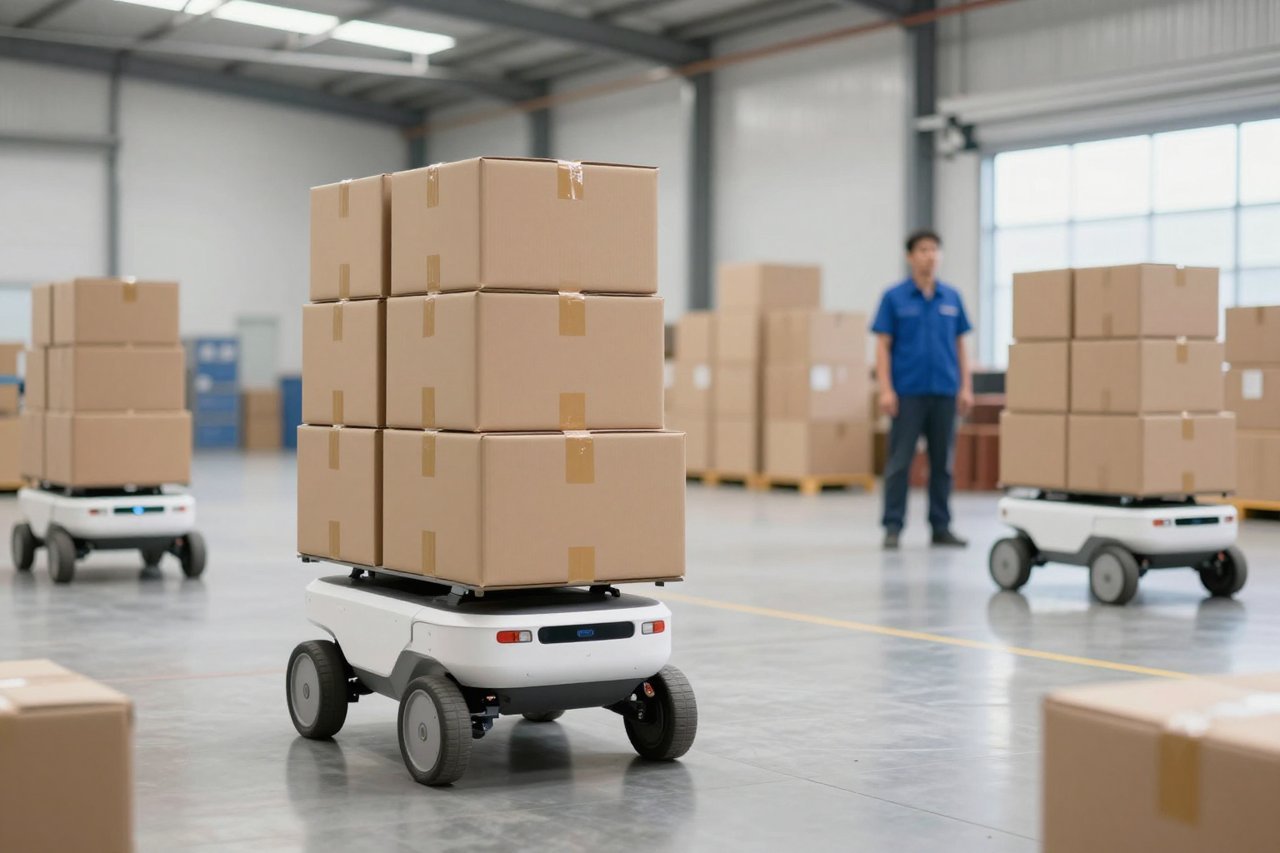
The phrase “AI robots” is loaded. It conjures images of humanoid machines chirping about the weather, yet the most important AI robots working today look nothing like that. They’re pallet-moving carts in fulfilment centres, robotic arms with force-sensitive grippers, and sensors mounted on tractors that identify weeds in real time. What unites them is a genuinely intelligent decision-making layer that adapts to new situations, rather than blindly following a fixed program.
This is the shift that matters. Traditional industrial robots have been around for decades, repeating the same motion millions of times. AI robots, in contrast, use machine learning to perceive their environment, make choices, and even improve with experience. The implications are huge, and so is the hype. Understanding where the technology truly stands—and where it doesn’t—can save you from expensive bets on polished prototypes.
What Separates an AI Robot from a Regular One?
The line is blurrier than most people think. A standard industrial arm with a computer vision system isn’t necessarily an AI robot. For that to be true, the system has to handle the unexpected. It needs a loop somewhere that resembles learning or decision-making.
Three traits usually define it:
- Perception: AI robots don’t just sense objects; they interpret them. LiDAR, stereo cameras, and tactile sensors feed data into models that classify objects and estimate their physical properties.
- Adaptation: Rather than following a fixed path, these robots choose actions based on incoming sensor data. That allows them to grasp a misplaced item, avoid a human who steps into the path, or adjust a grip before a cup slips.
- Learning: Many modern robots use reinforcement learning in simulation to master manipulation before they ever touch a real object. That transfer is still tricky, but it is increasingly what separates cutting-edge systems from robotic arms that simply replay coordinates.
That last point often surprises people. A lot of the “intelligence” in an AI robot was practised in a virtual world first, then moved into a physical body. The software, not the hardware, is where the real race is happening.
Where AI Robots Are Working Right Now
Forget humanoid butlers. The most mature commercial deployments are in tightly controlled environments where tasks are narrow and data is plentiful. Let’s look at the categories that matter.
Factory and Warehouse Automation
Amazon, Walmart, and a host of third-party operators run thousands of autonomous mobile robots (AMRs) in their warehouses. These machines don’t just follow magnetic tape on the floor; they map their surroundings, avoid workers, and reroute when a pallet appears in an aisle. One large fulfilment centre can process more than 70,000 items per hour with the help of robotic workstations that use vision models to identify objects and plan a grasp.
If you want a reality check on what’s actually working in these environments, our deep look at what AI robots can actually do now shows where the productivity gains are real and where the long-promised flexibility is still missing.
Healthcare and Surgery
Surgical robots like the da Vinci system have been around for years, but they are not truly AI-driven; they are precision tools driven by a human surgeon. The next generation is different. For example, robotic systems in the operating room now assist by segmenting CT scans, tracking instruments in real time, and suggesting safer tool paths. Some pilot programmes have used semi-autonomous robots to suture tissue with micro-precision, though regulatory approvals remain limited.
Outside the OR, hospital logistics robots are unquestionably mainstream. They move linens, lab samples, and meals across dozens of floors and react to crowded elevators and blocked corridors with surprising common sense.
Agriculture and Field Work
In vineyards and vegetable fields, AI robots are pulling weeds without chemicals. Using cameras and trained image recognition models, small robots travel between rows and distinguish crop leaves from weeds. Startup companies have built machines that cover roughly 300,000 plants per hour and remove 98% of targeted weeds. These are not lab fantasies; fleets of them are commercially active across Europe and parts of the US.
The Hidden Software Problem
What people see at robotics trade shows is the body. What determines success or failure is the software plumbing behind it. Every AI robot needs a way to navigate, a way to perceive, a policy for movement, and a control system to turn digital decisions into precise motor commands. It’s an entire pipeline, and it breaks in unexpected ways the moment the target environment changes from a demo floor to a rainy loading dock.
A physical robot also introduces constraints that pure software never faces. Latency matters: if the decision model takes 700 milliseconds to plan a grasp, the robot will miss the moving part on the conveyor. Battery life limits how much computation you can do onboard, which is why many systems offload heavy inference to edge servers. This constant balancing act is what makes robotics so much harder than chatbot development.
For anyone used to building AI that runs purely in a server, the transition to robotics is jarring. AI bots that succeed in the purely digital world usually fail in the physical one because they don’t face friction, battery limits, or bent metal gears. But the good news is that many of the deployment lessons—start narrow, collect data, validate in production—apply in both worlds.
The Business Case: When Do AI Robots Make Sense?
AI robots can be a great investment, but only under specific circumstances. The most common conditions are:
- Repetitive but unstructured tasks that would break traditional robots.
- Environments with high labour costs or safety risks.
- Enough existing data to train vision or manipulation models.
- A strong tolerance for iterative deployment. You won’t get it right on the first try.
For example, a logistics operator can justify a $200,000 robot if it stacks boxes for ten hours a day and reduces workplace injuries. A midsized furniture factory may be better off retrofitting existing equipment with smart sensors. The difference comes down to unit economics, not technological novelty.
Large enterprises also buy AI capabilities through platforms rather than building their own robots. Enterprise AI platforms like C3 AI handle the data pipelines and predictive models that let a brand decide when a robot arm will fail before it breaks, reducing downtime dramatically. In that sense, the business value often isn’t in the robot itself; it’s in the software that manages the robot.
What Still Stumps Every AI Robot in 2025
Here it’s useful to temper expectations. There are hard problems that no amount of GPU chips has solved yet.
Dexterous manipulation is chief among them. Humans can pick up a screwdriver, a banana, or a key with a single, smooth hand movement, adjusting grip on the fly. Robots still struggle with tasks that require fine tactile feedback, like screwing in a lightbulb or handing over a delicate object without crushing it.
Common sense is another huge limitation. An AI robot trained on millions of scenes can still get confused when it sees a mug that has a handle pointing backwards or a cardboard box that’s slightly crushed. It lacks a real-world model of how objects behave.
Then there’s the mechanical side. Battery life is improving but still poor in heavy humanoid designs. Many prototypes stay tethered to a power cable or work for only around two hours before needing a charge. Hardware costs also remain steep. High-end torque sensors can cost thousands of dollars each, which is why grippers with multi-axis sensing usually carry a price tag in the tens of thousands.
Such limitations haven’t slowed the market. Venture money in robotics is near an all-time high, and the top artificial intelligence companies pushing this sector forward are increasingly hardware firms, not just cloud platforms.
How to Evaluate an AI Robot Before You Buy
If you’re seriously considering introducing an AI robot, avoid the temptation to start with the physical machine. Start by mapping the exact task and failure conditions. Ask these questions:
- What is the acceptable cycle time per action, and can the robot meet it in your real environment?
- What happens when the object is not standard? Does it retry, call for help, or just fail silently?
- Who will service the robot, and how long does a replacement part take?
- Are there integration costs beyond the sticker price, like reconfiguring floors, networks, or safety fences?
- What data pipeline exists to improve the model after deployment?
Most companies underestimate the importance of change management. A robot that works perfectly in a demo may fail in a dimly lit corner of your factory where its camera struggles to see. The vendors with the strongest track records are the ones that spend weeks on-site before they claim a hard quote.
The broader AI industry continues to shift as well. For a practical map of those developments and how they relate to physical machines, our guide to what artificial intelligence can and cannot do is a useful read before you set a long-term robotics roadmap.
Invest in the problem you are solving, not the robot design. That’s the difference between a headline-grabbing humanoid and a fleet of unglamorous machines that quietly save your operation millions.